World

Mississippi sank a 31-ton propane tank and steel tower once used to train firefighters 13 miles offshore, turning old equipment into a long-lasting artificial reef for Gulf fish

Mississippi sank a 31-ton propane tank and steel tower once used to train firefighters 13 miles offshore, turning old equipment into a long-lasting artificial reef for Gulf fish
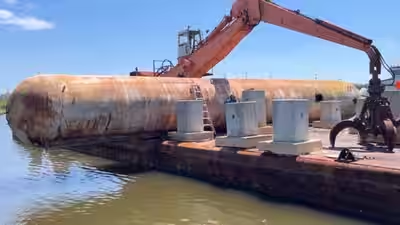
Unused steel equipment is prepared for deployment underwater to create a habitat for marine life. (Photo: Chevron’s Pascagoula Refinery in Mississippi)

A 31-ton propane tank and a steel tower that once helped firefighters practise emergency operations in Mississippi, have found a new purpose underwater. The two structures have been lowered into the Gulf, about 13 miles south of Petit Bois Island, where they are expected to provide shelter for fish and support marine life. The project is part of an effort to expand artificial reefs along the Mississippi Gulf Coast.According to WLOX News, the equipment previously belonged to the Forts Lake Volunteer Fire Department. After it was no longer needed for training, several organisations came together to turn it into an underwater habitat.The idea behind the project is to provide fish with places to gather, shelter and find food in areas where natural reef habitats are limited. Unlike a natural reef, which develops through natural processes, an artificial reef is deliberately placed on the seabed. Materials such as steel, concrete and retired ships can be used to create these underwater structures.The Mississippi project is not the first of its kind. Chevron’s Pascagoula Refinery which contributed $30,000 to help transport the heavy structures and deploy them safely at sea, had previously supported another artificial reef in the region in 2023. That project has since provided a habitat for hundreds of fish.

Firefighting equipment finds new purpose

According to details shared by Chevron’s Pascagoula Refinery in Mississippi, the project involved the Forts Lake Volunteer Fire Department, the Jackson County Office of Emergency Services, the Mississippi Department of Marine Resources and Mississippi Gulf Fishing Banks.The firefighting equipment included a large propane cylinder tank weighing 31 tons and a steel tower. Both had been used for training before being retired. The structures had to be prepared for their new purpose and transported to a location south of Petit Bois Island, part of the Gulf Islands National Seashore.Chevron explains that artificial reefs can support organisms such as corals while also offering fish places to shelter and find food and can continue supporting marine life over time.This is particularly relevant along parts of the Mississippi coast, where the seabed has historically offered fewer natural reef-fishing opportunities.Ralph Humphrey, president of Mississippi Gulf Fishing Banks, described the earlier conditions in an interview with WLOX News. “There were no artificial reefs back then, and there were no reefs at all, just a mud bottom. It’s good for shrimp, but not so good for reef fishing,” he said.

When Mississippi created an earlier reef

The organisations involved already have experience using retired industrial materials to establish underwater habitats. In 2023, Chevron supported a reef project using surplus steel from its refinery. The results reported from that site provides a useful comparison with the latest deployment.According to Chevron, estimates from the Mississippi Department of Marine Resources indicate that the 2023 reef now supports more than 530 red snapper. Hundreds of other reef-dependent fish, including triggerfish, spadefish, sheepshead and grouper, have also been recorded there.These numbers relate specifically to the older reef. There are no comparable fish population figures yet for the newly deployed propane tank and steel tower.

How new reef could help fishermen

Apart from its intended ecological benefits, the project is expected to create additional fishing opportunities along the Mississippi Gulf Coast.Artificial reefs can provide locations for fish to gather, making them useful to people who depend on fishing for work as well as those who fish recreationally.Humphrey said the new reef could support charter fishing businesses and recreational anglers. “Charter captains can make a living out of it, both federal and state captains, and just a wealth of opportunity for the recreational anglers,” he said.Chevron expects the retired steel equipment to remain useful as a marine habitat for a long period. Katarina Scott, the company’s public affairs advisor, said the collaboration showed how different organisations could work together to benefit the marine environment.“This reef that we’ve deployed is going to have lasting benefits for years to come; it’s just a really great thing, I think, for the fishing community here on the Mississippi Gulf Coast,” she told WLOX News.


Source link

Related Articles

Leave a Reply

Your email address will not be published. Required fields are marked *

Back to top button
×
newsnation.aanest.com
Logo
Date of Publish : 23 October 2026, 5:30 pm Digital Edition : News nation
Mississippi sank a 31-ton propane tank and steel tower once used to train firefighters 13 miles offshore, turning old equipment into a long-lasting artificial reef for Gulf fish

Unused steel equipment is prepared for deployment underwater to create a habitat for marine life. (Photo: Chevron's Pascagoula Refinery in Mississippi) A 31-ton propane tank and a steel tower that once helped firefighters practise emergency operations in Mississippi, have found a new purpose underwater. The two structures have been lowered into the Gulf, about 13 miles south of Petit Bois Island, where they are expected to provide shelter for fish and support marine life. The project is part of an effort to expand artificial reefs along the Mississippi Gulf Coast.According to WLOX News, the equipment previously belonged to the Forts Lake Volunteer Fire Department. After it was no longer needed for training, several organisations came together to turn it into an underwater habitat.The idea behind the project is to provide fish with places to gather, shelter and find food in areas where natural reef habitats are limited. Unlike a natural reef, which develops through natural processes, an artificial reef is deliberately placed on the seabed. Materials such as steel, concrete and retired ships can be used to create these underwater structures.The Mississippi project is not the first of its kind. Chevron's Pascagoula Refinery which contributed $30,000 to help transport the heavy structures and deploy them safely at sea, had previously supported another artificial reef in the region in 2023. That project has since provided a habitat for hundreds of fish.Firefighting equipment finds new purposeAccording to details shared by Chevron's Pascagoula Refinery in Mississippi, the project involved the Forts Lake Volunteer Fire Department, the Jackson County Office of Emergency Services, the Mississippi Department of Marine Resources and Mississippi Gulf Fishing Banks.The firefighting equipment included a large propane cylinder tank weighing 31 tons and a steel tower. Both had been used for training before being retired. The structures had to be prepared for their new purpose and transported to a location south of Petit Bois Island, part of the Gulf Islands National Seashore.Chevron explains that artificial reefs can support organisms such as corals while also offering fish places to shelter and find food and can continue supporting marine life over time.This is particularly relevant along parts of the Mississippi coast, where the seabed has historically offered fewer natural reef-fishing opportunities.Ralph Humphrey, president of Mississippi Gulf Fishing Banks, described the earlier conditions in an interview with WLOX News. “There were no artificial reefs back then, and there were no reefs at all, just a mud bottom. It’s good for shrimp, but not so good for reef fishing,” he said.When Mississippi created an earlier reefThe organisations involved already have experience using retired industrial materials to establish underwater habitats. In 2023, Chevron supported a reef project using surplus steel from its refinery. The results reported from that site provides a useful comparison with the latest deployment.According to Chevron, estimates from the Mississippi Department of Marine Resources indicate that the 2023 reef now supports more than 530 red snapper. Hundreds of other reef-dependent fish, including triggerfish, spadefish, sheepshead and grouper, have also been recorded there.These numbers relate specifically to the older reef. There are no comparable fish population figures yet for the newly deployed propane tank and steel tower.How new reef could help fishermenApart from its intended ecological benefits, the project is expected to create additional fishing opportunities along the Mississippi Gulf Coast.Artificial reefs can provide locations for fish to gather, making them useful to people who depend on fishing for work as well as those who fish recreationally.Humphrey said the new reef could support charter fishing businesses and recreational anglers. “Charter captains can make a living out of it, both federal and state captains, and just a wealth of opportunity for the recreational anglers,” he said.Chevron expects the retired steel equipment to remain useful as a marine habitat for a long period. Katarina Scott, the company's public affairs advisor, said the collaboration showed how different organisations could work together to benefit the marine environment.“This reef that we’ve deployed is going to have lasting benefits for years to come; it’s just a really great thing, I think, for the fishing community here on the Mississippi Gulf Coast,” she told WLOX News.

Source link