World

Meet Isaac Nelson, the 13-year-old Florida boy whose EcoScouts team released over 23,000 native clams, rescued 3,000 mangrove propagules and built oyster gardens estimated to filter 250,000 gallons of water daily

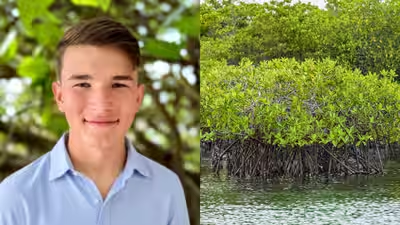
Meet Isaac Nelson, the 13-year-old Florida boy whose EcoScouts team released over 23,000 native clams, rescued 3,000 mangrove propagules and built oyster gardens estimated to filter 250,000 gallons of water daily
Nelson’s innovative underwater camera uses AI to track marine biodiversity, helping researchers monitor ecosystem recovery and restoration progress.

At just 13, Isaac Nelson is tackling an environmental challenge that has troubled Florida’s coastal ecosystems for years. Armed with scientific curiosity, community support and a determination to restore the waters around Jupiter Inlet, the young conservationist has turned his childhood passion into a hands-on restoration mission. Through EcoScouts, the youth organisation he founded at seven, Nelson is helping revive marine habitats, protect native species and demonstrate how young people can contribute to environmental recovery.

Bringing native clams back to jupiter inlet

According to Jupiter Brief, Nelson’s latest conservation effort has returned approximately 23,000 juvenile native clams to local waters, offering hope for a species that has become increasingly scarce in the inlet.The project began when Nelson located just 30 surviving clams in nearby estuaries. Working with the Whitney Laboratory for Marine Bioscience at the University of Florida, he helped facilitate their breeding, resulting in thousands of juveniles. The EcoScouts subsequently introduced the young clams into the inlet, using protective mesh bags in selected locations to reduce predation and improve their chances of survival.The Barron Prize highlights the initiative as part of Nelson’s wider effort to rebuild the natural systems that support marine biodiversity. Native clams play an important ecological role by filtering water, supporting food webs and helping maintain conditions necessary for seagrass habitats.

Oyster gardens that clean the water

Nelson’s work extends beyond clam restoration. According to Jupiter Brief, EcoScouts has installed 120 vertical oyster gardens using recycled shells collected from local restaurants with support from the West Palm Beach Fishing Club.Volunteers string the shells onto steel wires and suspend them beneath docks, allowing oysters to grow while creating habitats for other marine organisms. The Barron Prize estimates that the developing oyster gardens filter approximately 250,000 gallons of water daily.Beyond improving water quality, these installations provide shelter for marine life and offer residents a practical way to participate in conservation. Community workshops organised with local partners have helped turn the project into a collaborative effort involving families and waterfront property owners.

Rebuilding the mangrove shoreline

Shoreline erosion and heavy boat traffic around the historic Jupiter Lighthouse previously contributed to the removal of native mangroves and living shoreline habitat. According to the Barron Prize, Nelson responded by rescuing more than 3,000 dried-out mangrove propagules and nurturing them in a nursery in his backyard.His work subsequently expanded through a partnership with the Bureau of Land Management, resulting in a permanent mangrove nursery near the lighthouse. The young trees are intended to help restore natural shoreline protection as construction work progresses. Mangroves are vital coastal ecosystems, helping stabilise banks, provide wildlife habitat and buffer shorelines against erosion.

Using technology to track recovery

Nelson has also developed an underwater benthic camera designed to capture high-resolution footage for up to 48 hours, substantially exceeding the typical 60-minute battery life of comparable equipment, according to the Barron Prize. With AI-enabled species identification, the system can help researchers catalog marine biodiversity and track inlet restoration over time.

A young conservationist with bigger goals

“The conservation films and scientific programs Nelson has launched have attracted national attention,” Jupiter Brief reported. Yet his work remains rooted in local action, with EcoScouts continuing to seek volunteers and waterfront property owners to expand its projects.His efforts show that environmental responsibility doesn’t have to wait until adulthood. By combining research, innovation and community participation, Nelson is helping give Jupiter Inlet a stronger chance at ecological recovery.Images Courtesy: istock and Barron Prize


Source link

Related Articles

Leave a Reply

Your email address will not be published. Required fields are marked *

Back to top button
×
newsnation.aanest.com
Logo
Date of Publish : 29 October 2026, 5:50 pm Digital Edition : News nation
Meet Isaac Nelson, the 13-year-old Florida boy whose EcoScouts team released over 23,000 native clams, rescued 3,000 mangrove propagules and built oyster gardens estimated to filter 250,000 gallons of water daily

Nelson's innovative underwater camera uses AI to track marine biodiversity, helping researchers monitor ecosystem recovery and restoration progress. At just 13, Isaac Nelson is tackling an environmental challenge that has troubled Florida's coastal ecosystems for years. Armed with scientific curiosity, community support and a determination to restore the waters around Jupiter Inlet, the young conservationist has turned his childhood passion into a hands-on restoration mission. Through EcoScouts, the youth organisation he founded at seven, Nelson is helping revive marine habitats, protect native species and demonstrate how young people can contribute to environmental recovery.Bringing native clams back to jupiter inletAccording to Jupiter Brief, Nelson's latest conservation effort has returned approximately 23,000 juvenile native clams to local waters, offering hope for a species that has become increasingly scarce in the inlet.The project began when Nelson located just 30 surviving clams in nearby estuaries. Working with the Whitney Laboratory for Marine Bioscience at the University of Florida, he helped facilitate their breeding, resulting in thousands of juveniles. The EcoScouts subsequently introduced the young clams into the inlet, using protective mesh bags in selected locations to reduce predation and improve their chances of survival.The Barron Prize highlights the initiative as part of Nelson's wider effort to rebuild the natural systems that support marine biodiversity. Native clams play an important ecological role by filtering water, supporting food webs and helping maintain conditions necessary for seagrass habitats.Oyster gardens that clean the waterNelson's work extends beyond clam restoration. According to Jupiter Brief, EcoScouts has installed 120 vertical oyster gardens using recycled shells collected from local restaurants with support from the West Palm Beach Fishing Club.Volunteers string the shells onto steel wires and suspend them beneath docks, allowing oysters to grow while creating habitats for other marine organisms. The Barron Prize estimates that the developing oyster gardens filter approximately 250,000 gallons of water daily.Beyond improving water quality, these installations provide shelter for marine life and offer residents a practical way to participate in conservation. Community workshops organised with local partners have helped turn the project into a collaborative effort involving families and waterfront property owners.Rebuilding the mangrove shorelineShoreline erosion and heavy boat traffic around the historic Jupiter Lighthouse previously contributed to the removal of native mangroves and living shoreline habitat. According to the Barron Prize, Nelson responded by rescuing more than 3,000 dried-out mangrove propagules and nurturing them in a nursery in his backyard.His work subsequently expanded through a partnership with the Bureau of Land Management, resulting in a permanent mangrove nursery near the lighthouse. The young trees are intended to help restore natural shoreline protection as construction work progresses. Mangroves are vital coastal ecosystems, helping stabilise banks, provide wildlife habitat and buffer shorelines against erosion.Using technology to track recoveryNelson has also developed an underwater benthic camera designed to capture high-resolution footage for up to 48 hours, substantially exceeding the typical 60-minute battery life of comparable equipment, according to the Barron Prize. With AI-enabled species identification, the system can help researchers catalog marine biodiversity and track inlet restoration over time.A young conservationist with bigger goals“The conservation films and scientific programs Nelson has launched have attracted national attention,” Jupiter Brief reported. Yet his work remains rooted in local action, with EcoScouts continuing to seek volunteers and waterfront property owners to expand its projects.His efforts show that environmental responsibility doesn't have to wait until adulthood. By combining research, innovation and community participation, Nelson is helping give Jupiter Inlet a stronger chance at ecological recovery.Images Courtesy: istock and Barron Prize

Source link