World

Workers laying a sewer pipe under a building in Dendermonde, Belgium, found about 50 gold bars and piles of gold coins bricked into the cellar walls, worth an estimated 9 million euros, and no one yet knows who owns them

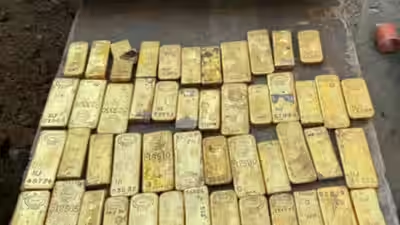
Workers laying a sewer pipe under a building in Dendermonde, Belgium, found about 50 gold bars and piles of gold coins bricked into the cellar walls, worth an estimated 9 million euros, and no one yet knows who owns them

An ordinary construction job in Belgium turned into an extraordinary discovery when an 18-year-old student and his colleagues uncovered a hidden fortune while working on a drainage project. The find, estimated to be worth €9 million (approximately ₹99 crore), has since prompted an investigation into the gold’s origins and the question of who has the legal right to claim it. According to reports by The Guardian, BBC News and Belgian newspaper Het Laatste Nieuws, the discovery was made on August 11, 2026, at a former brewery property in Sint-Gillis-Dendermonde, around 30 kilometres north-west of Brussels. The workers were removing part of the building’s foundation to make way for new sewage pipes when they came across the concealed treasure. The student, identified only as Kobe, was working a summer job with construction company De Brand. What initially appeared to be ordinary coins turned out to be part of a much larger collection of precious metal. As the workers continued excavating, they discovered gold bars and other pieces of bullion hidden inside the building’s masonry.

A treasure concealed for decades

The gold was reportedly packed into a bag and sealed behind a bricked-up cellar wall beneath a villa known as the Brouwershuis. The property was originally built in the late 19th century for Theophilus Van Assche, a member of a wealthy local brewing family. According to The Brussels Times, the collection included gold bars and coins, while subsequent reporting by Brussels Signal put the number of numbered bullion bars at 49, alongside thousands of coins. The building’s history has added another layer to the mystery. Brewing operations at the site began in 1899 and continued until 1970, after which the property changed hands.The former brewery is now owned by CAW Oost-Vlaanderen, a social welfare organisation that is renovating the listed property to accommodate offices and housing. The renovation involved stripping much of the building’s interior, leaving its exterior walls standing. The gold came to light during this extensive work.

Who could claim the €9 million fortune?

Following the discovery, the workers informed the property owner and contacted the police. The entire collection was subsequently taken to a secure government facility in Brussels, where it is being held while authorities investigate its origins and establish its legal ownership. Investigators are examining whether the gold could have been stolen or connected to criminal activity. Only after its provenance has been established can the question of ownership be properly addressed, according to reports citing the East Flanders public prosecutor’s office.There are several possible claimants. The descendants of the Van Assche family could come forward if they can establish a legitimate connection to the treasure. CAW Oost-Vlaanderen, as the current property owner, and the construction workers who discovered it may also have a claim under Belgian law. Local historian and former Dendermonde mayor Piet Buyse has suggested that the gold could have belonged to the Van Assche family, given their wealth and historical connection to the property. However, this remains a possibility rather than an established finding.The legal process could take years. According to Brussels Signal and German broadcaster ARD’s Tagesschau, Belgian law allows a five-year period for potential owners to establish their claims. If no rightful owner is identified by 2031, the treasure could be divided between the finder and the owner of the property.

A possible reward for the young worker

For Kobe and his colleagues, the discovery has already become an experience unlike any other summer job. The workers handed over the collection rather than attempting to keep it, recognising that its value and uncertain origins required police involvement. The discovery has also attracted attention from people claiming connections to the property’s past. Tagesschau reported that police received messages from people in different parts of the world, including individuals suggesting that their relatives had once worked in the area. Some people have also come forward claiming links to the Van Assche family.For now, the gold remains secured in Brussels as authorities work to determine where it came from and who is entitled to it. If the legal process ultimately favours the finder and the property owner, the student who began the day digging trenches for a sewage pipe could find himself entitled to a share of a fortune worth millions.


Source link

Related Articles

Leave a Reply

Your email address will not be published. Required fields are marked *

Back to top button
×
newsnation.aanest.com
Logo
Date of Publish : 10 November 2026, 1:36 pm Digital Edition : News nation
Workers laying a sewer pipe under a building in Dendermonde, Belgium, found about 50 gold bars and piles of gold coins bricked into the cellar walls, worth an estimated 9 million euros, and no one yet knows who owns them

An ordinary construction job in Belgium turned into an extraordinary discovery when an 18-year-old student and his colleagues uncovered a hidden fortune while working on a drainage project. The find, estimated to be worth €9 million (approximately ₹99 crore), has since prompted an investigation into the gold's origins and the question of who has the legal right to claim it. According to reports by The Guardian, BBC News and Belgian newspaper Het Laatste Nieuws, the discovery was made on August 11, 2026, at a former brewery property in Sint-Gillis-Dendermonde, around 30 kilometres north-west of Brussels. The workers were removing part of the building's foundation to make way for new sewage pipes when they came across the concealed treasure. The student, identified only as Kobe, was working a summer job with construction company De Brand. What initially appeared to be ordinary coins turned out to be part of a much larger collection of precious metal. As the workers continued excavating, they discovered gold bars and other pieces of bullion hidden inside the building's masonry.A treasure concealed for decadesThe gold was reportedly packed into a bag and sealed behind a bricked-up cellar wall beneath a villa known as the Brouwershuis. The property was originally built in the late 19th century for Theophilus Van Assche, a member of a wealthy local brewing family. According to The Brussels Times, the collection included gold bars and coins, while subsequent reporting by Brussels Signal put the number of numbered bullion bars at 49, alongside thousands of coins. The building's history has added another layer to the mystery. Brewing operations at the site began in 1899 and continued until 1970, after which the property changed hands.The former brewery is now owned by CAW Oost-Vlaanderen, a social welfare organisation that is renovating the listed property to accommodate offices and housing. The renovation involved stripping much of the building's interior, leaving its exterior walls standing. The gold came to light during this extensive work.Who could claim the €9 million fortune?Following the discovery, the workers informed the property owner and contacted the police. The entire collection was subsequently taken to a secure government facility in Brussels, where it is being held while authorities investigate its origins and establish its legal ownership. Investigators are examining whether the gold could have been stolen or connected to criminal activity. Only after its provenance has been established can the question of ownership be properly addressed, according to reports citing the East Flanders public prosecutor's office.There are several possible claimants. The descendants of the Van Assche family could come forward if they can establish a legitimate connection to the treasure. CAW Oost-Vlaanderen, as the current property owner, and the construction workers who discovered it may also have a claim under Belgian law. Local historian and former Dendermonde mayor Piet Buyse has suggested that the gold could have belonged to the Van Assche family, given their wealth and historical connection to the property. However, this remains a possibility rather than an established finding.The legal process could take years. According to Brussels Signal and German broadcaster ARD's Tagesschau, Belgian law allows a five-year period for potential owners to establish their claims. If no rightful owner is identified by 2031, the treasure could be divided between the finder and the owner of the property.A possible reward for the young workerFor Kobe and his colleagues, the discovery has already become an experience unlike any other summer job. The workers handed over the collection rather than attempting to keep it, recognising that its value and uncertain origins required police involvement. The discovery has also attracted attention from people claiming connections to the property's past. Tagesschau reported that police received messages from people in different parts of the world, including individuals suggesting that their relatives had once worked in the area. Some people have also come forward claiming links to the Van Assche family.For now, the gold remains secured in Brussels as authorities work to determine where it came from and who is entitled to it. If the legal process ultimately favours the finder and the property owner, the student who began the day digging trenches for a sewage pipe could find himself entitled to a share of a fortune worth millions.

Source link