
World

In 2013, California began removing millions of purple urchins from barren reefs; seven years later, more than 55 acres of kelp forest had returned

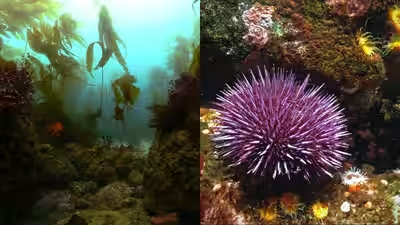
In 2013, California began removing millions of purple urchins from barren reefs; seven years later, more than 55 acres of kelp forest had returned
Kelp forests are among the most productive ecosystems in the ocean. They provide habitat for fish and invertebrates while supporting marine mammals and other wildlife

Beneath the waves off Southern California, a once-lush underwater forest had been reduced to something resembling a desert. Kelp that had provided shelter and food for fish, crabs and marine mammals had disappeared, leaving behind rocky reefs covered by hungry purple sea urchins. Then, in 2013, conservationists and fishermen began tackling the problem from the seafloor, one urchin at a time. Seven years later, more than 55 acres of kelp forest had returned, bringing marine life back with it, reports NOAA Fisheries website. Scroll down to read the details.

When Kelp forests disappear

Kelp forests are among the most productive ecosystems in the ocean. They provide habitat for fish and invertebrates while supporting marine mammals and other wildlife.But Southern California’s kelp forests have faced years of pressure from environmental damage. One major source of contamination came from the Montrose Chemical manufacturing plant, which discharged pollutants including DDT and PCBs into coastal waters between the 1940s and 1970s. The chemicals persisted in sediments along the Palos Verdes ocean shelf and affected marine ecosystems and wildlife. As kelp declined, another problem took hold.

Purple Urchins take over

According to the report, sea urchins normally form part of a healthy coastal ecosystem. But when their numbers become excessive, they can consume kelp faster than the plants can recover. The result is an urchin barren, a shallow reef where dense populations of purple urchins graze away newly growing kelp, preventing the forest from returning. To break that cycle, the Bay Foundation led a partnership involving researchers, conservationists and commercial urchin fishermen. Beginning in 2013, the team started removing the overwhelming numbers of purple urchins from affected reefs. The scale of the effort was enormous. Five commercial fishermen eventually contributed more than 8,000 hours of underwater work and harvested approximately 4.2 million urchins.

Turning a barren reef green again

The goal was not simply to remove urchins. It was to give kelp a chance to establish itself and rebuild the habitat. The strategy began producing visible results. By 2020, restoration efforts had helped bring back more than 55 acres of kelp forest. The recovering forests created new habitat for fish and other marine species, transforming areas that had once been dominated by bare rock and urchins into more complex and productive ecosystems. The project also demonstrated the value of bringing people with different kinds of expertise to the same conservation problem. Scientists contributed research and monitoring, conservation groups coordinated restoration, and commercial fishermen brought years of practical experience working underwater.

Restoration beyond Kelp

The Kelp recovery is part of a much broader effort to repair ecosystems damaged by pollution and oil spills. In San Francisco Bay, restoration funds following the 2007 Cosco Busan oil spill have supported more than 60 projects. The spill contaminated more than 3,300 acres of shoreline habitat and affected Pacific herring. Among the projects have been efforts to restore subtidal eelgrass and native oyster habitat. More than nine acres of eelgrass have been planted, while more than five acres of oyster reef structures have been installed to provide habitat for oysters, fish, crabs, birds and other wildlife.

A bigger lesson from damaged waters

Other restoration work has extended south into Baja California, where conservation teams have worked to rebuild seabird populations affected by pollution and oil spills. On Pacific islands in the region, a multi-year restoration program used techniques designed to encourage seabirds to return while reducing human disturbance. Of 27 seabird populations that had disappeared from the islands, 22 have returned over the past decade, with four additional species beginning to nest there. These projects show that environmental recovery rarely happens through a single intervention. It can require years of monitoring, funding, fieldwork and cooperation between scientists, governments, conservation groups and local communities.Image Courtesy: istock


Source link

Related Articles

Leave a Reply

Your email address will not be published. Required fields are marked *

Back to top button
×
newsnation.aanest.com
Logo
Date of Publish : 15 September 2026, 11:29 am Digital Edition : News nation
In 2013, California began removing millions of purple urchins from barren reefs; seven years later, more than 55 acres of kelp forest had returned

Kelp forests are among the most productive ecosystems in the ocean. They provide habitat for fish and invertebrates while supporting marine mammals and other wildlife Beneath the waves off Southern California, a once-lush underwater forest had been reduced to something resembling a desert. Kelp that had provided shelter and food for fish, crabs and marine mammals had disappeared, leaving behind rocky reefs covered by hungry purple sea urchins. Then, in 2013, conservationists and fishermen began tackling the problem from the seafloor, one urchin at a time. Seven years later, more than 55 acres of kelp forest had returned, bringing marine life back with it, reports NOAA Fisheries website. Scroll down to read the details.When Kelp forests disappearKelp forests are among the most productive ecosystems in the ocean. They provide habitat for fish and invertebrates while supporting marine mammals and other wildlife.But Southern California's kelp forests have faced years of pressure from environmental damage. One major source of contamination came from the Montrose Chemical manufacturing plant, which discharged pollutants including DDT and PCBs into coastal waters between the 1940s and 1970s. The chemicals persisted in sediments along the Palos Verdes ocean shelf and affected marine ecosystems and wildlife. As kelp declined, another problem took hold.Purple Urchins take overAccording to the report, sea urchins normally form part of a healthy coastal ecosystem. But when their numbers become excessive, they can consume kelp faster than the plants can recover. The result is an urchin barren, a shallow reef where dense populations of purple urchins graze away newly growing kelp, preventing the forest from returning. To break that cycle, the Bay Foundation led a partnership involving researchers, conservationists and commercial urchin fishermen. Beginning in 2013, the team started removing the overwhelming numbers of purple urchins from affected reefs. The scale of the effort was enormous. Five commercial fishermen eventually contributed more than 8,000 hours of underwater work and harvested approximately 4.2 million urchins.Turning a barren reef green againThe goal was not simply to remove urchins. It was to give kelp a chance to establish itself and rebuild the habitat. The strategy began producing visible results. By 2020, restoration efforts had helped bring back more than 55 acres of kelp forest. The recovering forests created new habitat for fish and other marine species, transforming areas that had once been dominated by bare rock and urchins into more complex and productive ecosystems. The project also demonstrated the value of bringing people with different kinds of expertise to the same conservation problem. Scientists contributed research and monitoring, conservation groups coordinated restoration, and commercial fishermen brought years of practical experience working underwater.Restoration beyond KelpThe Kelp recovery is part of a much broader effort to repair ecosystems damaged by pollution and oil spills. In San Francisco Bay, restoration funds following the 2007 Cosco Busan oil spill have supported more than 60 projects. The spill contaminated more than 3,300 acres of shoreline habitat and affected Pacific herring. Among the projects have been efforts to restore subtidal eelgrass and native oyster habitat. More than nine acres of eelgrass have been planted, while more than five acres of oyster reef structures have been installed to provide habitat for oysters, fish, crabs, birds and other wildlife.A bigger lesson from damaged watersOther restoration work has extended south into Baja California, where conservation teams have worked to rebuild seabird populations affected by pollution and oil spills. On Pacific islands in the region, a multi-year restoration program used techniques designed to encourage seabirds to return while reducing human disturbance. Of 27 seabird populations that had disappeared from the islands, 22 have returned over the past decade, with four additional species beginning to nest there. These projects show that environmental recovery rarely happens through a single intervention. It can require years of monitoring, funding, fieldwork and cooperation between scientists, governments, conservation groups and local communities.Image Courtesy: istock

Source link