In 1926, an Atlanta woman donated her home to establish an art museum; 100 years later, the High Museum covers more than 300,000 square feet and is approaching 50,000 members as the city celebrates its centennial

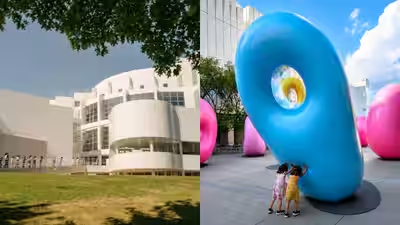

A century ago, a private home on Peachtree Street became the starting point for what would grow into one of the American South’s most significant cultural institutions. Today, the High Museum of Art stretches across more than 300,000 square feet, houses a collection of over 20,000 works and is nearing 50,000 members, reflecting a remarkable transformation that has unfolded alongside Atlanta itself.As the city celebrates the museum’s centennial, the High is marking the occasion not simply by revisiting its history, but by looking at how art can continue to shape the city’s cultural future.
From a Peachtree Street home to a major museum
According to the High Museum of Art, the institution was established in October 1926, when Mrs. Hattie High donated her stately Peachtree Street residence to Atlanta for use as a school and museum. The gesture came during a period when cultural leaders in the rapidly developing city were beginning to see the arts as an important part of public life.Over the following century, that original vision expanded dramatically. The High evolved from a modest regional institution into a major cultural hub for the Southeast, with collections spanning centuries, continents and mediums. Its holdings also include significant works by Southern artists, reflecting the region’s complex artistic history.The centennial programme builds on that legacy with new exhibitions, collection displays, acquisitions, partnerships and community initiatives.
A museum increasingly shaped by its city
The High’s centennial celebrations have taken art outside the traditional museum experience. Georgia Public Broadcasting (GPB) reported on the museum’s Centennial Community Block Party, where hundreds of people gathered for live music, food trucks and interactive art as Atlanta marked the milestone.The museum has also planned a series of events throughout October, including free admission, walking tours, teen programming and seasonal celebrations. These initiatives reflect a broader shift in how the High engages with its audience.According to the High Museum of Art, visitors of colour accounted for 55% of attendance in recent years, up from 15% in 2015. Younger audiences have also become an increasingly important part of the institution’s community, while free admission programmes and after-hours events have helped broaden access.That transformation is visible in the museum’s membership as well. GPB reports that membership has grown from fewer than 25,000 a decade ago to just a few hundred short of 50,000 today.
Reimagining the collection for the next century
The centennial year brings substantial changes inside the museum, too. The High is reinstalling its American and African Art galleries, moving towards thematic and material connections rather than purely chronological displays, states the GPB report.The new presentations will introduce significant acquisitions, including a rare Jacob Lawrence painting, a quilt by Carolyn L. Mazloomi and a work by Grandma Moses. The African galleries will feature works by artists including Ben Enwonwu, Ladi Kwali, Nike Okundaye, Bruce Onobrakpeya and Jimoh Akolo, also adds GPB report.The museum is also adding more than 200 works across photography, contemporary art and design, while a commemorative publication will trace the institution’s century-long journey.Beyond its walls, partnerships with MARTA, the Atlanta Beltline, Atlanta Hawks, UPS, Delta Air Lines and other organisations will bring art into different corners of the city.
The next 100 years
Atlanta’s cultural landscape has expanded considerably since the High first opened its doors. With the city now recognised as a major centre for music, film and visual arts, the museum enters its second century amid a broader creative renaissance.Its centennial, therefore, is more than a birthday. It is a marker of how far Atlanta’s cultural ambitions have travelled, from one donated home in 1926 to an institution increasingly defined by its collections, its audiences and its place in the life of the city.Images Courtesy: Wikipedia and Instagram/highmuseuamofart
Source link