Florida manatee habitat ruling sent back to court after US wildlife agency changed the definition of harm under endangered species law | World News

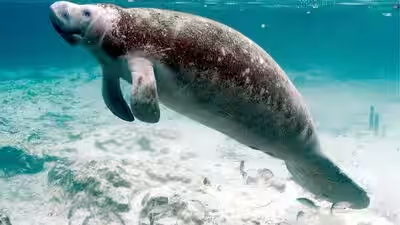

A US appeals court has sent a case over Florida’s wastewater regulations and manatee habitats back to a lower court after a federal rule changed the definition of harm under the Endangered Species Act. The lawsuit was brought by Bear Warriors United, Inc., against the Secretary of the Florida Department of Environmental Protection. The district court had ruled in favour of the Florida non-profit Bear Warriors United and issued a permanent injunction against the department. According to an opinion issued by the United States Court of Appeals for the Eleventh Circuit, the court vacated the judgment and injunction and asked the district court to assess the effect of the revised rule. The case concerns alleged damage to manatee habitats in the North Indian River Lagoon.
Why Bear Warriors United sued Florida’s environmental regulator
Bear Warriors United, Inc., sued the Secretary of the Florida Department of Environmental Protection, alleging that the department’s wastewater regulatory scheme damaged manatee habitats in the North Indian River Lagoon and ultimately harmed manatees in violation of the Endangered Species Act.The district court ruled in favour of Bear Warriors and issued the permanent injunction it had requested against the Florida Department of Environmental Protection. The department challenged the decision before the United States Court of Appeals for the Eleventh Circuit.The case concerned the relationship between wastewater regulation, damage to manatee habitats, and the federal law protecting endangered species.

PC: Wikipedia
The legal definition of harm that shaped the original ruling
The Endangered Species Act makes it unlawful for any person subject to US jurisdiction to take an endangered species within the United States or its territorial sea. The law defines the term ‘take’ as harassing, harming, pursuing, hunting, shooting, wounding, killing, trapping, capturing or collecting a protected species, as well as attempting such conduct.At the time of the district court’s judgment, regulations issued by the US Fish and Wildlife Service further defined harm as an act that actually kills or injures wildlife. The definition could include significant habitat modification or degradation when it killed or injured wildlife by significantly impairing essential behavioural patterns, including breeding, feeding or sheltering.The district court relied on this definition when concluding that Florida’s environmental regulator had violated the law.
Why did a change in federal rules send the manatee case back to court
While the appeal was pending, the US Fish and Wildlife Service issued a new final rule rescinding the definition of harm on which the district court had relied. The change was published in the Federal Register on 14 July 2026 under the title Rescinding the Definition of “Harm” Under the Endangered Species Act.The new rule changed the regulatory framework relevant to the district court’s decision. The appeals court determined that the case needed to return to the lower court for further consideration.The ruling did not establish a new finding that the Florida Department of Environmental Protection had complied with the Endangered Species Act. Instead, the court vacated the existing judgment and injunction and directed the district court to evaluate the effect of the new federal rule on the case.
Appeals court vacates ruling and sends manatee case back to lower court
The Eleventh Circuit considered two appeals filed by the Florida Department of Environmental Protection. The first appeal was dismissed because it had been filed before the district court entered the requested injunction. At that stage, the case did not have a final decision suitable for appeal.The court had jurisdiction over the second appeal, which challenged both the judgment and the injunction. It then vacated both decisions and remanded the case to the district court.The appeals court’s decision was issued on 8 October 2026. Both parties had agreed that the case would need to be remanded if a new rule was introduced.
Source link