
Hyderabad

A wild hurdle: Telangana govt’s crop switch runs into a monkey trap | Hyderabad News

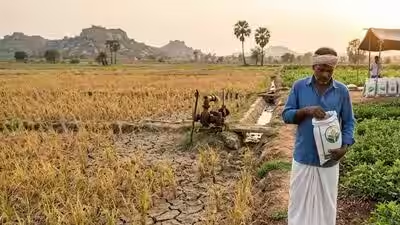
A wild hurdle: Telangana govt's crop switch runs into a monkey trap
The Telangana government has urged farmers to shift from paddy cultivation due to water scarcity concerns.

HYDERABAD: Even as the state govt urges farmers to avoid paddy amid concerns over water availability and the possibility of El Nino-induced rainfall deficiency, agriculture department expects cultivation to cover 70 lakh to 75 lakh acres during the coming Yasangi season.

The agriculture department projects an acreage of 70 lakh to 75 lakh acres for the forthcoming Yasangi season.

The agriculture department projects an acreage of 70 lakh to 75 lakh acres for the forthcoming Yasangi season.

The projected acreage is significantly lower than the 92 lakh acres cultivated during the previous Yasangi season, when irrigation water was readily available. Some experts, however, expect the area under cultivation to fall below 50 lakh acres this season, citing declining reservoir levels and depleted groundwater reserves.The wide gap between these estimates highlights the uncertainty over the Rabi season, with actual acreage depending on water availability, weather conditions and farmers’ crop choices.

Key highlights

  • Yasangi cultivation target: Agriculture department expects cultivation to cover 70 lakh to 75 lakh acres in Telangana during the coming Yasangi season.
  • Lower acreage projected: The estimate is significantly below the 92 lakh acres cultivated during the previous Yasangi season.
  • Experts warn of sharper decline: Some experts expect cultivated area to fall below 50 lakh acres due to declining reservoir levels and depleted groundwater reserves.
  • Water availability remains a concern: Actual acreage will depend on irrigation water, weather conditions and farmers’ crop choices.
  • Farmers urged to avoid paddy: The state govt is encouraging farmers to shift away from paddy amid water concerns and the possibility of El Niño-induced rainfall deficiency.
  • Focus on less water-intensive crops: The agriculture department plans to promote pulses, oilseeds, vegetables and other crops that require less water.
  • Rs 49 crore allocated for edible oils mission: Under the National Mission on Edible Oils, the department aims to promote groundnut, sunflower, sesame and safflower across 51,225 acres. It has prepared 28,680 quintals of seeds, with subsidies ranging from 50% to 75%, depending on the crop, seed variety and scheme conditions.

The agriculture department plans to distribute subsidised seeds and conduct awareness programmes to encourage farmers to grow pulses, oilseeds, vegetables and other crops requiring less water. Under the National Mission on Edible Oils, the department aims to promote groundnut, sunflower, sesame and safflower across 51,225 acres. It has prepared 28,680 quintals of seeds, with the Centre allocating 49 crore to Telangana under the programme. Depending on the crop, seed variety and scheme conditions, farmers may receive subsidies ranging from 50% to 75%.


Source link

Related Articles

Leave a Reply

Your email address will not be published. Required fields are marked *

Back to top button
×
newsnation.aanest.com
Logo
Date of Publish : 27 October 2026, 1:19 pm Digital Edition : News nation
A wild hurdle: Telangana govt’s crop switch runs into a monkey trap | Hyderabad News

The Telangana government has urged farmers to shift from paddy cultivation due to water scarcity concerns. HYDERABAD: Even as the state govt urges farmers to avoid paddy amid concerns over water availability and the possibility of El Nino-induced rainfall deficiency, agriculture department expects cultivation to cover 70 lakh to 75 lakh acres during the coming Yasangi season.The agriculture department projects an acreage of 70 lakh to 75 lakh acres for the forthcoming Yasangi season.The projected acreage is significantly lower than the 92 lakh acres cultivated during the previous Yasangi season, when irrigation water was readily available. Some experts, however, expect the area under cultivation to fall below 50 lakh acres this season, citing declining reservoir levels and depleted groundwater reserves.The wide gap between these estimates highlights the uncertainty over the Rabi season, with actual acreage depending on water availability, weather conditions and farmers' crop choices. Key highlightsYasangi cultivation target: Agriculture department expects cultivation to cover 70 lakh to 75 lakh acres in Telangana during the coming Yasangi season.Lower acreage projected: The estimate is significantly below the 92 lakh acres cultivated during the previous Yasangi season.Experts warn of sharper decline: Some experts expect cultivated area to fall below 50 lakh acres due to declining reservoir levels and depleted groundwater reserves.Water availability remains a concern: Actual acreage will depend on irrigation water, weather conditions and farmers’ crop choices.Farmers urged to avoid paddy: The state govt is encouraging farmers to shift away from paddy amid water concerns and the possibility of El Niño-induced rainfall deficiency.Focus on less water-intensive crops: The agriculture department plans to promote pulses, oilseeds, vegetables and other crops that require less water.Rs 49 crore allocated for edible oils mission: Under the National Mission on Edible Oils, the department aims to promote groundnut, sunflower, sesame and safflower across 51,225 acres. It has prepared 28,680 quintals of seeds, with subsidies ranging from 50% to 75%, depending on the crop, seed variety and scheme conditions.The agriculture department plans to distribute subsidised seeds and conduct awareness programmes to encourage farmers to grow pulses, oilseeds, vegetables and other crops requiring less water. Under the National Mission on Edible Oils, the department aims to promote groundnut, sunflower, sesame and safflower across 51,225 acres. It has prepared 28,680 quintals of seeds, with the Centre allocating 49 crore to Telangana under the programme. Depending on the crop, seed variety and scheme conditions, farmers may receive subsidies ranging from 50% to 75%.

Source link