
A British canal that opened in 1779 and was officially abandoned in 1954 is being restored; volunteers are preparing to lower an oil pipeline blocking boats as part of a 3.7-mile restoration phase

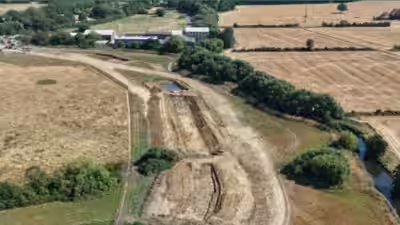

A British canal that once carried coal and goods through the industrial heart of the Cotswolds is inching closer to a new life, more than 250 years after it first opened and over seven decades after it was officially abandoned. Volunteers restoring the historic Stroudwater Navigation are preparing to remove an oil pipeline that currently blocks boats from passing through part of the waterway. The pipeline, which crosses the canal near Occupation Bridge at Fromebridge, is being relocated beneath the canal bed as part of a wider restoration project to reconnect the Stroudwater Navigation with Britain’s inland canal network.The work is part of Phase 1B of the Cotswold Canals restoration, a 3.7-mile (6km) stretch running between Saul Junction, on the Gloucester and Sharpness Canal, and the new Ocean Railway Bridge in Stonehouse. The Cotswold Canals Trust said the pipeline is an obstacle to navigation and that the new underground section will allow boats to pass once the wider restoration is complete.According to local news outlet Punchline Gloucester, volunteers have begun preparing the site for the specialist pipeline work, which is being carried out in partnership with pipeline owner Exolum. The existing pipe will be exposed, disconnected and removed before a replacement section is installed below the canal bed. The new pipeline will be tested before service is restored, with completion planned for early 2027.The canal’s history stretches back to the 18th century, when waterways were vital for moving heavy goods before the expansion of railways and road transport. The Stroudwater Navigation was built to link Stroud with the River Severn and support the region’s thriving woollen cloth industry. It opened in 1779 at a cost of £40,930, according to the canal’s historical record.The eight-mile waterway carried coal, timber, grain and stone, helping local mills and businesses transport goods more efficiently. It later connected with the Thames and Severn Canal at Wallbridge, forming part of a longer route between the River Severn and the River Thames.The arrival of railways in the 19th century gradually weakened the canal’s commercial importance. Competition from faster rail transport led to a decline in traffic, and the last toll on the Stroudwater Navigation was paid in 1941. Most of the canal was formally abandoned in 1954, when an Act of Parliament ended the right of navigation and allowed old bridges to be replaced with structures better suited to road traffic.Restoration efforts began gaining momentum in the 1970s, led by what eventually became the Cotswold Canals Trust. Today, the Stroudwater Navigation is being brought back to life through a partnership involving the trust, Stroud District Council and other local organisations.One of the most significant challenges is the so-called “Missing Mile”, a section of canal that was filled in during the early 1970s when the M5 motorway was built. After six years of planning and preparation, construction began on this stretch in summer 2026.The current work includes excavation of approximately 750 metres of new canal from John Robinson Lock towards the M5. Stroud District Council is acting as principal contractor, while volunteers are helping with excavation and other restoration tasks. The project also involves creating a new canal channel through the River Frome beneath the motorway, along with flood banks, a towpath and two new locks.In August, Stroud District Council announced that the River Frome had been diverted through an existing culvert beneath the M5 to enable construction. The Missing Mile project is expected to restore a blue-green corridor beneath the motorway, reconnecting communities and improving access to nature.The wider Phase 1B programme also includes reinstating bridges, restoring locks, moving utilities and building a new canal basin near the A38. The project received an additional £6.46 million in funding in November 2025, while the wider Cotswold Canals Connected programme has received £15.4 million from the National Lottery Heritage Fund.The partnership is working towards reopening the 3.7-mile Phase 1B stretch by 2029. Once completed, the restored canal will connect previously isolated sections of the Stroudwater Navigation to the Gloucester and Sharpness Canal, allowing boats to travel through the network again.
Source link