
World

Built in 1878, this 8,500-sq-ft Ohio jail held prisoners for 110 years; 148 years later, a developer bought it and may turn its cells into offices or a speakeasy

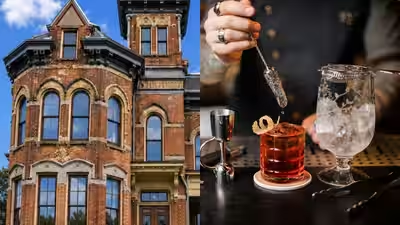
Built in 1878, this 8,500-sq-ft Ohio jail held prisoners for 110 years; 148 years later, a developer bought it and may turn its cells into offices or a speakeasy
Built in 1878 by Toledo architect David Gibbs, the building operated as a working jail until 1988. It was added to the National Register of Historic Places in 1990.

A former Ohio jail that spent more than a century behind bars is getting a very different future. The historic Jail and Sheriff’s Residence in Delaware, Ohio, has been sold by the Delaware County Historical Society to Westwood principal Andy Warnock, a Delaware native, states the Columbus Business First report. The 8,500-square-foot property, which once housed prisoners and the county sheriff’s family, is now being repositioned as a mixed-use property that could include private offices, creative space and an unusual nod to its Prohibition-era past. The sale follows more than five years of stewardship by the Historical Society, which purchased the building in 2021 and worked to make it accessible through tours, exhibitions and community events, adds the report.

A jail with more than 100 years of history

Built in 1878 by Toledo architect David Gibbs, the building operated as a working jail until 1988. It was added to the National Register of Historic Places in 1990. Its architecture is primarily Italianate, with Gothic Revival and Second Empire influences that reflect the period in which it was built. The property also offers a glimpse into changing attitudes toward incarceration in 19th-century Ohio. The jail contains 18 cells, with 16 originally intended for men and two for women. The sheriff lived on the premises with his family, while the sheriff’s wife, known as the Matron, had responsibilities that included preparing meals and caring for inmates. The arrangement was part of a broader prison-reform movement associated with Ohio Governor Rutherford B. Hayes, who was born and raised in Delaware.

From prison cells to private offices

The new plans are considerably more modern. Renovations to the property include HVAC and electrical improvements, along with updates to the rooms in the former residential section. Eight private offices are planned for that portion of the building, while shared amenities will include a kitchenette, conference room and lounge.Westwood Real Estate Co., the brokerage arm of Westwood Collective, plans to use part of the renovated space as it expands into the Delaware market and recruits residential and commercial real estate agents. Architects Dave Kerr and Cara Hering of DK Architects are working on the project.

A speakeasy behind bars?

Perhaps the most intriguing possibility involves the jail itself. The existing cells are expected to receive their own refresh during a second phase of renovation. Among the concepts being considered for the rear portion of the building are a Prohibition-era speakeasy and a maker’s space combined with an art gallery. It is a fittingly unconventional next act for a building that has already served as a jail, residence, museum and even wedding venue. In October 2025, the property hosted nine weddings during a Halloween-themed event organized by the City of Delaware and the Historical Society. Court employees dressed in costume while the entrance and cells were decorated for the occasion.

Preserving the past while moving forward

For Warnock, the project represents more than another real estate investment. As a Delaware native, he is bringing two decades of industry experience back to his hometown while taking on the challenge of giving one of its most recognizable buildings a useful new life. The goal now is to preserve the character that makes the old jail special while allowing the property to function in a very different era. If the plans come together, the building’s cells may soon hold businesses, artists or late-night patrons rather than prisoners, an unusual transformation for a landmark that has witnessed nearly 150 years of Delaware history.Image Courtesy: istock and Columbus Business First


Source link

Related Articles

Leave a Reply

Your email address will not be published. Required fields are marked *

Back to top button
×
newsnation.aanest.com
Logo
Date of Publish : 14 September 2026, 2:25 pm Digital Edition : News nation
Built in 1878, this 8,500-sq-ft Ohio jail held prisoners for 110 years; 148 years later, a developer bought it and may turn its cells into offices or a speakeasy

Built in 1878 by Toledo architect David Gibbs, the building operated as a working jail until 1988. It was added to the National Register of Historic Places in 1990. A former Ohio jail that spent more than a century behind bars is getting a very different future. The historic Jail and Sheriff’s Residence in Delaware, Ohio, has been sold by the Delaware County Historical Society to Westwood principal Andy Warnock, a Delaware native, states the Columbus Business First report. The 8,500-square-foot property, which once housed prisoners and the county sheriff’s family, is now being repositioned as a mixed-use property that could include private offices, creative space and an unusual nod to its Prohibition-era past. The sale follows more than five years of stewardship by the Historical Society, which purchased the building in 2021 and worked to make it accessible through tours, exhibitions and community events, adds the report.A jail with more than 100 years of historyBuilt in 1878 by Toledo architect David Gibbs, the building operated as a working jail until 1988. It was added to the National Register of Historic Places in 1990. Its architecture is primarily Italianate, with Gothic Revival and Second Empire influences that reflect the period in which it was built. The property also offers a glimpse into changing attitudes toward incarceration in 19th-century Ohio. The jail contains 18 cells, with 16 originally intended for men and two for women. The sheriff lived on the premises with his family, while the sheriff’s wife, known as the Matron, had responsibilities that included preparing meals and caring for inmates. The arrangement was part of a broader prison-reform movement associated with Ohio Governor Rutherford B. Hayes, who was born and raised in Delaware.From prison cells to private officesThe new plans are considerably more modern. Renovations to the property include HVAC and electrical improvements, along with updates to the rooms in the former residential section. Eight private offices are planned for that portion of the building, while shared amenities will include a kitchenette, conference room and lounge.Westwood Real Estate Co., the brokerage arm of Westwood Collective, plans to use part of the renovated space as it expands into the Delaware market and recruits residential and commercial real estate agents. Architects Dave Kerr and Cara Hering of DK Architects are working on the project.A speakeasy behind bars?Perhaps the most intriguing possibility involves the jail itself. The existing cells are expected to receive their own refresh during a second phase of renovation. Among the concepts being considered for the rear portion of the building are a Prohibition-era speakeasy and a maker’s space combined with an art gallery. It is a fittingly unconventional next act for a building that has already served as a jail, residence, museum and even wedding venue. In October 2025, the property hosted nine weddings during a Halloween-themed event organized by the City of Delaware and the Historical Society. Court employees dressed in costume while the entrance and cells were decorated for the occasion.Preserving the past while moving forwardFor Warnock, the project represents more than another real estate investment. As a Delaware native, he is bringing two decades of industry experience back to his hometown while taking on the challenge of giving one of its most recognizable buildings a useful new life. The goal now is to preserve the character that makes the old jail special while allowing the property to function in a very different era. If the plans come together, the building's cells may soon hold businesses, artists or late-night patrons rather than prisoners, an unusual transformation for a landmark that has witnessed nearly 150 years of Delaware history.Image Courtesy: istock and Columbus Business First

Source link