
World

Volunteers spent 16 years restoring a damaged Arizona desert; 133 native plant species now thrive where invasive grass once ruled |

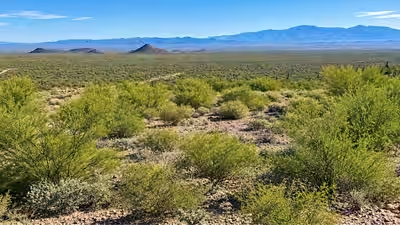
Volunteers spent 16 years restoring a damaged Arizona desert; 133 native plant species now thrive where invasive grass once ruled

An 18-acre stretch of Arizona desert that was once heavily disturbed and overrun by invasive buffelgrass has been transformed through 16 years of sustained restoration work by volunteers and conservation partners. The Waterman Restoration Project, located on Bureau of Land Management land within Ironwood Forest National Monument near Marana, began in 2010 after earlier attempts to control the invasive grass failed to produce lasting results. Volunteers helped reintroduce native trees, slow erosion, capture rainwater and suppress buffelgrass across the damaged site. The results have become increasingly visible over the years. The Arizona Native Plant Society now records 133 native plant species at the site, alongside more than 2,000 established native trees. Restoration continues, with volunteers still working to improve the desert habitat.

16 years of restoring an 18-acre Arizona desert

The Waterman Restoration Project occupies an 18-acre desert bajada in southern Arizona, an area historically characterised by native Sonoran Desert vegetation. The site suffered major disturbance in 1981 when mining entrepreneur Harlow Jones bulldozed the land, including an approximately one-kilometre airstrip, according to an Arizona Native Plant Society technical paper. Jones later planted buffelgrass on the property, and by the early 2000s the disturbed area had become heavily dominated by the invasive grass. The Bureau of Land Management subsequently removed the unauthorised occupant and began efforts to address the degraded landscape. Sierra Club volunteers manually removed buffelgrass between 2005 and 2009, while BLM contractors also used herbicide. These measures reduced the grass temporarily but did not stop its return. The Arizona Native Plant Society began sustained restoration at the site in 2010.

Native trees helped rebuild the damaged desert

A major part of the restoration involved bringing back native vegetation without creating a conventional irrigated planting scheme. In 2010, BLM heavy equipment was used to reshape parts of the 18-acre site, fill erosion channels and create terraces that could slow and spread stormwater. Volunteers collected seeds from nearby native plants, including whitethorn acacia, foothill palo verde and ironwood, before planting them across the site. More than 2,000 tree seedlings emerged by September that year, and more than 2,000 native desert trees had become established by 2016. The trees were grown from locally collected seed and were not irrigated. Volunteers also spread more than 300 truckloads of tree branches over bare ground. The woody material helped shade the soil, retain residual moisture and create conditions in which native plants could establish. The restoration has since expanded beyond the original tree planting effort, with the Arizona Native Plant Society recording 133 native plant species at the site.

Native trees helped rebuild the damaged desert<br>

Water harvesting helped the desert hold on to rain

Rainfall is highly variable in the Sonoran Desert, making the ability to slow and retain stormwater particularly important for restoration. Volunteers have constructed more than 150 simple water-harvesting structures at Waterman, including one-rock dams and rocked waterways designed to reduce the speed of runoff and spread water across the landscape. The project also used a backhoe to create water-retention dimples across about two acres of compacted gravel, giving rainfall more opportunity to soak into the ground rather than rapidly flowing away. Native plants and seeds began emerging from these areas within a year. The approach is based largely on passive water harvesting rather than regular irrigation. By modifying how water moves across the damaged landscape, the project has created better conditions for native vegetation to survive and spread. Volunteers continue to repair and add water-harvesting features as part of the long-term restoration work.

Discarded Christmas trees became an erosion-control tool

One of the project’s more unusual interventions came after a major storm in September 2022. About 3.5 inches of rain fell in roughly three hours, carving a channel approximately 500 feet long, three feet wide and three feet deep through the upper part of the restoration area. Rather than relying solely on conventional infrastructure, volunteers began packing discarded Christmas trees into the channel in early 2023. The trees were placed end-to-end and packed into the trench after their above-ground dried growth was removed. Arizona Native Plant Society monitoring found no runoff in the channel during rainfall events exceeding 0.25 inches during 2023. Another 50 Christmas trees were added during the winter of 2024, with further additions reported in 2025 and 2026. The channel has gradually begun filling in and developing a more meandering form. The technique is a site-specific restoration measure intended to slow water and trap sediment, rather than evidence that discarded Christmas trees are universally suitable for erosion control.

Buffelgrass declined as native habitat returned

Controlling buffelgrass has remained an essential part of the project because the invasive grass can outcompete native desert vegetation and increase wildfire risk in Sonoran Desert ecosystems. During the first year of sustained restoration, three to five volunteers carried out spot spraying several times a week between August and October. The amount of herbicide used fell sharply as the infestation declined, from about 234 gallons in 2010 to 74 gallons in 2011, 45 gallons in 2012 and 10 gallons in 2013. Since 2015, annual use has generally been only about three to five gallons. The Arizona Native Plant Society and BLM report that fewer than 150 buffelgrass plants have emerged at the site in a season since 2022. Meanwhile, the restored landscape now supports 133 recorded native plant species and more than 2,000 established native trees. More than 75 salvaged saguaros have also been transplanted onto the site since 2021. More than 7,000 volunteer hours have contributed to the project, and restoration remains ongoing rather than being considered finished.


Source link

Related Articles

Leave a Reply

Your email address will not be published. Required fields are marked *

Back to top button
×
newsnation.aanest.com
Logo
Date of Publish : 10 September 2026, 1:54 pm Digital Edition : News nation
Volunteers spent 16 years restoring a damaged Arizona desert; 133 native plant species now thrive where invasive grass once ruled |

An 18-acre stretch of Arizona desert that was once heavily disturbed and overrun by invasive buffelgrass has been transformed through 16 years of sustained restoration work by volunteers and conservation partners. The Waterman Restoration Project, located on Bureau of Land Management land within Ironwood Forest National Monument near Marana, began in 2010 after earlier attempts to control the invasive grass failed to produce lasting results. Volunteers helped reintroduce native trees, slow erosion, capture rainwater and suppress buffelgrass across the damaged site. The results have become increasingly visible over the years. The Arizona Native Plant Society now records 133 native plant species at the site, alongside more than 2,000 established native trees. Restoration continues, with volunteers still working to improve the desert habitat.16 years of restoring an 18-acre Arizona desertThe Waterman Restoration Project occupies an 18-acre desert bajada in southern Arizona, an area historically characterised by native Sonoran Desert vegetation. The site suffered major disturbance in 1981 when mining entrepreneur Harlow Jones bulldozed the land, including an approximately one-kilometre airstrip, according to an Arizona Native Plant Society technical paper. Jones later planted buffelgrass on the property, and by the early 2000s the disturbed area had become heavily dominated by the invasive grass. The Bureau of Land Management subsequently removed the unauthorised occupant and began efforts to address the degraded landscape. Sierra Club volunteers manually removed buffelgrass between 2005 and 2009, while BLM contractors also used herbicide. These measures reduced the grass temporarily but did not stop its return. The Arizona Native Plant Society began sustained restoration at the site in 2010.Native trees helped rebuild the damaged desertA major part of the restoration involved bringing back native vegetation without creating a conventional irrigated planting scheme. In 2010, BLM heavy equipment was used to reshape parts of the 18-acre site, fill erosion channels and create terraces that could slow and spread stormwater. Volunteers collected seeds from nearby native plants, including whitethorn acacia, foothill palo verde and ironwood, before planting them across the site. More than 2,000 tree seedlings emerged by September that year, and more than 2,000 native desert trees had become established by 2016. The trees were grown from locally collected seed and were not irrigated. Volunteers also spread more than 300 truckloads of tree branches over bare ground. The woody material helped shade the soil, retain residual moisture and create conditions in which native plants could establish. The restoration has since expanded beyond the original tree planting effort, with the Arizona Native Plant Society recording 133 native plant species at the site.Water harvesting helped the desert hold on to rainRainfall is highly variable in the Sonoran Desert, making the ability to slow and retain stormwater particularly important for restoration. Volunteers have constructed more than 150 simple water-harvesting structures at Waterman, including one-rock dams and rocked waterways designed to reduce the speed of runoff and spread water across the landscape. The project also used a backhoe to create water-retention dimples across about two acres of compacted gravel, giving rainfall more opportunity to soak into the ground rather than rapidly flowing away. Native plants and seeds began emerging from these areas within a year. The approach is based largely on passive water harvesting rather than regular irrigation. By modifying how water moves across the damaged landscape, the project has created better conditions for native vegetation to survive and spread. Volunteers continue to repair and add water-harvesting features as part of the long-term restoration work.Discarded Christmas trees became an erosion-control toolOne of the project's more unusual interventions came after a major storm in September 2022. About 3.5 inches of rain fell in roughly three hours, carving a channel approximately 500 feet long, three feet wide and three feet deep through the upper part of the restoration area. Rather than relying solely on conventional infrastructure, volunteers began packing discarded Christmas trees into the channel in early 2023. The trees were placed end-to-end and packed into the trench after their above-ground dried growth was removed. Arizona Native Plant Society monitoring found no runoff in the channel during rainfall events exceeding 0.25 inches during 2023. Another 50 Christmas trees were added during the winter of 2024, with further additions reported in 2025 and 2026. The channel has gradually begun filling in and developing a more meandering form. The technique is a site-specific restoration measure intended to slow water and trap sediment, rather than evidence that discarded Christmas trees are universally suitable for erosion control.Buffelgrass declined as native habitat returnedControlling buffelgrass has remained an essential part of the project because the invasive grass can outcompete native desert vegetation and increase wildfire risk in Sonoran Desert ecosystems. During the first year of sustained restoration, three to five volunteers carried out spot spraying several times a week between August and October. The amount of herbicide used fell sharply as the infestation declined, from about 234 gallons in 2010 to 74 gallons in 2011, 45 gallons in 2012 and 10 gallons in 2013. Since 2015, annual use has generally been only about three to five gallons. The Arizona Native Plant Society and BLM report that fewer than 150 buffelgrass plants have emerged at the site in a season since 2022. Meanwhile, the restored landscape now supports 133 recorded native plant species and more than 2,000 established native trees. More than 75 salvaged saguaros have also been transplanted onto the site since 2021. More than 7,000 volunteer hours have contributed to the project, and restoration remains ongoing rather than being considered finished.

Source link