The Trump administration has proposed selling parts of America’s federal land holdings to states, tribes and local governments under a new five-year plan, but has not identified which parcels could be sold

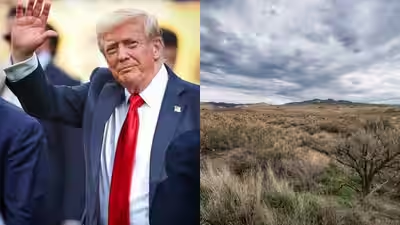

America’s vast public landscapes, long regarded as a shared national inheritance, are once again at the centre of a political battle over who should control the country’s natural resources. President Donald Trump‘s administration has outlined a proposal that could reshape the future of federally managed land, opening the door to sales and transfers to states, tribal governments and local authorities. While officials have presented the move as an effort to improve efficiency and redirect resources towards conservation, the absence of clearly identified properties and disposal criteria has raised concerns among conservationists, outdoor enthusiasts and lawmakers.A new direction for federal land managementAccording to The Washington Post, the proposal forms part of a five-year strategic plan released by the Department of the Interior, outlining the agency’s priorities for fiscal years 2026 through 2030. The 28-page document identifies four central objectives, including reducing the size of the federal estate by offering certain properties for purchase to states, local governments and tribes.The department has argued that disposing of lands considered less nationally significant would allow it to concentrate resources on properties of greater federal importance. However, neither the specific parcels under consideration nor the geographical scope of potential sales has been disclosed. The administration has also not explained what qualifies a property as nationally significant, the report adds.According to The Washington Post, the Interior Department oversees more than 750,000 square miles of land, an area larger than Texas and California combined, alongside extensive underground mineral resources. Much of this estate is concentrated in Western states, where federal ownership remains particularly substantial. Nevada, for instance, has nearly 80 per cent of its territory under federal control.Under the proposed arrangement, some proceeds from land sales would be returned to purchasing entities for conservation initiatives elsewhere, potentially supporting improved recreational access while reducing the government’s long-term management expenses.Conservationists raise access concernsThe proposal has drawn criticism from outdoor recreation groups concerned that transferring federal properties to state authorities could eventually restrict public access. Outdoor Life reports that hunting and fishing advocates are particularly worried about losing access to lesser-known Bureau of Land Management properties that remain important recreational destinations.The distinction between federal and state ownership is significant. State-managed properties often operate under different access regulations, with restrictions on camping, driving and recreational activities. Consequently, a transfer could make certain landscapes less accessible even if they remain publicly owned.Outdoor Life also highlights concerns about the department’s proposed workforce consolidation. The strategic plan promises further reductions across federal agencies, including the National Park Service, Bureau of Land Management and US Fish and Wildlife Service. These organizations have long struggled with staff and funding, raising concerns about their ability to meet current needs.The only areas identified for potential staffing expansion are law enforcement and public safety, rather than conservation operations.Legal, political oppositionBipartisan opposition exists to the proposal. The former Trump interior secretary told The Washington Post that Ryan Zinke still opposes selling public lands. He has indicated that he would vote against legislation advancing such a move.Democratic lawmakers have also pledged to resist the initiative, arguing that federally owned landscapes should remain protected from commercial interests. Their opposition follows earlier unsuccessful attempts by some Western lawmakers to sell large portions of federal land, including a proposal by Utah Republican Senator Mike Lee involving more than two million acres.Legal restrictions could present another obstacle. Natural resources law professor Mark Squillace told The Washington Post that federal legislation places significant limits on property disposals. Protected lands cannot simply be sold, while other parcels must satisfy specific requirements, such as being uneconomical to manage or supporting important public objectives, including community expansion and economic development.Wider changes to public land policyThe strategic plan extends beyond property sales. Outdoor Life reports that it also prioritises domestic energy production, critical mineral development, artificial intelligence infrastructure and a major restructuring of federal wildfire management through a new US Wildland Fire Service.Separately, the Bureau of Land Management has proposed changes to its resource management planning process. The proposed rule would eliminate the existing 90-day public comment period for major plans and remove the requirement to release draft plans for public feedback, potentially replacing these processes with public meetings. The proposal remains open for public comments until January 11, 2027.These changes could have considerable implications because BLM resource management plans help determine where activities such as mining, drilling and grazing are permitted, as well as which properties may be considered for disposal.Although the five-year strategy establishes the administration’s direction, it does not guarantee that the proposed land transfers will happen. Congressional approval and existing federal protections remain important considerations. For now, with no specific parcels identified, the proposal has opened a wider debate about whether America’s public lands should primarily serve economic development, conservation or the millions of people who rely on them for recreation.Images Courtesy: istock and Instagram
Source link