World

Texas is offering $100 for every invasive black carp caught; the fish has not yet been found in the state but is dangerously close | World News

Texas is offering $100 for every invasive black carp caught; the fish has not yet been found in the state but is dangerously close

Texas is offering $100 for every invasive black carp caught and submitted under a multi-state programme designed to improve understanding of the species as it spreads through the Mississippi River basin. The fish has been captured in waters shared by eight states, including Arkansas, Louisiana, Missouri, and Oklahoma, neighbouring river systems, while Texas is among 27 state agencies taking part in the bounty programme. According to the Invasive Carp Regional Coordinating Committee (ICRCC), participants can receive $100 per individual black carp, with up to 10 reimbursements available each month. The programme is intended to collect specimens for research because comparatively little is known about black carp in North America. The fish live near riverbeds and feed mainly on mussels and snails, raising particular concern for freshwater species. Fishers who suspect they have caught one are urged to follow the “Keep, Cool, Call” procedure and contact state fisheries officials immediately.

Texas tracks invasive black carp near its waters

Black carp have been captured in shared waters involving eight states: Arkansas, Illinois, Indiana, Kentucky, Louisiana, Mississippi, Missouri and Tennessee. The captures have occurred primarily in sections of the lower Mississippi River, Illinois River, and Ohio River. Texas is not included among the states where captures have been recorded under the programme.The species’ presence in neighbouring parts of the Mississippi River basin has made monitoring and early detection important for states participating in the programme. The ICRCC’s bounty programme covers the Mississippi River basin and its sub-basins, with Texas listed among the participating states. The committee says scientists and fisheries managers are collecting information on black carp age, growth, distribution and abundance, while research is also examining their diet, reproduction, habitat use and movements.

Black carp threaten Texas mussels

Black carp live close to the riverbed and feed mainly on mussels and snails. The committee identifies freshwater mussels as the most imperilled group of animals in North America, making information about black carp distribution and feeding behaviour important to fisheries research.Texas already classifies black carp as an exotic species that is harmful or potentially harmful. Texas Parks and Wildlife Department lists black carp, of the genus Mylopharyngodon, among prohibited exotic aquatic species. It states that possession of listed exotic aquatic species without a permit is illegal in Texas.

Black carp threaten Texas mussels

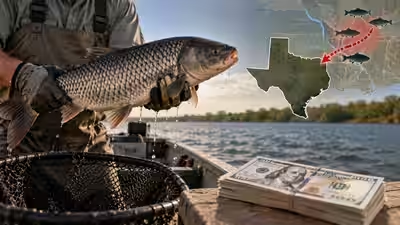
Image AI generated

What fishers should do after catching a suspected black carp

The ICRCC advises fishers who believe they have caught a black carp to follow its “Keep, Cool, Call” procedure. The fish should be retained, the capture location recorded, and photographs taken of the head, mouth and total length. Details including the fishing gear, bait and, where possible, habitat conditions such as substrate, depth, water temperature and flow should also be recorded.The fish should then be humanely killed and kept cold on ice or in a freezer. Live possession of black carp is illegal, as the species is listed as injurious under the Lacey Act. The appropriate state agency should be contacted immediately with photographs, contact details, the capture location and information about the fishing gear and habitat.Accurate identification is important because several other fish can resemble black carp. Black carp have a long, narrow head, dark external colouring ranging from black to blue-grey and a nearly straight lateral line with a slight curve in the body. Grass carp, common carp, blue suckers and buffalo species can also be mistaken for black carp, so the agency advises fishers to use identification information before reporting a suspected capture.


Source link

Related Articles

Leave a Reply

Your email address will not be published. Required fields are marked *

Back to top button
×
newsnation.aanest.com
Logo
Date of Publish : 08 September 2026, 6:23 pm Digital Edition : News nation
Texas is offering $100 for every invasive black carp caught; the fish has not yet been found in the state but is dangerously close | World News

Texas is offering $100 for every invasive black carp caught and submitted under a multi-state programme designed to improve understanding of the species as it spreads through the Mississippi River basin. The fish has been captured in waters shared by eight states, including Arkansas, Louisiana, Missouri, and Oklahoma, neighbouring river systems, while Texas is among 27 state agencies taking part in the bounty programme. According to the Invasive Carp Regional Coordinating Committee (ICRCC), participants can receive $100 per individual black carp, with up to 10 reimbursements available each month. The programme is intended to collect specimens for research because comparatively little is known about black carp in North America. The fish live near riverbeds and feed mainly on mussels and snails, raising particular concern for freshwater species. Fishers who suspect they have caught one are urged to follow the “Keep, Cool, Call” procedure and contact state fisheries officials immediately.Texas tracks invasive black carp near its watersBlack carp have been captured in shared waters involving eight states: Arkansas, Illinois, Indiana, Kentucky, Louisiana, Mississippi, Missouri and Tennessee. The captures have occurred primarily in sections of the lower Mississippi River, Illinois River, and Ohio River. Texas is not included among the states where captures have been recorded under the programme.The species' presence in neighbouring parts of the Mississippi River basin has made monitoring and early detection important for states participating in the programme. The ICRCC's bounty programme covers the Mississippi River basin and its sub-basins, with Texas listed among the participating states. The committee says scientists and fisheries managers are collecting information on black carp age, growth, distribution and abundance, while research is also examining their diet, reproduction, habitat use and movements.Black carp threaten Texas musselsBlack carp live close to the riverbed and feed mainly on mussels and snails. The committee identifies freshwater mussels as the most imperilled group of animals in North America, making information about black carp distribution and feeding behaviour important to fisheries research.Texas already classifies black carp as an exotic species that is harmful or potentially harmful. Texas Parks and Wildlife Department lists black carp, of the genus Mylopharyngodon, among prohibited exotic aquatic species. It states that possession of listed exotic aquatic species without a permit is illegal in Texas.Image AI generatedWhat fishers should do after catching a suspected black carpThe ICRCC advises fishers who believe they have caught a black carp to follow its “Keep, Cool, Call” procedure. The fish should be retained, the capture location recorded, and photographs taken of the head, mouth and total length. Details including the fishing gear, bait and, where possible, habitat conditions such as substrate, depth, water temperature and flow should also be recorded.The fish should then be humanely killed and kept cold on ice or in a freezer. Live possession of black carp is illegal, as the species is listed as injurious under the Lacey Act. The appropriate state agency should be contacted immediately with photographs, contact details, the capture location and information about the fishing gear and habitat.Accurate identification is important because several other fish can resemble black carp. Black carp have a long, narrow head, dark external colouring ranging from black to blue-grey and a nearly straight lateral line with a slight curve in the body. Grass carp, common carp, blue suckers and buffalo species can also be mistaken for black carp, so the agency advises fishers to use identification information before reporting a suspected capture.

Source link