World

Noah’s Ark mystery: 3D-printed model of 157-metre Turkey formation created using radar data after researchers drill over 60 feet underground; geologists say it may be natural

Noah’s Ark mystery: 3D-printed model of 157-metre Turkey formation created using radar data after researchers drill over 60 feet underground; geologists say it may be natural
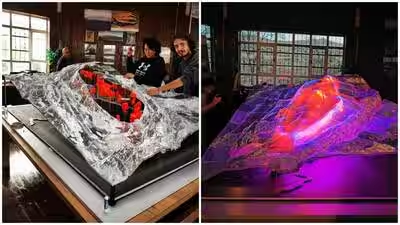
Researchers create a 3D-printed model of Turkey’s Durupınar formation using ground-penetrating radar data. (Photo: Noah’s Ark Scans)

A team investigating a site in eastern Turkey believed by some to be the location of Noah’s Ark has created a 3D-printed model of the boat-shaped Durupınar formation using ground-penetrating radar data. Located around 29 kilometres south of Mount Ararat, the 157-metre-long formation is being examined by the Noah’s Ark Scans team, which recently completed the first phase of its field investigation, including drilling more than 60 feet beneath the site. Researchers have collected samples for laboratory analysis to look for possible evidence of human activity or decayed wood, although many geologists maintain that the formation is a natural geological feature.The Noah’s Ark Scans team enlisted architectural mapping company FieldTech to create a scale model showing how the formation currently lies beneath the ground. The model was developed using ground-penetrating radar data collected at the site, along with geophysical analysis.

The 157-metre-long boat-shaped formation lies around 29 kilometres south of Mount Ararat.

The 157-metre-long boat-shaped formation lies around 29 kilometres south of Mount Ararat. (Photo: Noah’s Ark Scans)

In a social media post, FieldTech explained that the red bubbles shown in the model represent underground voids identified through geophysical analysis. The company clarified that its visualisation was based on scientific outputs, including topographical scans and geophysical results.The model offers a visual representation of the features detected beneath the surface, but it does not, by itself, establish that the formation is a man-made structure or that it contains the remains of a biblical vessel.

Researchers complete first phase of investigation

The team recently completed the first phase of its field investigation at the Durupınar formation, which included drilling more than 60 feet underground. Samples collected during the process are expected to undergo laboratory analysis to determine whether they contain evidence of human activity or organic material that could point to the presence of decayed wood.Andrew Jones, vice-president of the Noah’s Ark Research Project, told Fox News that the next stage would involve testing the samples.

The Noah’s Ark Scans team has completed its first investigation phase after drilling more than 60 feet underground.

The Noah’s Ark Scans team has completed its first investigation phase after drilling more than 60 feet underground. (Photo: Noah’s Ark Scans)

“That’s what we’ll be testing this winter. Just to see if we can find any type of man-made activity or something that suggests decayed wood,” Jones said.The findings from the laboratory tests could help researchers assess the nature of the material beneath the formation. However, any claims about the site’s origins would require evidence that can be independently examined and verified.

Why the Durupınar formation is linked to Noah’s Ark

The Durupınar formation is a boat-shaped geological feature in eastern Turkey, approximately 29 kilometres south of Mount Ararat. Some Ark enthusiasts believe its shape and dimensions correspond to descriptions of Noah’s Ark in the Book of Genesis.The Noah’s Ark Scans team describes the formation as a 157-metre-long ship structure that it believes matches the biblical account in Genesis 6. The claim remains disputed, and the formation’s resemblance to a boat is not proof that it was built by humans.The biblical story of Noah’s Ark describes a vessel constructed by Noah to survive a great flood. For centuries, explorers and religious researchers have searched for physical evidence of the Ark, with Mount Ararat and the surrounding region attracting particular attention.

Claims about evolution draw attention

Geologists maintain that the Durupınar formation is a natural geological feature, despite claims linking it to Noah’s Ark.

Geologists maintain that the Durupınar formation is a natural geological feature, despite claims linking it to Noah’s Ark. (Photo: Noah’s Ark Scans)

The investigation has also attracted attention because of comments made by Lauren Witzke, the team’s director of marketing and fundraising. In September, Witzke suggested that the findings could challenge established scientific explanations of evolution.Posting from the Durupınar site on September 22, she wrote, “Core drilling has begun and the Big Bang Evolutionists are already on damage control mode.”She further claimed that the findings could lead to university curricula being rewritten and Darwinism being dismantled, describing the site as the place “where creation began anew”.These statements reflect Witzke’s views and expectations about the investigation. No findings described so far establish that evolution is disproved or that the formation represents the remains of Noah’s Ark.

Geologists question the Ark theory

Despite renewed interest in the site, many geologists consider the Durupınar formation a natural geological feature rather than a man-made vessel. A boat-like outline alone cannot establish the presence of a ship, and underground anomalies detected through radar require further investigation before their origins can be determined.The samples collected during drilling and the results of subsequent laboratory tests may provide additional information about the formation’s composition. Until those results are available and independently assessed, the claim that the site contains Noah’s Ark remains unproven.For now, the 3D-printed model offers a visualisation of the terrain and underground features identified by the research team. Whether the formation contains evidence of a man-made structure will depend on the findings of further scientific analysis.


Source link

Related Articles

Leave a Reply

Your email address will not be published. Required fields are marked *

Back to top button
×
newsnation.aanest.com
Logo
Date of Publish : 14 October 2026, 12:44 pm Digital Edition : News nation
Noah’s Ark mystery: 3D-printed model of 157-metre Turkey formation created using radar data after researchers drill over 60 feet underground; geologists say it may be natural

Researchers create a 3D-printed model of Turkey’s Durupınar formation using ground-penetrating radar data. (Photo: Noah's Ark Scans) A team investigating a site in eastern Turkey believed by some to be the location of Noah’s Ark has created a 3D-printed model of the boat-shaped Durupınar formation using ground-penetrating radar data. Located around 29 kilometres south of Mount Ararat, the 157-metre-long formation is being examined by the Noah’s Ark Scans team, which recently completed the first phase of its field investigation, including drilling more than 60 feet beneath the site. Researchers have collected samples for laboratory analysis to look for possible evidence of human activity or decayed wood, although many geologists maintain that the formation is a natural geological feature.The Noah’s Ark Scans team enlisted architectural mapping company FieldTech to create a scale model showing how the formation currently lies beneath the ground. The model was developed using ground-penetrating radar data collected at the site, along with geophysical analysis.The 157-metre-long boat-shaped formation lies around 29 kilometres south of Mount Ararat. (Photo: Noah's Ark Scans)In a social media post, FieldTech explained that the red bubbles shown in the model represent underground voids identified through geophysical analysis. The company clarified that its visualisation was based on scientific outputs, including topographical scans and geophysical results.The model offers a visual representation of the features detected beneath the surface, but it does not, by itself, establish that the formation is a man-made structure or that it contains the remains of a biblical vessel.Researchers complete first phase of investigationThe team recently completed the first phase of its field investigation at the Durupınar formation, which included drilling more than 60 feet underground. Samples collected during the process are expected to undergo laboratory analysis to determine whether they contain evidence of human activity or organic material that could point to the presence of decayed wood.Andrew Jones, vice-president of the Noah’s Ark Research Project, told Fox News that the next stage would involve testing the samples.The Noah’s Ark Scans team has completed its first investigation phase after drilling more than 60 feet underground. (Photo: Noah's Ark Scans)“That’s what we’ll be testing this winter. Just to see if we can find any type of man-made activity or something that suggests decayed wood,” Jones said.The findings from the laboratory tests could help researchers assess the nature of the material beneath the formation. However, any claims about the site's origins would require evidence that can be independently examined and verified.Why the Durupınar formation is linked to Noah’s ArkThe Durupınar formation is a boat-shaped geological feature in eastern Turkey, approximately 29 kilometres south of Mount Ararat. Some Ark enthusiasts believe its shape and dimensions correspond to descriptions of Noah’s Ark in the Book of Genesis.The Noah’s Ark Scans team describes the formation as a 157-metre-long ship structure that it believes matches the biblical account in Genesis 6. The claim remains disputed, and the formation’s resemblance to a boat is not proof that it was built by humans.The biblical story of Noah’s Ark describes a vessel constructed by Noah to survive a great flood. For centuries, explorers and religious researchers have searched for physical evidence of the Ark, with Mount Ararat and the surrounding region attracting particular attention.Claims about evolution draw attentionGeologists maintain that the Durupınar formation is a natural geological feature, despite claims linking it to Noah’s Ark. (Photo: Noah's Ark Scans)The investigation has also attracted attention because of comments made by Lauren Witzke, the team’s director of marketing and fundraising. In September, Witzke suggested that the findings could challenge established scientific explanations of evolution.Posting from the Durupınar site on September 22, she wrote, “Core drilling has begun and the Big Bang Evolutionists are already on damage control mode.”She further claimed that the findings could lead to university curricula being rewritten and Darwinism being dismantled, describing the site as the place “where creation began anew”.These statements reflect Witzke’s views and expectations about the investigation. No findings described so far establish that evolution is disproved or that the formation represents the remains of Noah’s Ark.Geologists question the Ark theoryDespite renewed interest in the site, many geologists consider the Durupınar formation a natural geological feature rather than a man-made vessel. A boat-like outline alone cannot establish the presence of a ship, and underground anomalies detected through radar require further investigation before their origins can be determined.The samples collected during drilling and the results of subsequent laboratory tests may provide additional information about the formation’s composition. Until those results are available and independently assessed, the claim that the site contains Noah’s Ark remains unproven.For now, the 3D-printed model offers a visualisation of the terrain and underground features identified by the research team. Whether the formation contains evidence of a man-made structure will depend on the findings of further scientific analysis.

Source link