World

In 1927, Henry Ford took over a stretch of the Amazon rainforest to build an American town inside it; in 1945 he was forced to sell it for $250,000

In 1927, Henry Ford took over a stretch of the Amazon rainforest to build an American town inside it; in 1945 he was forced to sell it for $250,000

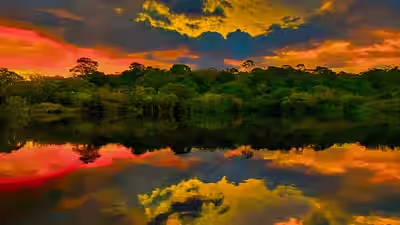
Imagine a Midwestern town with a swimming pool, a golf course and a movie theatre located in the middle of the Amazon rainforest, several hundred kilometres upriver from anything resembling a city. While it might sound like something from a set of a movie, it’s not. In 1927, Henry Ford, the legend who put America on wheels began to look for land in Brazil to build his own version of small-town Michigan in the depths of the jungle. He finally found it in 1928 and named it Fordlandia. While the town had everything one would need, what it never had, across the seventeen years of trying, was enough rubber to be worth it, as per a report by Science Blog.

Why Ford wanted his own rubber

Rubber was the choke point of the car business. Tyres, belts, hoses, gaskets, seals: a Model A was full of the stuff, and nearly all of it came from British and Dutch plantations in Southeast Asia, grown from stock that had been carried out of Brazil in the first place. As Henry Ford’s account of the venture records, Henry Wickham took 70,000 rubber tree seedlings out of the Amazon in 1876 for cultivation in the East Indies, and Brazil lost the trade it had invented.Britain then tried to prop up the price with the Stevenson Plan in 1922. Ford, who objected to paying other people’s margins on principle, decided to cut them out.In July 1927 the Brazilian government handed him a free concession of a million hectares along the Tapajós River, on terms of seven per cent of annual profits to the federal government and two per cent to local municipalities, payable after twelve years of operation.

Building a town

In August 1928, two vessels left for the Amazon carrying what amounted to a town in a kit form: tractors, prefabricated buildings, a sawmill, hospital equipment, a powerhouse, ice-making machinery and railway gear. Leading the expedition, and then running the plantation, was a Danish sea captain named Einar Oxholm, who had no agricultural experience at all.Ford’s instinct was to send factory men, on the theory that anyone who understood process could master a field outside it, so the plantation spent its early years under Ford-trained industrial staff rather than horticultural specialists.The wages were good. Workers were offered 35 cents a day plus free food, housing and medical care, against roughly 20 cents on the Asian plantations.

A riot in 1930

But certain rules had to be followed. Alcohol and tobacco were banned, and the dining hall served brown rice, wholemeal bread, oatmeal and canned peaches, which Ford considered healthy and his Brazilian workforce considered inedible. There were square dances and poetry readings. Work ran through the middle of the day in equatorial heat, not in the cool hours before dawn and after dusk that local labourers preferred.The workforce responded by slipping off to a settlement a few kilometres upstream that they nicknamed the Island of Innocence, which had bars, nightclubs and brothels. A manager replaced table service in the dining hall with a self-serve queue, and workers took machetes to the cafeteria while the American staff waited it out in boats on the river. Greg Grandin, whose book Fordlandia is the standard account, told NPR that the early years ran on waste, violence and vice, and that the right reference point is Deadwood rather than Thornton Wilder’s Our Town.

Why Fordlandia failed

What truly cracked the town was not the workers, it was the trees. Hevea brasiliensis does not grow in stands in the wild. It grows scattered, individual trees separated by other species, and that dispersal is the tree’s defence against a fungus it has co-evolved with over millennia. Planting them in tiny rows will have the defence stop working almost instantly.Ford’s trees went in close together on hilly, thin soil that the rains washed out from under them, and South American leaf blight moved through the plantings, along with saúva ants, lace bugs, red spiders and leaf caterpillars. A century of work on the pathogen, reviewed in the journal Plant Disease, treats the destruction of Ford’s two sites as the clearest demonstration of what the disease does to concentrated rubber.By 1933 the problem was obvious enough that Ford hired an actual plant pathologist, James Weir, who chose a fresh site about 130 kilometres downstream. Belterra was the more successful attempt. Weir brought back budwood from high-yielding Asian trees and set up a research nursery. The new manager relaxed the Dearborn-style rules and deferred to local custom on food and entertainment, and the town got schools, churches, a library, radio stations and a golf course. Brazil’s president visited in 1940 and called it a model community.Commercial tapping began in 1942 and produced 750 tons of latex. Ford’s factories needed 38,000 tons a year. Then the war ended, the Asian plantations reopened, synthetic rubber was established, and no argument remained for staying. Total investment had reached $20 million. Ford Motor Company sold both plantations to the Brazilian government for around $250,000, which Atlas Obscura notes is next to nothing compared to what went in.Ford had announced a grand tour of South America back in 1927, with Charles Lindbergh flying him down in the Spirit of St. Louis. The tour never happened. He never saw either town.The disease has still never reached Asia. More than 90 per cent of the world’s natural rubber grows there, on trees descended from a very narrow genetic base, and keeping the fungus out is permanent work. A pest risk analysis lodged with the FAO by Thailand, Indonesia, Malaysia, India, China, Vietnam and Sri Lanka sets out what that takes, down to steam cleaning secondhand chainsaws and logging machinery before they are shipped.


Source link

Related Articles

Leave a Reply

Your email address will not be published. Required fields are marked *

Back to top button
×
newsnation.aanest.com
Logo
Date of Publish : 19 September 2026, 3:33 pm Digital Edition : News nation
In 1927, Henry Ford took over a stretch of the Amazon rainforest to build an American town inside it; in 1945 he was forced to sell it for $250,000

Imagine a Midwestern town with a swimming pool, a golf course and a movie theatre located in the middle of the Amazon rainforest, several hundred kilometres upriver from anything resembling a city. While it might sound like something from a set of a movie, it's not. In 1927, Henry Ford, the legend who put America on wheels began to look for land in Brazil to build his own version of small-town Michigan in the depths of the jungle. He finally found it in 1928 and named it Fordlandia. While the town had everything one would need, what it never had, across the seventeen years of trying, was enough rubber to be worth it, as per a report by Science Blog.Why Ford wanted his own rubberRubber was the choke point of the car business. Tyres, belts, hoses, gaskets, seals: a Model A was full of the stuff, and nearly all of it came from British and Dutch plantations in Southeast Asia, grown from stock that had been carried out of Brazil in the first place. As Henry Ford’s account of the venture records, Henry Wickham took 70,000 rubber tree seedlings out of the Amazon in 1876 for cultivation in the East Indies, and Brazil lost the trade it had invented.Britain then tried to prop up the price with the Stevenson Plan in 1922. Ford, who objected to paying other people’s margins on principle, decided to cut them out.In July 1927 the Brazilian government handed him a free concession of a million hectares along the Tapajós River, on terms of seven per cent of annual profits to the federal government and two per cent to local municipalities, payable after twelve years of operation.Building a townIn August 1928, two vessels left for the Amazon carrying what amounted to a town in a kit form: tractors, prefabricated buildings, a sawmill, hospital equipment, a powerhouse, ice-making machinery and railway gear. Leading the expedition, and then running the plantation, was a Danish sea captain named Einar Oxholm, who had no agricultural experience at all.Ford’s instinct was to send factory men, on the theory that anyone who understood process could master a field outside it, so the plantation spent its early years under Ford-trained industrial staff rather than horticultural specialists.The wages were good. Workers were offered 35 cents a day plus free food, housing and medical care, against roughly 20 cents on the Asian plantations.A riot in 1930But certain rules had to be followed. Alcohol and tobacco were banned, and the dining hall served brown rice, wholemeal bread, oatmeal and canned peaches, which Ford considered healthy and his Brazilian workforce considered inedible. There were square dances and poetry readings. Work ran through the middle of the day in equatorial heat, not in the cool hours before dawn and after dusk that local labourers preferred.The workforce responded by slipping off to a settlement a few kilometres upstream that they nicknamed the Island of Innocence, which had bars, nightclubs and brothels. A manager replaced table service in the dining hall with a self-serve queue, and workers took machetes to the cafeteria while the American staff waited it out in boats on the river. Greg Grandin, whose book Fordlandia is the standard account, told NPR that the early years ran on waste, violence and vice, and that the right reference point is Deadwood rather than Thornton Wilder’s Our Town.Why Fordlandia failedWhat truly cracked the town was not the workers, it was the trees. Hevea brasiliensis does not grow in stands in the wild. It grows scattered, individual trees separated by other species, and that dispersal is the tree’s defence against a fungus it has co-evolved with over millennia. Planting them in tiny rows will have the defence stop working almost instantly.Ford’s trees went in close together on hilly, thin soil that the rains washed out from under them, and South American leaf blight moved through the plantings, along with saúva ants, lace bugs, red spiders and leaf caterpillars. A century of work on the pathogen, reviewed in the journal Plant Disease, treats the destruction of Ford’s two sites as the clearest demonstration of what the disease does to concentrated rubber.By 1933 the problem was obvious enough that Ford hired an actual plant pathologist, James Weir, who chose a fresh site about 130 kilometres downstream. Belterra was the more successful attempt. Weir brought back budwood from high-yielding Asian trees and set up a research nursery. The new manager relaxed the Dearborn-style rules and deferred to local custom on food and entertainment, and the town got schools, churches, a library, radio stations and a golf course. Brazil’s president visited in 1940 and called it a model community.Commercial tapping began in 1942 and produced 750 tons of latex. Ford’s factories needed 38,000 tons a year. Then the war ended, the Asian plantations reopened, synthetic rubber was established, and no argument remained for staying. Total investment had reached $20 million. Ford Motor Company sold both plantations to the Brazilian government for around $250,000, which Atlas Obscura notes is next to nothing compared to what went in.Ford had announced a grand tour of South America back in 1927, with Charles Lindbergh flying him down in the Spirit of St. Louis. The tour never happened. He never saw either town.The disease has still never reached Asia. More than 90 per cent of the world’s natural rubber grows there, on trees descended from a very narrow genetic base, and keeping the fungus out is permanent work. A pest risk analysis lodged with the FAO by Thailand, Indonesia, Malaysia, India, China, Vietnam and Sri Lanka sets out what that takes, down to steam cleaning secondhand chainsaws and logging machinery before they are shipped.

Source link