World

In 1900, Chicago engineers reversed the flow of an entire river to push the city’s sewage away from Lake Michigan; 126 years later, the river still runs backwards

In 1900, Chicago engineers reversed the flow of an entire river to push the city's sewage away from Lake Michigan; 126 years later, the river still runs backwards

Chicago’s founding problem had always been plumbing. The city drew its drinking water from Lake Michigan and emptied sewers into the Chicago River, which flowed straight into Lake Michigan. But every rainstorm flushed the stockyards and slaughterhouses and a million people’s waste out toward the water intakes. This is why the nineteenth-century city was periodically ravaged by typhoid, cholera, dysentery and more. This is when the city came up with a solution: if the river ends in the wrong place, turn it around.

Creating a ditch

Rivers don’t turn around on command. But Chicago is near a low ridge. That ridge separates the Great Lakes basin from the Mississippi River basin. Engineers had a simple idea. Dig a deep ditch towards the Des Plaines River, and gravity would take the water the other way.The tool created to do this was the Chicago Sanitary and Ship Canal, a 28-mile channel cut from the river’s South Branch to Lockport, crossing the low subcontinental divide that separates the Great Lakes basin from the Mississippi’s. Dig deep enough, and gravity itself could be re-hired: lake water would pour into the Chicago River, push its whole flow backwards, and carry the city’s diluted sewage away down the Des Plaines and Illinois rivers toward the Mississippi.The digging, from 1892, was the largest earth-moving enterprise the world had then seen, tens of millions of cubic yards of rock and clay, new machines invented for the job, a workforce of thousands. The methods pioneered on what locals called the Big Ditch became known as the Chicago School of Earth Moving, and its veterans and techniques went on to dig the Panama Canal.

Calling for trouble

Downstream, the plan had been received with understandable horror. Missouri, whose largest city, St. Louis, drank from the Mississippi, saw Chicago preparing to point its sewers at their faucets, and prepared to ask the U.S. Supreme Court for an injunction before the canal could open. Chicago’s sanitary trustees, hearing the lawsuit was coming, chose velocity. On the frigid morning of January 2, 1900, with almost no announcement, they went out to the last earthen dam at Kedzie Avenue and had it cut; one account has trustees attacking the final barrier themselves as the water broke through. By January 17 the controlling works at Lockport were opened and the reversal was fact. Missouri filed within weeks, but there was no longer a construction project to enjoin, only a river already running backwards. A fisherman’s line of that season put it best: the Chicago River had become “the only river in the world that flows away from its mouth.”Missouri pressed the case anyway, and Missouri v. Illinois became a landmark. In 1906, Justice Oliver Wendell Holmes delivered the Court’s answer: Missouri had failed to prove that Chicago’s distant, diluted sewage was what sickened St. Louis, a burden made harder to carry by the awkward fact that St. Louis and every city between were pouring their own raw sewage into the same rivers. The suit failed; the reversal stood. The case, in the process, helped found the federal common law of interstate pollution, the legal machinery later used against actual proven polluters.

126 years later

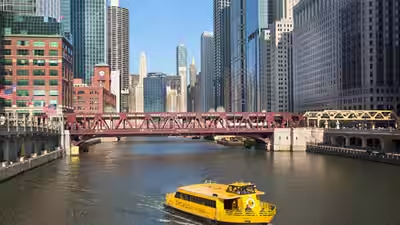
The reversal delivered exactly what its engineers promised Chicago. With sewage no longer marinating the water intakes, the city’s typhoid and waterborne-disease death rates collapsed within a generation, and the project entered the engineering pantheon, the American Society of Civil Engineers eventually named it a monument of the millennium, alongside the Panama Canal its workers went on to dig.A century and a quarter later, Lake Michigan water flows in at the lakefront and runs backwards through downtown, the reversal maintained by locks and controlling works. In the biggest storms, when even the city’s cavernous Deep Tunnel reservoirs fill, the gates must occasionally be opened, and the river allowed to run the old way into the lake for a few hours. The canal that separated Chicago’s sewage from its drinking water also stitched together two watersheds nature had kept apart, which is why it is now the front line of the Asian carp fight, an electric fish barrier humming in the channel to keep the Mississippi’s invaders out of the Great Lakes.That link works both ways. Fish are now able to swim between what used to be separate basins. According to a University of Illinois study covered by ScienceDaily, invasive Asian carp are moving north through this waterway, heading for Lake Michigan and the rest of the Great Lakes. Researchers pinpointed 18 risky spots along the canal where invasive species could enter. Since then, electric barriers have been installed in the water to help keep the carp out.


Source link

Related Articles

Leave a Reply

Your email address will not be published. Required fields are marked *

Back to top button
×
newsnation.aanest.com
Logo
Date of Publish : 12 September 2026, 6:11 pm Digital Edition : News nation
In 1900, Chicago engineers reversed the flow of an entire river to push the city’s sewage away from Lake Michigan; 126 years later, the river still runs backwards

Chicago's founding problem had always been plumbing. The city drew its drinking water from Lake Michigan and emptied sewers into the Chicago River, which flowed straight into Lake Michigan. But every rainstorm flushed the stockyards and slaughterhouses and a million people's waste out toward the water intakes. This is why the nineteenth-century city was periodically ravaged by typhoid, cholera, dysentery and more. This is when the city came up with a solution: if the river ends in the wrong place, turn it around.Creating a ditchRivers don't turn around on command. But Chicago is near a low ridge. That ridge separates the Great Lakes basin from the Mississippi River basin. Engineers had a simple idea. Dig a deep ditch towards the Des Plaines River, and gravity would take the water the other way.The tool created to do this was the Chicago Sanitary and Ship Canal, a 28-mile channel cut from the river's South Branch to Lockport, crossing the low subcontinental divide that separates the Great Lakes basin from the Mississippi’s. Dig deep enough, and gravity itself could be re-hired: lake water would pour into the Chicago River, push its whole flow backwards, and carry the city’s diluted sewage away down the Des Plaines and Illinois rivers toward the Mississippi.The digging, from 1892, was the largest earth-moving enterprise the world had then seen, tens of millions of cubic yards of rock and clay, new machines invented for the job, a workforce of thousands. The methods pioneered on what locals called the Big Ditch became known as the Chicago School of Earth Moving, and its veterans and techniques went on to dig the Panama Canal.Calling for troubleDownstream, the plan had been received with understandable horror. Missouri, whose largest city, St. Louis, drank from the Mississippi, saw Chicago preparing to point its sewers at their faucets, and prepared to ask the U.S. Supreme Court for an injunction before the canal could open. Chicago’s sanitary trustees, hearing the lawsuit was coming, chose velocity. On the frigid morning of January 2, 1900, with almost no announcement, they went out to the last earthen dam at Kedzie Avenue and had it cut; one account has trustees attacking the final barrier themselves as the water broke through. By January 17 the controlling works at Lockport were opened and the reversal was fact. Missouri filed within weeks, but there was no longer a construction project to enjoin, only a river already running backwards. A fisherman’s line of that season put it best: the Chicago River had become “the only river in the world that flows away from its mouth.”Missouri pressed the case anyway, and Missouri v. Illinois became a landmark. In 1906, Justice Oliver Wendell Holmes delivered the Court’s answer: Missouri had failed to prove that Chicago’s distant, diluted sewage was what sickened St. Louis, a burden made harder to carry by the awkward fact that St. Louis and every city between were pouring their own raw sewage into the same rivers. The suit failed; the reversal stood. The case, in the process, helped found the federal common law of interstate pollution, the legal machinery later used against actual proven polluters.126 years laterThe reversal delivered exactly what its engineers promised Chicago. With sewage no longer marinating the water intakes, the city’s typhoid and waterborne-disease death rates collapsed within a generation, and the project entered the engineering pantheon, the American Society of Civil Engineers eventually named it a monument of the millennium, alongside the Panama Canal its workers went on to dig.A century and a quarter later, Lake Michigan water flows in at the lakefront and runs backwards through downtown, the reversal maintained by locks and controlling works. In the biggest storms, when even the city’s cavernous Deep Tunnel reservoirs fill, the gates must occasionally be opened, and the river allowed to run the old way into the lake for a few hours. The canal that separated Chicago’s sewage from its drinking water also stitched together two watersheds nature had kept apart, which is why it is now the front line of the Asian carp fight, an electric fish barrier humming in the channel to keep the Mississippi’s invaders out of the Great Lakes.That link works both ways. Fish are now able to swim between what used to be separate basins. According to a University of Illinois study covered by ScienceDaily, invasive Asian carp are moving north through this waterway, heading for Lake Michigan and the rest of the Great Lakes. Researchers pinpointed 18 risky spots along the canal where invasive species could enter. Since then, electric barriers have been installed in the water to help keep the carp out.

Source link