
In 1793, goats were introduced to Hawaii’s Kahoʻolawe; their population later reached about 50,000, and 200 years later the last feral goat was removed after severe vegetation loss and erosion

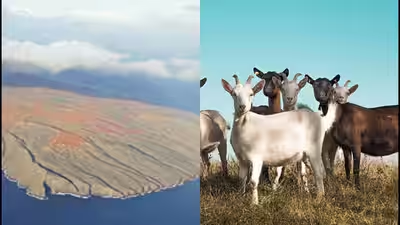

From an island carved by voyagers, farmers and sacred traditions comes the unlikely story of thousands of hungry goats. They grew on Kaho’olawe from a small 18th-century introduction into a herd of perhaps 50,000, stripping the vegetation and hastening erosion over the landscape. Today, the Hawaiian island is the focus of a decades-long effort to restore its ecosystems and cultural heritage. The story of Kahoʻolawe is one of environmental destruction, Indigenous activism and an ongoing effort to bring a sacred landscape back to life, states the Kahoʻolawe Hawaii govt website. According to the website, archeological evidence suggests native Hawaiians arrived on Kahoʻolawe around 400 A.D. Over the centuries the island became an important navigational center and supported fishing communities, agriculture, an adz quarry and places of religious ceremony. The cultural importance of the island is demonstrated by the some 3,000 archeological and historical sites and features that were documented through 2004. Kahoʻolawe, once a wahi pana and puʻuhonua, is a sacred site, a place dedicated to Kanaloa, the Hawaiian God of the ocean. But centuries of traditional use were followed by dramatic shifts. Scroll down to read the details.Introduction of goatsGoats were introduced to Kahoʻolawe in 1793, as a gift from Captain George Vancouver to Maui chief Kahekili. With no natural controls in place the population exploded. Cattle, sheep and goats were brought in when ranching began on the island in the 19th century. Uncontrolled grazing destroyed vegetation, and resulted in severe soil loss. By the late 1890s the island supported hundreds of cattle and some 15,000 sheep. Eventually the goat population alone was estimated at 50,000. The animals ate vegetation that would have helped to bind the island’s fragile soils in place. Loss of plant cover increased erosion that delivered sediment to surrounding waters and damaged the island’s watersheds.Ranch to bombing rangeThe military use added to Kaho‘olawe’s environmental woes. After the attack on Pearl Harbor in 1941, the United States imposed martial law in Hawaii and began using Kahoʻolawe as a bombing range. In 1953 ownership passed to the U.S. Navy with the proviso that the island be returned in a habitable condition. Since the 1970s, Indigenous Hawaiian activists have opposed the bombing through occupations and legal actions. Their work helped raise awareness for the island’s cultural sites and environmental destruction. President George H. W. Bush had the bombing stopped in 1990. Congress later authorized the return of Kahoʻolawe to Hawaii and appropriated $400 million for the removal of unexploded ordnance.A long road to healingIn 1994, the navy transferred ownership to the State of Hawaii, which established the Kaho‘olawe Island Reserve Commission to manage the island. It took years to clear the ordnance. By 2004, about 75 percent of Kahoʻolawe had been surface-cleared, but big areas were still unsafe to enter without an escort. Another key element of the restoration effort was goat eradication. The last feral goats were removed after some 200 years on the island, removing a major source of grazing pressure and restoring the ability for vegetation recovery.Re-creating a living landscapeIncreasingly, restoration efforts have turned to watershed repair, erosion control, and re-establishment of native vegetation on damaged lands. State-supported conservation programs from 2004 to 2016 provided approximately $1.9 million in Clean Water Act funding, matched with about $1.9 million in volunteer restoration work. These efforts helped to restore targeted watersheds and reduce sediment runoff. Since 2013, the Aloha Kahoʻolawe program has also been working to establish sustainable funding for the island’s long-term recovery. The transformation of Kahoʻolawe is not yet complete. But the story of the island is beginning to change, from exploitation and environmental destruction to restoration and cultural renewal. Killing tens of thousands of goats was only a first step. The broader goal is to bring back a landscape where native plants can flourish, watersheds can recover, and Kahoʻolawe can once again be a place of cultural connection, learning and reverence.
Source link


