Europe plans to heat 6,500 homes and a school using crematorium heat; how the unusual energy recycling system works

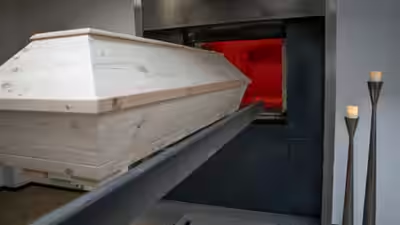

In 2011, Redditch Borough Council in England decided to experiment with something that hardly anyone in the UK had heard of before. Staff announced they were going to warm the local swimming pool with heat from a nearby crematorium. What ensued was a public firestorm with the plan making international headlines and even gaining criticism locally. Eventually, the project proved to be one of the most thoughtful decisions, winning a green award. Since 2013, the crematorium has warmed Redditch’s swimming pool, as per a report by WIRED.European countries have been harvesting warmth from crematoriums for years. The total volume of heat available from the crematoriums is modest, but with an increasing search for ways of reducing the environmental impact of funeral rites, utilising this heat provides a way to lower their carbon intensity.Roughly 1,200 cremations are carried out every year in Redditch. A heat exchanger captures heat from flue gases emitted by the facility’s two gas-fired ovens as part of a process to remove vaporised mercury from dental fillings, before venting the remaining gas into the atmosphere. In Redditch, the heat exchanger connects to a water loop that travels 200 meters underground, eventually reaching another heat exchanger supplying the swimming pool.Helpfully, such a sizable body of water “acts as a heat sink”, said Guy Revans, of Redditch and Bromsgrove Councils. “You put heat into it during the day; it retains that heat for a considerable length of time.” The recreation centre also has gas-fired boilers that can provide more heat when necessary. Overall, the system has saved the council tens of thousands of pounds per year in fuel costs.Not just swimming pools, a school currently under construction in Aberdeen, Scotland, will receive excess heat from the city’s crematorium. The crematorium already relies on waste heat to warm its own premises. “They were only utilising a tiny amount of the heat available; the rest was going to the atmosphere,” said Ian Davidson, chief executive of Aberdeen Heat & Power, who said that the system now has full planning permission. The crematorium will provide just under 1 gigawatt-hour of heat annually, roughly half the school’s total requirement. A heat pump will cover the rest of the facility’s needs, and the entire system should be fully operational by February 2027.In Finland, the crematorium set to open in Kangasala in 2028 will be connected to the town’s district heat network, a system of pipes that supplies more than 6,500 homes with hot water for heating. The crematorium will be fully electric, powered partly by solar panels on its roof. “It’s a special thing,” said Timo Heikkilä, an energy and building systems consultant at Thenco Oy, who is working on the project. “I’m really glad I get to be a part of this.” Winter temperatures in Kangasala can remain below 0 degrees Celsius for weeks on end. In Finland, there is a push to use less natural gas for heating, added Heikkilä.Ian Rudkin, who has managed multiple crematoria in the UK and is currently a board member of the Cremation Society of Great Britain, said many crematoria are becoming more eco-conscious. Some crematoria hold coffins for up to 72 hours, so that several may be cremated in a sequence, making it more efficient. “When we first brought that in, [families] seemed a little bit shocked,” said Rudkin. Soon, however, people became more accepting.Recovering heat from cremations is one way of attempting to counter the “devastating impact” that humans have had on the environment, said Hannah Rumble, an associate at the University of Bath’s Centre for Death and Society. “I can see that would be a reason why people might choose to be cremated at a particular crematorium.”A study published in the journal Energy in 2024 estimated that, if all crematoria in the UK were tapped for waste heat, they might only meet 1 per cent of the country’s total heating needs. While it sounds small, decarbonising heat is notoriously difficult, so any interventions to achieve that can be valuable.“I have thought about it, and once my time is up, I would like to be cremated, and I would like my waste heat to be recycled,” shared Heikkilä. “It’s the sensible thing. The last favour you can do for the world.”
Source link