World

Colleen Begg came to Mozambique in 2002 to study honey badgers and stayed to protect one of Africa’s largest lion populations, and she is the first woman to win Prince William’s Tusk lifetime award

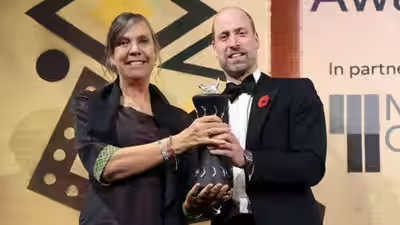
Colleen Begg came to Mozambique in 2002 to study honey badgers and stayed to protect one of Africa’s largest lion populations, and she is the first woman to win Prince William’s Tusk lifetime award

What began as a research trip to study honey badgers in Mozambique has turned into a conservation career spanning more than two decades for Dr Colleen Begg. The South African conservationist, who arrived in the country in 2002, has now received one of Africa’s most significant conservation honours, recognising her efforts to protect threatened wildlife while building lasting partnerships with local communities. Begg received the 2026 Prince William Award for Conservation in Africa at the Tusk Conservation Awards in London on November 11. Prince William, the Prince of Wales and royal patron of the British conservation charity Tusk, presented the award at a ceremony held at Raffles London at The OWO. According to Tusk, Begg is the first woman to receive the lifetime achievement honour since the awards were established in 2013. The recognition was also reported by the Wildlife Conservation Network and Ninety One, the award’s supporting partner.The award acknowledges more than 30 years of Begg’s work in conservation, including over 20 years spent protecting wildlife in Mozambique’s Niassa Special Reserve. Her journey there, however, began with a very different research interest.In 2002, Begg travelled to Niassa to study honey badgers, honeyguide birds and traditional honey-gathering practices. Her research eventually brought her attention to a significant gap in scientific knowledge about the reserve’s large carnivores. Alongside her husband, fellow conservationist Keith Begg, she undertook a survey of the region’s predators. The findings laid the groundwork for the Niassa Carnivore Project, which the couple established in 2003.Today, the project works to protect lions, leopards, spotted hyenas and African wild dogs across the Niassa Special Reserve, an approximately 42,000-square-kilometre protected landscape in northern Mozambique. The reserve is home to one of Africa’s important remaining lion populations and provides a crucial habitat for other threatened carnivores.But the project’s work extends well beyond wildlife monitoring. A central part of Begg’s approach has been to address the challenges faced by people living alongside dangerous animals. Through community wildlife guardian programmes, environmental education, alternative livelihood initiatives and conflict-prevention measures, the organisation aims to make conservation beneficial to the people who share their land with wildlife.One of its notable initiatives involves restoring traditional raised homes, known locally as sanja houses. The structures elevate families above ground level, helping reduce dangerous encounters with wildlife. The project has also built a largely Mozambican workforce, with local residents playing an increasingly important role in conservation and decision-making.Begg’s commitment to the region was also tested by a deadly security incident. In April 2025, insurgents attacked the Mariri Environmental Centre and the Niassa Carnivore Project’s headquarters, killing four anti-poaching scouts. The attack severely disrupted conservation activities and affected families connected to the project.However, Begg and her team returned to support those affected, continue essential programmes and rebuild damaged infrastructure. Tusk recognised this resilience as an important part of her contribution, alongside her efforts to develop a conservation organisation that can eventually be led entirely by Mozambicans.Her influence also reaches beyond Mozambique. In 2017, Begg co-founded Women for the Environment Africa (WE Africa), an initiative that supports and connects women working in environmental conservation across the continent. The organisation aims to strengthen women’s leadership and ensure they have a greater role in shaping conservation policies and decisions.Begg was among three conservationists recognised at this year’s Tusk ceremony. Kenyan conservationist Raabia Hawa, founder of the Ulinzi Africa Foundation, received the Tusk Award for Conservation in Africa for her work addressing wildlife crime. Daniel Yiankere, security manager at Kenya’s Loisaba Conservancy, received the Tusk Wildlife Ranger Award in recognition of his decades of service protecting wildlife.For Begg, the lifetime achievement honour represents more than an individual milestone. It also brings international attention to the people of Niassa, the Mozambican conservation teams and the community partnerships that have sustained the project for more than 20 years. Her work has increasingly focused on ensuring that the next generation of local conservationists has the skills, opportunities and leadership roles needed to carry it forward.


Source link

Related Articles

Leave a Reply

Your email address will not be published. Required fields are marked *

Back to top button
×
newsnation.aanest.com
Logo
Date of Publish : 20 November 2026, 9:08 pm Digital Edition : News nation
Colleen Begg came to Mozambique in 2002 to study honey badgers and stayed to protect one of Africa’s largest lion populations, and she is the first woman to win Prince William’s Tusk lifetime award

What began as a research trip to study honey badgers in Mozambique has turned into a conservation career spanning more than two decades for Dr Colleen Begg. The South African conservationist, who arrived in the country in 2002, has now received one of Africa’s most significant conservation honours, recognising her efforts to protect threatened wildlife while building lasting partnerships with local communities. Begg received the 2026 Prince William Award for Conservation in Africa at the Tusk Conservation Awards in London on November 11. Prince William, the Prince of Wales and royal patron of the British conservation charity Tusk, presented the award at a ceremony held at Raffles London at The OWO. According to Tusk, Begg is the first woman to receive the lifetime achievement honour since the awards were established in 2013. The recognition was also reported by the Wildlife Conservation Network and Ninety One, the award’s supporting partner.The award acknowledges more than 30 years of Begg’s work in conservation, including over 20 years spent protecting wildlife in Mozambique’s Niassa Special Reserve. Her journey there, however, began with a very different research interest.In 2002, Begg travelled to Niassa to study honey badgers, honeyguide birds and traditional honey-gathering practices. Her research eventually brought her attention to a significant gap in scientific knowledge about the reserve’s large carnivores. Alongside her husband, fellow conservationist Keith Begg, she undertook a survey of the region’s predators. The findings laid the groundwork for the Niassa Carnivore Project, which the couple established in 2003.Today, the project works to protect lions, leopards, spotted hyenas and African wild dogs across the Niassa Special Reserve, an approximately 42,000-square-kilometre protected landscape in northern Mozambique. The reserve is home to one of Africa’s important remaining lion populations and provides a crucial habitat for other threatened carnivores.But the project’s work extends well beyond wildlife monitoring. A central part of Begg’s approach has been to address the challenges faced by people living alongside dangerous animals. Through community wildlife guardian programmes, environmental education, alternative livelihood initiatives and conflict-prevention measures, the organisation aims to make conservation beneficial to the people who share their land with wildlife.One of its notable initiatives involves restoring traditional raised homes, known locally as sanja houses. The structures elevate families above ground level, helping reduce dangerous encounters with wildlife. The project has also built a largely Mozambican workforce, with local residents playing an increasingly important role in conservation and decision-making.Begg’s commitment to the region was also tested by a deadly security incident. In April 2025, insurgents attacked the Mariri Environmental Centre and the Niassa Carnivore Project’s headquarters, killing four anti-poaching scouts. The attack severely disrupted conservation activities and affected families connected to the project.However, Begg and her team returned to support those affected, continue essential programmes and rebuild damaged infrastructure. Tusk recognised this resilience as an important part of her contribution, alongside her efforts to develop a conservation organisation that can eventually be led entirely by Mozambicans.Her influence also reaches beyond Mozambique. In 2017, Begg co-founded Women for the Environment Africa (WE Africa), an initiative that supports and connects women working in environmental conservation across the continent. The organisation aims to strengthen women’s leadership and ensure they have a greater role in shaping conservation policies and decisions.Begg was among three conservationists recognised at this year’s Tusk ceremony. Kenyan conservationist Raabia Hawa, founder of the Ulinzi Africa Foundation, received the Tusk Award for Conservation in Africa for her work addressing wildlife crime. Daniel Yiankere, security manager at Kenya’s Loisaba Conservancy, received the Tusk Wildlife Ranger Award in recognition of his decades of service protecting wildlife.For Begg, the lifetime achievement honour represents more than an individual milestone. It also brings international attention to the people of Niassa, the Mozambican conservation teams and the community partnerships that have sustained the project for more than 20 years. Her work has increasingly focused on ensuring that the next generation of local conservationists has the skills, opportunities and leadership roles needed to carry it forward.

Source link