California woman bought a house in 1978 and left it to her partner through a trust; after both died, another woman challenged his son’s claim to the property, but the court ruled in his favour | World News

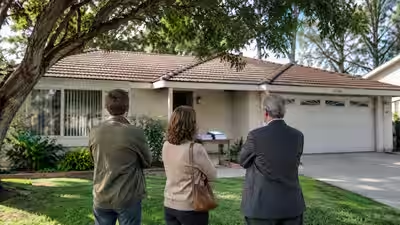

A house purchased in 1978 by a California woman became the centre of an inheritance dispute decades later, after her death and that of her long-term partner. Diane Martinez had lived at the Stanton property with Lester Edmond Compton and named him as the sole beneficiary of her trust. However, the property had never been formally transferred into her trust through a deed. After Martinez died in 2020, a probate court recognised the house as an asset of her trust and transferred ownership to Lester. He died less than two months later, leaving his son, John Compton, to establish that the property belonged to his father’s trust. Another woman challenged his claim, but an appeals court upheld his position on November 24, 2026.
How the California couple arranged their trusts
Martinez purchased the Stanton property in 1978 and subsequently lived there with Compton. More than three decades later, on September 12, 2012, the couple created separate trusts to organise their assets and specify who would receive their property.Under the Diane Marie Martinez Trust, Compton was named as the successor trustee and the sole beneficiary of her estate. The separate Compton Trust named Lester as its trustee, Martinez as his first successor trustee and his son, John, as the second successor trustee.Lester’s trust also contained an important provision stating that his worldly possessions were to be held for Martinez and, if she died before him, were to pass to John. Alongside this, Lester signed an assignment transferring all his property, including assets acquired in the future, to his trust.
Why the house became part of a legal dispute
Although Martinez’s trust identified the Stanton property, she never executed or recorded a deed formally transferring it into the trust. Consequently, the property remained in her name when she died on March 21, 2020.In June 2020, Compton filed a petition seeking an order confirming that the house should be transferred to him as successor trustee of Martinez’s trust. On April 20, 2021, the probate court approved his request, declaring the property transferred to him and vesting both legal and equitable title in his name as successor trustee.Compton died on June 14, 2021, less than two months after obtaining the order. This brought the separate trust he had created with Martinez back into focus, particularly the clause covering property he might acquire after signing the document in 2012.
Another woman challenged the son’s inheritance claim
In August 2022, John Compton approached the probate court seeking confirmation that his father’s trust was valid, that he was its sole beneficiary and that the Stanton property belonged to the trust. He also sought authority to manage and control the property as its trustee.Cindy Lynn Cavanaugh objected to the petition in September 2023, arguing that the trust assignment did not adequately identify the house. She relied on California’s statute of frauds, which sets requirements for written evidence establishing trusts involving real estate.Her argument was that Lester had not owned the Stanton property when he created his trust in 2012 and that a general assignment covering future property was insufficient to establish ownership of a specific house. The probate court rejected the objection after considering the trust documents, agreed facts, John’s testimony and excerpts from Cavanaugh’s deposition. It ruled that the property was an asset of Lester’s trust, prompting Cavanaugh to appeal.
Why the appeals court ruled in the son’s favour
The California Court of Appeal, Fourth Appellate District, Division Three, examined whether Lester’s signed assignment could cover a property he acquired years after creating his trust.The judges found that the document explicitly covered all his property, regardless of its type, location or when it was acquired. They also relied on the April 20, 2021 probate order, which had formally established that Lester owned the Stanton property as successor trustee of Martinez’s trust.The court referred to an earlier California decision, Ukkestad v. RBS Asset Finance, Inc., which recognised that real estate can become part of a trust without a separate deed when the required written documentation and evidence identify the property.Applying that reasoning, the judges concluded that Lester’s signed assignment, combined with the earlier probate order, was sufficient to establish that the Stanton house belonged to his trust. The court rejected Cavanaugh’s arguments and affirmed the lower court’s judgment on November 24, 2026.
What the ruling means for the property
The appellate judgment leaves John Compton’s claim to the Stanton property intact. As the sole beneficiary and successor trustee of his father’s trust, he can manage and control the property as an asset of that trust.The court also ordered Cavanaugh to pay the respondent’s costs of the appeal. However, the judgment did not specify the property’s market value or award a separate monetary payment.The ruling also does not establish that Cavanaugh lived in the house or identify her relationship to Martinez or Compton. Its central finding concerns the validity of Lester’s assignment of future-acquired property and whether the Stanton house consequently became part of his trust.
Source link