
World

A Vermont forester bought 175 acres of degraded woodland in 2017; after nine years of restoring habitats, the land now features a wildlife pond, rich vegetation and an orchard of more than 100 fruit trees | World News

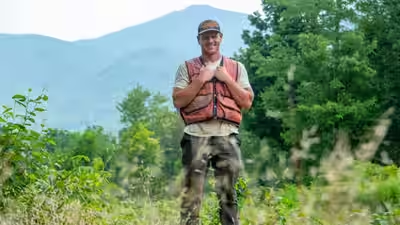
A Vermont forester bought 175 acres of degraded woodland in 2017; after nine years of restoring habitats, the land now features a wildlife pond, rich vegetation and an orchard of more than 100 fruit trees

Vermont forester Ethan Tapper bought 175 acres of degraded woodland in Bolton, Vermont, in 2017 and began restoring its ecosystem. The property, which he named Bear Island, had been affected by decades of logging, invasive plant growth and soil erosion. Over the following years, Tapper selectively cut trees, removed invasive vegetation, planted acorns and repaired damage left by earlier land use. He also transformed a rubbish-filled clearing into a pond, where frogs and salamanders appeared within months. The woodland now features a diverse forest understory, habitat for several bird species and an orchard containing more than 100 fruit trees. His work has turned the property into a long-term conservation project focused on improving forest health and habitat diversity.

How a Vermont forester spent nine years restoring a damaged forest

When Tapper acquired Bear Island, the property reflected its history as pastureland and a woodlot. Earlier logging had removed many healthy trees, leaving behind diseased and poorly formed growth. Eroded logging roads crossed the land, while a clearing once used for timber storage was littered with rubbish.Tapper began by selectively removing trees to give healthier specimens more room to grow. He also cleared diseased beech trees, stabilised eroding trails and planted tens of thousands of acorns to encourage future forest growth.His approach combines tree management with efforts to improve the woodland’s overall structure. A 2025 profile by forestry equipment manufacturer Tigercat described around 30 acres of regenerating forest with a diverse understory among the results of his work.

He turned a rubbish-filled clearing into a pond

One of the most visible changes at Bear Island involved a clearing previously used to store timber. Tapper and a friend rented an excavator and dug a pond, replacing a rubbish-filled area with a water feature.The pond is approximately 20 feet deep and about half the length of a football field. According to Audubon, frogs and salamanders appeared within months of its creation, adding amphibians to the wildlife associated with the recovering property.

Rich vegetation and an orchard of more than 100 fruit trees

The woodland now supports a varied understory, including bracken and several fern species. These plants grow beneath the main forest canopy, contributing to the diversity of vegetation across the property.Tapper has also established an orchard containing more than 100 fruit trees. Alongside the pond and regenerating woodland, the orchard adds another distinct feature to the landscape.Birds recorded on the property include American redstarts, veeries, black-throated blue warblers and mourning warblers, according to Audubon. In 2023, Tapper became one of Audubon’s first endorsed foresters in Vermont. The programme promotes forest-management practices designed to support birds and other wildlife.

A conservation easement protects the property

In 2022, Tapper donated a conservation easement on Bear Island, placing permanent legal protections on the land. Such agreements restrict certain uses of a property to preserve its conservation value.The easement extends the project’s long-term impact by helping safeguard the woodland beyond Tapper’s ownership. It complements the practical work carried out on the property by providing a legal framework for its continued protection.

How Ethan Tapper shared his experience

Tapper documented his work in his 2024 book, How to Love a Forest: The Bittersweet Work of Tending a Changing World. Drawing on his experience at Bear Island, the book explores forest ecology and the decisions involved in managing woodland.Through articles, talks and social media, Tapper also explains how forestry practices can influence ecosystem health. His work highlights the role of selective cutting, invasive-species management and habitat improvement in caring for forests affected by earlier land use.Nearly nine years after purchasing Bear Island, Tapper continues to manage the woodland and its orchard. The pond, diverse vegetation and regenerating forest reflect the results of sustained work on a landscape once heavily altered by logging and other human activities.


Source link

Related Articles

Leave a Reply

Your email address will not be published. Required fields are marked *

Back to top button
×
newsnation.aanest.com
Logo
Date of Publish : 14 October 2026, 7:49 pm Digital Edition : News nation
A Vermont forester bought 175 acres of degraded woodland in 2017; after nine years of restoring habitats, the land now features a wildlife pond, rich vegetation and an orchard of more than 100 fruit trees | World News

Vermont forester Ethan Tapper bought 175 acres of degraded woodland in Bolton, Vermont, in 2017 and began restoring its ecosystem. The property, which he named Bear Island, had been affected by decades of logging, invasive plant growth and soil erosion. Over the following years, Tapper selectively cut trees, removed invasive vegetation, planted acorns and repaired damage left by earlier land use. He also transformed a rubbish-filled clearing into a pond, where frogs and salamanders appeared within months. The woodland now features a diverse forest understory, habitat for several bird species and an orchard containing more than 100 fruit trees. His work has turned the property into a long-term conservation project focused on improving forest health and habitat diversity.How a Vermont forester spent nine years restoring a damaged forestWhen Tapper acquired Bear Island, the property reflected its history as pastureland and a woodlot. Earlier logging had removed many healthy trees, leaving behind diseased and poorly formed growth. Eroded logging roads crossed the land, while a clearing once used for timber storage was littered with rubbish.Tapper began by selectively removing trees to give healthier specimens more room to grow. He also cleared diseased beech trees, stabilised eroding trails and planted tens of thousands of acorns to encourage future forest growth.His approach combines tree management with efforts to improve the woodland's overall structure. A 2025 profile by forestry equipment manufacturer Tigercat described around 30 acres of regenerating forest with a diverse understory among the results of his work.He turned a rubbish-filled clearing into a pondOne of the most visible changes at Bear Island involved a clearing previously used to store timber. Tapper and a friend rented an excavator and dug a pond, replacing a rubbish-filled area with a water feature.The pond is approximately 20 feet deep and about half the length of a football field. According to Audubon, frogs and salamanders appeared within months of its creation, adding amphibians to the wildlife associated with the recovering property.Rich vegetation and an orchard of more than 100 fruit treesThe woodland now supports a varied understory, including bracken and several fern species. These plants grow beneath the main forest canopy, contributing to the diversity of vegetation across the property.Tapper has also established an orchard containing more than 100 fruit trees. Alongside the pond and regenerating woodland, the orchard adds another distinct feature to the landscape.Birds recorded on the property include American redstarts, veeries, black-throated blue warblers and mourning warblers, according to Audubon. In 2023, Tapper became one of Audubon's first endorsed foresters in Vermont. The programme promotes forest-management practices designed to support birds and other wildlife.A conservation easement protects the propertyIn 2022, Tapper donated a conservation easement on Bear Island, placing permanent legal protections on the land. Such agreements restrict certain uses of a property to preserve its conservation value.The easement extends the project's long-term impact by helping safeguard the woodland beyond Tapper's ownership. It complements the practical work carried out on the property by providing a legal framework for its continued protection.How Ethan Tapper shared his experienceTapper documented his work in his 2024 book, How to Love a Forest: The Bittersweet Work of Tending a Changing World. Drawing on his experience at Bear Island, the book explores forest ecology and the decisions involved in managing woodland.Through articles, talks and social media, Tapper also explains how forestry practices can influence ecosystem health. His work highlights the role of selective cutting, invasive-species management and habitat improvement in caring for forests affected by earlier land use.Nearly nine years after purchasing Bear Island, Tapper continues to manage the woodland and its orchard. The pond, diverse vegetation and regenerating forest reflect the results of sustained work on a landscape once heavily altered by logging and other human activities.

Source link