A 6-year-old Nebraska boy found a rare 200-million-year-old marine fossil that had not been recorded in the state for more than 55 years | World News

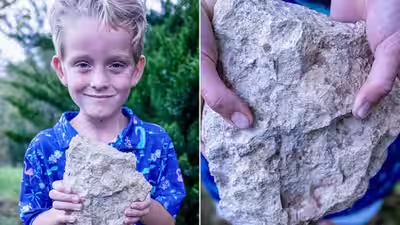

A six-year-old boy searching for fossils at a Nebraska park made a discovery not recorded in the state for more than 55 years. Leo Youngdahl, who lives in Eagle, turned over a large rock at Schramm Park State Recreation Area near Gretna and found the imprint of a conulariid, an ancient marine animal with a jellyfish-like body shaped like an upside-down pyramid. Conulariids lived in Nebraska between approximately 200 million and 500 million years ago. The only other known examples in the state were found in Louisville and Weeping Water. Staff plan to keep the fossil at Schramm for educational programmes.
How did a 6-year-old boy discover a rare marine fossil
According to People, Leo was at a Rafting and Rocks event at Schramm Park State Recreation Area when he spotted a large rock and decided to turn it over. Outdoor Nebraska states that he hoped to find a crinoid fossil. Crinoids are among his favourite fossils.Leo noticed an unusual pattern on the underside of the rock. It reminded him of the scales on a garter snake’s belly. He showed it to Kelly Ekue, an outdoor education specialist at the nearby Schramm Education Centre, who immediately noticed something different about it.
What did experts discover about the rare marine fossil
Ekue has led programmes at the outcrop for over seven years, and there are six main types of fossils found there. She told Outdoor Nebraska that the fossil looked unlike any of the species she has seen. The imprint was larger than the fossils typically found at the park. It also appeared almost fish-like, even though the rocks there contain fossils of marine invertebrates rather than fish.Ekue was unsure what Leo had uncovered, so she emailed a photograph to a geologist, who shared it with other experts. People named two of them: Shane Tucker, a palaeontologist at the University of Nebraska State Museum, and the geologist Bob Diffendal. The experts identified the fossil as a conulariid, an ancient marine animal with a jellyfish-like body shaped like an upside-down pyramid.

PC: Nebraska Game and Parks Commission
Why are conulariid fossils dating back 200 million to 500 million years so rare
Conulariids lived in what is now Nebraska, as well as other parts of the world, between approximately 200 million and 500 million years ago. Their fossils are especially rare because the creatures had soft bodies and thin skeletons that typically broke apart before they could be preserved.Researchers identified Leo’s specimen by its distinctive herringbone-shaped pattern, which had left an imprint in the limestone. According to Outdoor Nebraska, the only other known conulariid fossils found in the state were discovered more than 55 years ago in Louisville and Weeping Water.
How will the rare marine fossil help educate visitors
The discovery was exciting for Leo for another reason. He had never found a complete fossil before, especially one so large. He also recalled being told that his find was “rarer to find than a mammoth bone.” Ekue said it was amazing that, among all the rocks in the Schramm outcrop, Leo picked up this one, recognised it as a fossil and thought to ask about it. Leo will not be taking the fossil home, and he does not mind. It will remain at Schramm, where staff plan to use it in educational programmes.
Source link