A North Carolina couple lost their 18-year-old daughter in a car crash; 22 years later, they are honouring her memory by rescuing hundreds of orphaned and injured animals through a wildlife centre named after her | World News

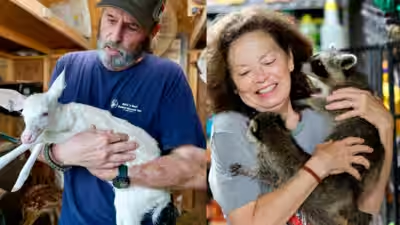

A couple in North Carolina, US, have turned an unimaginable personal tragedy into a mission to protect wildlife. Byron and Kim Wortham lost their 18-year-old daughter, Holly, in a car crash in February 2004. More than two decades later, they are keeping her memory alive through Holly’s Nest Animal Rescue, a wildlife rehabilitation centre they established in her honour. The facility takes in injured, abandoned and orphaned animals, nurses them back to health and releases them into suitable natural habitats. From baby deer whose mothers have been killed on roads to injured owls, raccoons and foxes, the couple’s work has grown into a demanding commitment to wildlife conservation, with the centre now caring for hundreds of animals each year.
How the couple turned personal loss into a wildlife rescue mission
Holly Wortham was 18 and in her final year of high school when she died in a car accident in February 2004. She was remembered by her family as an artist and an animal lover. Her death deeply affected her parents and their three other children.In the years that followed, Kim struggled with the loss and found it difficult to return to her previous routine. She eventually left her job at a library. Caring for animals gradually became a way for her to reconnect with the world and find purpose after the tragedy.Byron and Kim began obtaining the necessary permits to rehabilitate small mammals, including squirrels, rabbits and opossums. What started as an effort to honour Holly’s affection for animals gradually developed into a dedicated wildlife rescue operation. They named it Holly’s Nest to ensure that their daughter’s memory remained at the centre of their work.
What happens at Holly’s Nest Animal Rescue
Located near Sanford in Lee County, North Carolina, Holly’s Nest is a wildlife rehabilitation facility that receives animals from members of the public, wildlife officers and other rehabilitators.Its work involves rescuing injured, abandoned and orphaned animals, providing medical attention and specialised care, and preparing them for release once they can survive independently.The centre looks after a wide range of native wildlife, including white-tailed deer, raccoons, foxes, opossums, squirrels, rabbits, beavers, owls, hawks and other birds. Some animals arrive with serious injuries, while others are too young to survive without human intervention.The facility has also cared for animals with unusual conditions, including an albino fawn, a dwarf raccoon and a disabled squirrel.
Why orphaned fawns make up a major part of their work
One of the centre’s biggest responsibilities is caring for white-tailed deer, particularly fawns separated from their mothers after road accidents. According to a June 2026 report by The News & Observer, Holly’s Nest has become North Carolina’s largest deer rehabilitation facility, taking in an average of around 150 fawns annually.During the busiest part of the season, the centre can receive five to eight new fawns a day for about a month. On June 5, 2026, approximately 50 fawns were being cared for at the facility.Some arrive in particularly distressing circumstances, including newborns whose mothers have been struck by vehicles shortly after giving birth. The young deer require regular bottle-feeding and close attention until they are strong enough to survive without human care.
Their home has become an extension of the rescue centre
The Worthams’ commitment to wildlife rehabilitation extends well beyond the centre’s outdoor enclosures. Over the years, animals requiring special attention have also been cared for inside their home.A beaver named Bucky once occupied a bathtub in the bathroom that had belonged to Holly. He even attempted to build a dam there. Baby raccoons have been seen resting in hammocks, while young foxes have slept in dog beds. The couple has also cared for animals in their basement, particularly those requiring cooler conditions.The household has included two macaws named Jimmy Buffett and Bruce Springsteen. Kim has spoken about her affection for beavers, describing their behaviour as similar to that of children.These unusual arrangements reflect the demands of looking after animals that cannot immediately be placed in outdoor rehabilitation enclosures.
Thousands of acres provide a place for rescued animals to return
Rehabilitation is only one part of the couple’s conservation work. Finding suitable habitats where recovered animals can be released is equally important.According to The News & Observer, Tim Sweeney, founder and CEO of Epic Games, provided Holly’s Nest with access to approximately 8,000 acres of land for wildlife releases. The protected areas give rehabilitated animals an opportunity to return to natural surroundings rather than being released into unsuitable or heavily developed locations.The arrangement has been particularly valuable for animals that need appropriate habitat to survive independently. For the Worthams, the ultimate objective is not to keep rescued wildlife in captivity but to give it a chance to return to the wild.
A demanding routine that can last 18 hours a day
Running the rehabilitation centre requires considerable time and physical effort. During the busiest months, the couple can spend as many as 18 hours a day feeding animals, cleaning enclosures, preparing food and attending to new arrivals.April through October is particularly demanding because many young animals need assistance during this period. The couple prepares different diets depending on the species, with food including fruit, oats and other suitable provisions.Byron also takes their conservation message beyond the facility. He conducts wildlife education programmes at schools, parks, veterans’ facilities and community venues, helping people understand the challenges faced by native animals.The centre’s work is supported by donations, volunteers and the couple’s own contributions. The 2024 report stated that Holly’s Nest did not receive federal, state or local government funding and relied on donations and personal resources to meet its expenses.
The goal is to return every animal to the wild
Despite the care and attention the animals receive, the Worthams believe that successful rehabilitation should ultimately lead to freedom. Their aim is to help wildlife recover sufficiently to survive in its natural environment rather than remain dependent on humans.Byron has expressed this philosophy through a simple belief: “five minutes of freedom is better than a lifetime of captivity”.The couple’s work has therefore become more than a tribute to their daughter. Through Holly’s Nest, they are helping injured and orphaned wildlife recover, while also giving animals that have lost their natural habitats or mothers another opportunity to survive.For Byron and Kim, every animal that returns to the wild represents another way of keeping Holly’s love for nature alive.
Source link