World

‘Without Arab parties there won’t be change’: Joint List offers to back anti-Netanyahu government

‘Without Arab parties there won’t be change’: Joint List offers to back anti-Netanyahu government
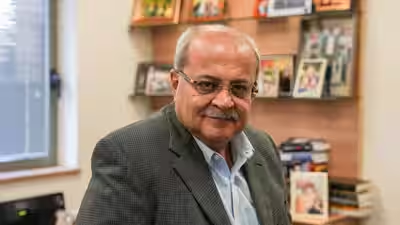
File photo: Israel opposition faces coalition hurdle as Arab Joint List offers support from outside

The Arab Joint List is willing to support an opposition-led government to replace Israeli prime minister Benjamin Netanyahu’s outgoing coalition, but will not join the cabinet, senior party leader Ahmad Tibi has said, as Israel’s political leaders grapple with the challenge of forming a government after an inconclusive election.Speaking to Channel 12, Tibi urged opposition leader Gadi Eisenkot to follow the example of former prime minister Yitzhak Rabin, who relied on the support of Arab lawmakers to secure parliamentary backing for the Oslo Accords. “We want to help anyone who wants to bring down this awful government,” Tibi said, while making clear that the Joint List did not seek ministerial positions or cabinet berths.“Without the Arab parties there won’t be change,” he said, pointing to the election results, which left Netanyahu’s bloc with 53 seats and his opponents with 67 in the 120-member Knesset. The opposition tally includes 48 seats held by Zionist parties and 19 won by Arab factions — the Joint List with 11 and Ra’am with eight. However, several Jewish-led opposition parties have ruled out forming a coalition with the Arab factions, complicating efforts to assemble a parliamentary majority.Joint List chairman Yousef Jabareen said initial, informal contacts had begun with most leaders in the anti-Netanyahu camp, including Eisenkot, Democrats leader Yair Golan and members of Naftali Bennett’s B’Yachad party. He described the exchanges as preliminary rather than formal coalition negotiations.Jabareen outlined several conditions for the party’s support, including a diplomatic process towards establishing a Palestinian state, a funded plan to tackle violent crime in Arab municipalities and a halt to home demolitions. These demands could prove difficult for opposition parties that have publicly opposed Palestinian statehood.The Joint List leaders also addressed allegations that Qatar had secretly funded efforts to increase Arab voter turnout. Tibi rejected claims of illicit foreign funding and accused Shin Bet chief David Zini of influencing the Central Elections Committee’s decision to investigate suspected foreign interference. Jabareen described the allegations as “spin” and “dangerous slander”, saying he knew of no Qatari interference.The Shin Bet has opened a limited probe into suspected foreign funding and interference, but the allegations have not been substantiated. The agency and the Central Elections Committee have indicated that the investigation would not affect the election results.Jabareen also faced questions over his refusal to describe Hamas as a terrorist organisation, a position that could complicate cooperation with Eisenkot, who has made such a declaration one of his stated requirements for potential coalition partners. Jabareen said the Joint List had condemned the October 7, 2023, Hamas-led massacre in communities near the Gaza border, but declined to give a direct answer when asked whether he considered Hamas a terrorist group.Meanwhile, President Isaac Herzog has urged party leaders to accept the election results and find a way to avoid another election. Speaking at a memorial ceremony for Israel’s first president, Chaim Weizmann, Herzog said the results were an established fact and called on political leaders to “stop climbing up trees and face reality”.Herzog is scheduled to receive the certified election results from the Central Elections Committee on November 4, after which he will begin consultations with party representatives at the President’s Residence. The newly elected Knesset is due to be sworn in on November 10.Eisenkot has said he intends to use the opposition’s parliamentary majority to establish what he described as a “Zionist and statesmanlike government”. The willingness of the Arab factions to recommend and support an opposition candidate could strengthen that effort, but the refusal of several Zionist parties to sit in a coalition with them remains a significant obstacle.


Source link

Related Articles

Leave a Reply

Your email address will not be published. Required fields are marked *

Back to top button
×
newsnation.aanest.com
Logo
Date of Publish : 01 November 2026, 6:14 pm Digital Edition : News nation
‘Without Arab parties there won’t be change’: Joint List offers to back anti-Netanyahu government

File photo: Israel opposition faces coalition hurdle as Arab Joint List offers support from outside The Arab Joint List is willing to support an opposition-led government to replace Israeli prime minister Benjamin Netanyahu’s outgoing coalition, but will not join the cabinet, senior party leader Ahmad Tibi has said, as Israel’s political leaders grapple with the challenge of forming a government after an inconclusive election.Speaking to Channel 12, Tibi urged opposition leader Gadi Eisenkot to follow the example of former prime minister Yitzhak Rabin, who relied on the support of Arab lawmakers to secure parliamentary backing for the Oslo Accords. “We want to help anyone who wants to bring down this awful government,” Tibi said, while making clear that the Joint List did not seek ministerial positions or cabinet berths.“Without the Arab parties there won’t be change,” he said, pointing to the election results, which left Netanyahu’s bloc with 53 seats and his opponents with 67 in the 120-member Knesset. The opposition tally includes 48 seats held by Zionist parties and 19 won by Arab factions — the Joint List with 11 and Ra’am with eight. However, several Jewish-led opposition parties have ruled out forming a coalition with the Arab factions, complicating efforts to assemble a parliamentary majority.Joint List chairman Yousef Jabareen said initial, informal contacts had begun with most leaders in the anti-Netanyahu camp, including Eisenkot, Democrats leader Yair Golan and members of Naftali Bennett’s B’Yachad party. He described the exchanges as preliminary rather than formal coalition negotiations.Jabareen outlined several conditions for the party’s support, including a diplomatic process towards establishing a Palestinian state, a funded plan to tackle violent crime in Arab municipalities and a halt to home demolitions. These demands could prove difficult for opposition parties that have publicly opposed Palestinian statehood.The Joint List leaders also addressed allegations that Qatar had secretly funded efforts to increase Arab voter turnout. Tibi rejected claims of illicit foreign funding and accused Shin Bet chief David Zini of influencing the Central Elections Committee’s decision to investigate suspected foreign interference. Jabareen described the allegations as “spin” and “dangerous slander”, saying he knew of no Qatari interference.The Shin Bet has opened a limited probe into suspected foreign funding and interference, but the allegations have not been substantiated. The agency and the Central Elections Committee have indicated that the investigation would not affect the election results.Jabareen also faced questions over his refusal to describe Hamas as a terrorist organisation, a position that could complicate cooperation with Eisenkot, who has made such a declaration one of his stated requirements for potential coalition partners. Jabareen said the Joint List had condemned the October 7, 2023, Hamas-led massacre in communities near the Gaza border, but declined to give a direct answer when asked whether he considered Hamas a terrorist group.Meanwhile, President Isaac Herzog has urged party leaders to accept the election results and find a way to avoid another election. Speaking at a memorial ceremony for Israel’s first president, Chaim Weizmann, Herzog said the results were an established fact and called on political leaders to “stop climbing up trees and face reality”.Herzog is scheduled to receive the certified election results from the Central Elections Committee on November 4, after which he will begin consultations with party representatives at the President’s Residence. The newly elected Knesset is due to be sworn in on November 10.Eisenkot has said he intends to use the opposition’s parliamentary majority to establish what he described as a “Zionist and statesmanlike government”. The willingness of the Arab factions to recommend and support an opposition candidate could strengthen that effort, but the refusal of several Zionist parties to sit in a coalition with them remains a significant obstacle.

Source link