A 117-year-old North Carolina basilica battled leaks and storm damage, then underwent a $7.7 million first phase of restoration; it reopened daily to visitors, while the full preservation effort could top $30 million


A century-old architectural landmark in Asheville, North Carolina, has reached a major milestone after years of deterioration threatened its distinctive dome and historic masonry. The Basilica of Saint Lawrence completed the first phase of a $7.7 million restoration and marked its reopening with a ceremony on October 10, 2026. According to Catholic News Herald, local outlet HERE Asheville and public radio station BPR News, the project focused on stopping water leaks, repairing storm damage and protecting the building for future generations. The restoration is part of a much larger preservation effort that could eventually cost more than $30 million. While the latest work has addressed some of the building’s most urgent problems, further repairs will depend on funding and the progress of subsequent phases.
A historic landmark threatened by water damage
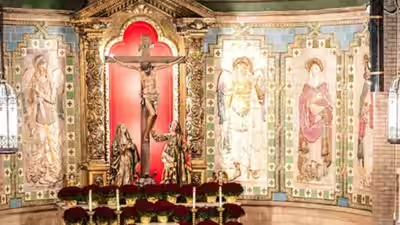
Located in downtown Asheville, the Basilica of Saint Lawrence is known for its distinctive elliptical dome and intricate tile construction. Designed under the supervision of Spanish architect Rafael Guastavino Sr., the church was completed in 1909 and is listed on the National Register of Historic Places.Over the years, leaks and deteriorating building materials made extensive repairs increasingly urgent. Hurricane Helene, which struck western North Carolina in September 2024, added to the damage and reinforced the need to protect the structure.The restoration began in October 2025 after years of planning, assessments and fundraising. Preservation specialists and construction teams were tasked with addressing water intrusion while safeguarding the architectural features that make the basilica distinctive. The first phase was budgeted at approximately $7.7 million, with contributions from parishioners, donors and grants helping fund the work.
What the $7.7 million restoration included
The initial phase concentrated on the building’s exterior and structural protection, particularly areas vulnerable to water damage. Work included replacing the copper covering on the iconic dome, installing new storm drains and gutters, repairing cornices and restoring the dome’s oculus skylight. Crews also stabilised masonry above the Marian Chapel and addressed damage associated with Hurricane Helene.These repairs were intended to prevent further water from entering the building and to stabilise vulnerable sections of the historic structure. Stopping the leaks was particularly important because continued moisture exposure could threaten masonry, interior finishes and other architectural details.The project involved specialist preservation work rather than routine maintenance. Guastavino’s distinctive tile-and-mortar construction requires care to retain the building’s historic character while improving its long-term durability. The completion of the first phase therefore represents an important step, rather than the end of the basilica’s preservation needs.
An architectural legacy worth preserving
Guastavino’s work is known for its distinctive tile vaulting, a construction technique that uses layers of thin tiles and mortar to create strong, elegant structures. His work can be seen in prominent American landmarks, including Grand Central Terminal and Ellis Island in New York.The Asheville basilica is particularly significant because it represents one of his most ambitious architectural projects. Construction began in the early 1900s, but Guastavino died in 1908, before the church was completed. His son, Rafael Guastavino Jr., helped bring the project to completion in 1909.Preservation efforts have been under consideration for years, with assessments and fundraising campaigns laying the groundwork for the current project. The Basilica Preservation Fund, a nonprofit organisation established in 2008, has helped raise money to protect the building and its architectural features.
Reopening marks a milestone, not the finish line
The October 10 ceremony brought together Bishop Michael Martin, parishioners, donors and preservation specialists to mark the completion of the first phase. The reopening was a significant moment for a church that continued to hold Masses and sacraments during construction, even as weekday visitor access was restricted.However, the restoration remains a multi-stage undertaking, with the overall cost potentially exceeding $30 million. Future work will depend on continued fundraising and the condition of the building as further repairs are planned.There is also an important distinction between the ceremonial reopening and unrestricted daily access. The basilica’s official website, updated October 22, lists limited visiting hours during the ongoing restoration and announces a revised schedule beginning November 2. Visitors should check the official website before planning a visit.For Asheville, the completed work is more than a construction milestone. It is an investment in a historic structure that has shaped the city’s skyline for more than a century. By addressing the most urgent threats first, the restoration team has taken a crucial step towards ensuring that the basilica’s architectural and cultural legacy can endure for generations to come.
Source link