World

A London artist spent decades covering his home with thousands of broken dolls, false teeth and other discarded objects, turning it into a museum of found art | World News

A London artist spent decades covering his home with thousands of broken dolls, false teeth and other discarded objects, turning it into a museum of found art
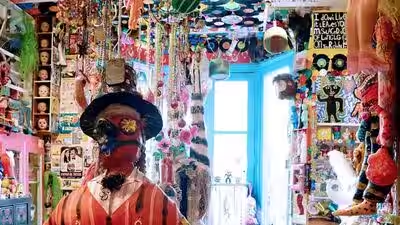
The House of Dreams Museum began in 1998. Image Credit: Stephen Wright official website

A London artist has spent decades turning his home into a dense and colourful record of his life, covering walls, ceilings and outdoor spaces with thousands of discarded and collected objects. Stephen Wright’s House of Dreams in East Dulwich began as a creative project in the late 1990s but gradually became something far more personal. Broken dolls, false teeth, glasses, bottles, ceramics and handwritten memories now form an ever-growing environment shaped by travel, relationships, grief and everyday experiences. Instead of simply decorating his home, Wright has used the space to preserve memories and give unwanted objects a new place to belong.

London artist turned his home into the House of Dreams

According to Wright’s own House of Dreams website, the museum began in 1998 and was initially inspired by the television programme Journeys into the Outside, presented by Jarvis Cocker. The programme introduced Wright to outsider art environments and helped spark the idea of transforming his own surroundings into something permanent.According to RawVision, which profiled Wright’s work in 2015, he started it with his former partner Donald Jones. The pair had visited unusual artistic environments, including the Maison Picassiette in Chartres, France. Those experiences helped shape Wright’s desire to create a lasting work rather than something that would simply be used and discarded.That motivation was connected to his earlier career. Before creating the House of Dreams, Wright had worked for years as a fashion, knitwear and stationery designer. RawVision explains that he had become tired of the temporary nature of design, where objects such as wrapping paper could be used and thrown away. The house offered him a way to make something permanent.

London artist turned his home into the House of Dreams

Stephen Wright. Image Credit: Stephen Wright official website

A home transformed by thousands of discarded objects

The result is a home where ordinary discarded objects have become part of the artwork. Wright’s website says he mosaics, sticks and stitches objects into walls and ceilings, while thousands of other pieces are arranged throughout the museum and garden.Broken dolls are among the most striking elements. Wright says thousands of them are present in the museum and garden, with many collected during trips to Budapest, Prague and Madrid. The objects are not treated simply as decorations. They have individual histories and are incorporated into sculptures, shrines and larger arrangements.There are also collections of glasses bought from junk markets in Paris and tooth molds donated to the museum. One particularly personal object is a small black purse that belonged to Wright’s mother. After her death, he found miniature light bulbs and pieces of crumpled silver paper inside it. Rather than throwing them away, he kept them as they were and attached them to one of the sculptures.The house also contains objects connected to Wright’s childhood. His website describes a battered blue and white lion that his father dug up in the family garden in Shavington when Wright was a child. Other pieces have travelled much further before finding their way into the collection.

The collection became a record of Wright’s life

The House of Dreams gradually moved beyond being an experiment in colour and objects. RawVision describes how the deaths of Donald and both of Wright’s parents, occurring only a few years after the project began, changed what the house meant to him.Wright took a short break from the work following the bereavements, but eventually returned to it. RawVision says that continuing the project became an outlet for healing and dealing with what had happened. The house became a place where memories could be held physically.That personal history is visible in the handwritten memory boards spread throughout the museum. Wright explains on his website that they record important events, thoughts about life, conversations overheard on public transport and political observations. Together, the objects and writing turn the building into something resembling a diary made from physical things.

Backstory of discarded objects that became part of Wright’s home

The objects in the House of Dreams often carry meaning because of where they came from. A doll bought after being run over by a car became part of a shrine. Two doll heads bought together at a flea market in Paris were transformed into a sculpture of Siamese twins. A red glitter-faced doll was made for a 2014 Mencap exhibition before becoming part of another shrine.Wright’s collection also extends to family-related pieces. His website describes two sculptures as part of his family. Even a ponytail donated in January 2016, once belonging to actor Richard Ashton, has found a place within the house. This approach gives the discarded objects a second existence.

What does the House of Dreams represent today

For Wright, the museum is closely tied to ideas of love, loss, childhood, trauma, travel and joy. His website describes it as a home for the discarded and unwanted.The house also reflects places that have mattered to Wright. His website highlights his love of travelling, particularly in India and Mexico, as well as his connection to Paris. Many objects in the museum were collected from those places, bringing pieces of his travels into his London home.The project is still not presented as a finished artwork. Wright acknowledges that he does not always know exactly what he is doing or why. What matters is the continuing act of creating.The House of Dreams has also been planned as something that will outlast its creator. Wright’s website states that the museum has been bequeathed to the National Trust of Great Britain.


Source link

Related Articles

Leave a Reply

Your email address will not be published. Required fields are marked *

Back to top button
×
newsnation.aanest.com
Logo
Date of Publish : 29 September 2026, 5:51 pm Digital Edition : News nation
A London artist spent decades covering his home with thousands of broken dolls, false teeth and other discarded objects, turning it into a museum of found art | World News

The House of Dreams Museum began in 1998. Image Credit: Stephen Wright official website A London artist has spent decades turning his home into a dense and colourful record of his life, covering walls, ceilings and outdoor spaces with thousands of discarded and collected objects. Stephen Wright’s House of Dreams in East Dulwich began as a creative project in the late 1990s but gradually became something far more personal. Broken dolls, false teeth, glasses, bottles, ceramics and handwritten memories now form an ever-growing environment shaped by travel, relationships, grief and everyday experiences. Instead of simply decorating his home, Wright has used the space to preserve memories and give unwanted objects a new place to belong.London artist turned his home into the House of DreamsAccording to Wright’s own House of Dreams website, the museum began in 1998 and was initially inspired by the television programme Journeys into the Outside, presented by Jarvis Cocker. The programme introduced Wright to outsider art environments and helped spark the idea of transforming his own surroundings into something permanent.According to RawVision, which profiled Wright’s work in 2015, he started it with his former partner Donald Jones. The pair had visited unusual artistic environments, including the Maison Picassiette in Chartres, France. Those experiences helped shape Wright’s desire to create a lasting work rather than something that would simply be used and discarded.That motivation was connected to his earlier career. Before creating the House of Dreams, Wright had worked for years as a fashion, knitwear and stationery designer. RawVision explains that he had become tired of the temporary nature of design, where objects such as wrapping paper could be used and thrown away. The house offered him a way to make something permanent.Stephen Wright. Image Credit: Stephen Wright official websiteA home transformed by thousands of discarded objectsThe result is a home where ordinary discarded objects have become part of the artwork. Wright’s website says he mosaics, sticks and stitches objects into walls and ceilings, while thousands of other pieces are arranged throughout the museum and garden.Broken dolls are among the most striking elements. Wright says thousands of them are present in the museum and garden, with many collected during trips to Budapest, Prague and Madrid. The objects are not treated simply as decorations. They have individual histories and are incorporated into sculptures, shrines and larger arrangements.There are also collections of glasses bought from junk markets in Paris and tooth molds donated to the museum. One particularly personal object is a small black purse that belonged to Wright’s mother. After her death, he found miniature light bulbs and pieces of crumpled silver paper inside it. Rather than throwing them away, he kept them as they were and attached them to one of the sculptures.The house also contains objects connected to Wright’s childhood. His website describes a battered blue and white lion that his father dug up in the family garden in Shavington when Wright was a child. Other pieces have travelled much further before finding their way into the collection.The collection became a record of Wright’s lifeThe House of Dreams gradually moved beyond being an experiment in colour and objects. RawVision describes how the deaths of Donald and both of Wright’s parents, occurring only a few years after the project began, changed what the house meant to him.Wright took a short break from the work following the bereavements, but eventually returned to it. RawVision says that continuing the project became an outlet for healing and dealing with what had happened. The house became a place where memories could be held physically.That personal history is visible in the handwritten memory boards spread throughout the museum. Wright explains on his website that they record important events, thoughts about life, conversations overheard on public transport and political observations. Together, the objects and writing turn the building into something resembling a diary made from physical things.Backstory of discarded objects that became part of Wright’s homeThe objects in the House of Dreams often carry meaning because of where they came from. A doll bought after being run over by a car became part of a shrine. Two doll heads bought together at a flea market in Paris were transformed into a sculpture of Siamese twins. A red glitter-faced doll was made for a 2014 Mencap exhibition before becoming part of another shrine.Wright’s collection also extends to family-related pieces. His website describes two sculptures as part of his family. Even a ponytail donated in January 2016, once belonging to actor Richard Ashton, has found a place within the house. This approach gives the discarded objects a second existence.What does the House of Dreams represent todayFor Wright, the museum is closely tied to ideas of love, loss, childhood, trauma, travel and joy. His website describes it as a home for the discarded and unwanted.The house also reflects places that have mattered to Wright. His website highlights his love of travelling, particularly in India and Mexico, as well as his connection to Paris. Many objects in the museum were collected from those places, bringing pieces of his travels into his London home.The project is still not presented as a finished artwork. Wright acknowledges that he does not always know exactly what he is doing or why. What matters is the continuing act of creating.The House of Dreams has also been planned as something that will outlast its creator. Wright’s website states that the museum has been bequeathed to the National Trust of Great Britain.

Source link