
World

55-million-year-old fossil bird reveals how trogons evolved their unusual feet; reversed toe came before the big toe shrank |

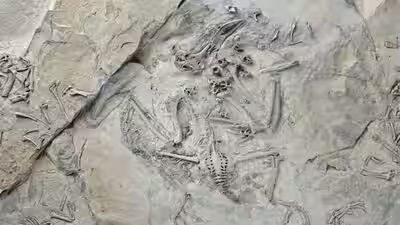
55-million-year-old fossil bird reveals how trogons evolved their unusual feet; reversed toe came before the big toe shrank
PC: Journal of Systematic Palaeontology

A fossil bird from Denmark is helping researchers understand how the unusual feet of modern trogons evolved. The fossil belongs to a species called Daniatrogon kochi, which lived about 55 million years ago during the Early Eocene. Researchers found the fossil in 1989 on the Danish island of Mors in the Fur Formation. According to the study published in the Journal of Systematic Palaeontology titled ‘Evolution of a morphological novelty: exceptional skeleton of an early Eocene trogon (Aves: Trogoniformes) elucidates the origin of a unique foot morphology’, the specimen is one of the oldest known trogoniforms and preserves a foot that differs from other known trogoniforms.

What does the 55-million-year-old fossil reveal about trogon feet

The nearly complete skeleton of Daniatrogon kochi was found on a beach on the Danish island of Mors in 1989 by fossil collector Karsten Koch, whose name is also reflected in the species name. The fossil comes from the Early Eocene Fur Formation and is exceptionally well preserved. The presence of medullary bone shows that the specimen was a breeding female.A phylogenetic analysis places Daniatrogon kochi as the earliest diverging member, though the analysis did not fully resolve how several early trogons are related to each other. Its foot also sets it apart from other known trogoniforms because the second toe was not fully reversed (it may have been slightly rotated inward). Modern trogons have a permanently reversed second toe that works with the big toe against the other two front toes. This distinctive arrangement is known as a heterodactyl foot.

What does the 55-million-year-old fossil reveal about trogon feet<br>

PC: Journal of Systematic Palaeontology

How did the unusual trogon foot evolve over time

The unusual foot of Daniatrogon kochi helps show how the distinctive trogon foot developed. Modern trogons have a heterodactyl foot in which the second toe is permanently reversed. The same arrangement is also found in other known fossil trogons. It has generally been considered an adaptation for perching that helped compensate for a weak big toe.Daniatrogon kochi, however, had a very long big toe. The study also notes that the Messel trogon, Masillatrogon had a long big toe. Together, these fossils show that the big toe was reduced later in the lineage. The findings indicate that the reversed second toe developed before the big toe shrank, providing a clearer sequence for the evolution of the distinctive trogon foot.

Evolution of trogon beaks

Daniatrogon kochi also differed from living trogons in the shape of its beak. The fossil had a narrower beak, a feature also seen in other stem-group trogoniforms such as Eotrogon and Primotrogon.Living trogons have wider beaks that they use to excavate nesting cavities in soft, rotting wood. The narrower beaks of these early forms may suggest that they used existing holes for nesting or dug nesting cavities in soil with their feet. The study places the change in the foot before the widening of the beak.This provides another detail about the early history of trogoniforms and shows that their distinctive features developed at different stages.

How did early trogoniforms move differently from modern trogons

The study also examines how early trogoniforms may have differed from living trogons. Modern trogons are relatively sedentary birds that search for food by making short flights from perches.Stem-group trogoniforms may have moved more actively through branches and vegetation while feeding. Their stronger grasping feet would have helped with this movement. The later reduction of the big toe may have been linked to a more sedentary lifestyle, when the reversed second toe was enough for perching.Early trogoniforms also had more varied beak and foot shapes than their living relatives, which the study takes to mean they were ecologically more varied.


Source link

Related Articles

Leave a Reply

Your email address will not be published. Required fields are marked *

Back to top button
×
newsnation.aanest.com
Logo
Date of Publish : 29 September 2026, 12:47 pm Digital Edition : News nation
55-million-year-old fossil bird reveals how trogons evolved their unusual feet; reversed toe came before the big toe shrank |

PC: Journal of Systematic Palaeontology A fossil bird from Denmark is helping researchers understand how the unusual feet of modern trogons evolved. The fossil belongs to a species called Daniatrogon kochi, which lived about 55 million years ago during the Early Eocene. Researchers found the fossil in 1989 on the Danish island of Mors in the Fur Formation. According to the study published in the Journal of Systematic Palaeontology titled ‘Evolution of a morphological novelty: exceptional skeleton of an early Eocene trogon (Aves: Trogoniformes) elucidates the origin of a unique foot morphology’, the specimen is one of the oldest known trogoniforms and preserves a foot that differs from other known trogoniforms.What does the 55-million-year-old fossil reveal about trogon feetThe nearly complete skeleton of Daniatrogon kochi was found on a beach on the Danish island of Mors in 1989 by fossil collector Karsten Koch, whose name is also reflected in the species name. The fossil comes from the Early Eocene Fur Formation and is exceptionally well preserved. The presence of medullary bone shows that the specimen was a breeding female.A phylogenetic analysis places Daniatrogon kochi as the earliest diverging member, though the analysis did not fully resolve how several early trogons are related to each other. Its foot also sets it apart from other known trogoniforms because the second toe was not fully reversed (it may have been slightly rotated inward). Modern trogons have a permanently reversed second toe that works with the big toe against the other two front toes. This distinctive arrangement is known as a heterodactyl foot.PC: Journal of Systematic PalaeontologyHow did the unusual trogon foot evolve over timeThe unusual foot of Daniatrogon kochi helps show how the distinctive trogon foot developed. Modern trogons have a heterodactyl foot in which the second toe is permanently reversed. The same arrangement is also found in other known fossil trogons. It has generally been considered an adaptation for perching that helped compensate for a weak big toe.Daniatrogon kochi, however, had a very long big toe. The study also notes that the Messel trogon, Masillatrogon had a long big toe. Together, these fossils show that the big toe was reduced later in the lineage. The findings indicate that the reversed second toe developed before the big toe shrank, providing a clearer sequence for the evolution of the distinctive trogon foot.Evolution of trogon beaksDaniatrogon kochi also differed from living trogons in the shape of its beak. The fossil had a narrower beak, a feature also seen in other stem-group trogoniforms such as Eotrogon and Primotrogon.Living trogons have wider beaks that they use to excavate nesting cavities in soft, rotting wood. The narrower beaks of these early forms may suggest that they used existing holes for nesting or dug nesting cavities in soil with their feet. The study places the change in the foot before the widening of the beak.This provides another detail about the early history of trogoniforms and shows that their distinctive features developed at different stages.How did early trogoniforms move differently from modern trogonsThe study also examines how early trogoniforms may have differed from living trogons. Modern trogons are relatively sedentary birds that search for food by making short flights from perches.Stem-group trogoniforms may have moved more actively through branches and vegetation while feeding. Their stronger grasping feet would have helped with this movement. The later reduction of the big toe may have been linked to a more sedentary lifestyle, when the reversed second toe was enough for perching.Early trogoniforms also had more varied beak and foot shapes than their living relatives, which the study takes to mean they were ecologically more varied.

Source link