
World

A mother and her three children were stranded in Panama for 33 days after Air Canada raised concerns about their valid Canadian visas; a Federal Court ordered the airline to pay C$4,129 | World News

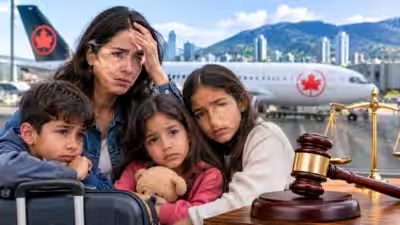
A mother and her three children were stranded in Panama for 33 days after Air Canada raised concerns about their valid Canadian visas; a Federal Court ordered the airline to pay C$4,129

A mother and her three children arrived at an airport in Panama in August 2017, ready to board a flight to Toronto. They had valid Canadian visas, but questions raised by Air Canada staff about their travel plans led to the documents being cancelled before they could fly. The family ended up spending another 33 days in Panama while trying to get the visas reinstated. The dispute eventually reached Canada’s Federal Court, which examined the airline’s role in the events and the expenses the family had incurred. In its April 2025 judgment in Mejias Turmero v. Air Canada and Attorney General of Canada, 2025 FC 673, the court ordered Air Canada to pay C$4,129.04.

How Air Canada’s check-in questions led to visa trouble

Nazarelys Paula Mejias Turmero was travelling to Toronto with her three children on 4 August 2017. The family had booked one-way seats on Air Canada flight AC 1949 from Panama City. They already had valid Canadian visas and were hoping to join Ms. Mejias’s husband, who was studying in Toronto.Questions came up when they reached the check-in desk. An Air Canada employee wanted to know more about their journey. Ms. Mejias explained that it was their first trip to Canada and that her husband planned to apply for a post-graduation work permit after finishing his studies. The employee said he would need to speak to immigration officials before proceeding.The conversation was then taken further by his supervisor, Ms. Corrales, who contacted a Canada Border Services Agency (CBSA) liaison officer in Panama. She raised concerns about the family’s luggage and one-way tickets, as well as the number of people leaving Venezuela. Her concern was that the family might not leave Canada when they were supposed to. However, the explanation about the husband’s plans to apply for a work permit was not included in the information passed on to immigration officials.However, the court later observed that the supervisor had not passed on an important part of the explanation given by Ms. Mejias: her husband’s plans to apply for a work permit after completing his studies.

A phone call led to the cancellation of their Canadian visas

The information provided by the airline supervisor was passed through the immigration channel to an official based in Mexico City, identified as Mr. Francis. The official cancelled the family’s Canadian visas on the same day, leaving the mother and her children unable to continue their journey.The family was in Panama without the documents needed to board their booked flight to Canada. They had to find a way to have the visas restored before they could travel.On 28 August 2017, a lawyer representing Ms. Mejias contacted Mr. Francis and explained the circumstances surrounding her husband’s studies and his intended work permit application. Following this communication, the visas were issued again. Air Canada also arranged new flights for the family without charging them for the rebooking.The passengers eventually arrived in Toronto on 6 September 2017, 33 days after their original departure date. During that period, Ms. Mejias and her children had to meet their accommodation and day-to-day living expenses in Panama.

Mother took Air Canada to the Federal Court

Ms. Mejias eventually took the matter to Canada’s Federal Court. Representing herself, she sought USD 4,520.13 from Air Canada, claiming the money she and her children had spent because they could not travel as planned. Her claim was brought under Article 19 of the Montreal Convention, which covers losses caused by delays in international air travel.She also named the Attorney General of Canada in a separate claim, accusing immigration authorities of negligence and seeking public law damages. In court, she questioned Air Canada’s account of the airport exchange. The airline’s own records did not show that the male check-in agent had entered the family’s visa details into its system. Ms. Corrales, the supervisor who contacted the CBSA, also admitted she had not heard the conversation herself. She had no first-hand knowledge of the answers Ms. Mejias had given at the counter.That left an important gap in the airline’s version of events. The explanation about her husband’s plans to apply for a work permit had not been passed on to the immigration official who cancelled the family’s visas.

What Air Canada argued in its defence

The airline disputed the interpretation of Article 19 of the Montreal Convention. Its position was that it was required to demonstrate that it had taken reasonable steps to prevent the damage caused by the delay, rather than prove that it had done everything possible to avoid the delay itself. Air Canada also referred to its obligations concerning passengers travelling to Canada without the necessary documentation. It maintained that its employees had acted within the scope of those responsibilities when they raised concerns with immigration authorities.The airline questioned the need to call the male check-in employee as a witness, arguing that the supervisor’s evidence was sufficient. Both Air Canada and the federal government also challenged the expenses claimed by Ms. Mejias, raising the issue of whether she had taken reasonable steps to limit her losses.During the proceedings, the possibility of returning to Venezuela rather than remaining in Panama was raised. The defence suggested that the family could have made that journey for approximately USD 240. It also argued that some of the claimed food and living expenses would have been incurred regardless of where the family stayed.

Why the court held the airline responsible

The Federal Court did not accept Air Canada’s interpretation of the Montreal Convention. In its examination of the applicable legal principles, it concluded that the airline had to establish that it had taken all reasonable measures to avoid the delay, not simply that it had tried to limit the financial consequences once the delay occurred.The court also distinguished the case from situations in which passengers are refused boarding because they do not possess valid travel documents. Ms. Mejias and her children had valid visas when they arrived at the airport. The court found that their cancellation followed a sequence of events initiated by Air Canada’s employees.The airline’s evidence presented further difficulties. The male employee who had first questioned Ms. Mejias was not called to testify, and no explanation was provided for his absence. The court also found problems with the reliability of Ms. Corrales’s account. Her failure to communicate the husband’s work permit plans to the CBSA liaison officer was another point considered by the judge. The court drew an adverse inference from the airline’s decision not to produce the original employee as a witness, concluding that his testimony would likely not have supported its position. As a result, Air Canada failed to establish the defence available to it under Article 19.

Why the court rejected Air Canada’s argument about returning to Venezuela

The court also considered the airline’s argument that Ms. Mejias should have returned to Venezuela instead of remaining in Panama while the visa issue was being resolved. It rejected the suggestion that her decision amounted to a failure to mitigate the family’s losses. When they arrived at the airport on 4 August, there was no way for the family to know that the problem would keep them away from Canada for more than a month.Their decision to stay in Panama while attempting to understand the cancellation and secure the return of their visas was considered reasonable in the circumstances. The court did not find that they had acted unreasonably by choosing to resolve the matter rather than immediately travel back to Venezuela.

Which expenses were included in the compensation

The hotel was the biggest expense the court accepted. Ms. Mejias had submitted a bill for USD 2,301.10, and the full amount was allowed. Food bills and other day-to-day expenses were also included where receipts showed what the family had spent during their extended stay in Panama.The pharmacy bill was treated differently. Ms. Mejias had claimed USD 311.36, but her children had chickenpox during the same period. The court could not establish how much of the medical spending was linked to the delay caused by Air Canada, so it did not allow the full amount.There was also USD 925.50 in expenses for which Ms. Mejias had no receipts. Those claims were turned down. The court was not prepared to award money on the basis of estimates alone.

Air Canada ordered to pay C$4,129.04

In its 2025 judgment, Mejias Turmero v. Air Canada and Attorney General of Canada, 2025 FC 673, the Federal Court ordered Air Canada to pay Ms. Mejias C$4,129.04. The amount represented USD 3,283.27 converted at an exchange rate of 1.2576.The award also included interest at 2% from 20 August 2017, followed by interest at 4.75% after the judgment. The question of legal costs was left open for further submissions.Disclaimer: This article is based on the judgment delivered by the Federal Court of Canada in Mejias Turmero v. Air Canada and Attorney General of Canada, 2025 FC 673, and other publicly available information. The Times of India has not independently verified the circumstances beyond the details available in the cited court records.


Source link

Related Articles

Leave a Reply

Your email address will not be published. Required fields are marked *

Back to top button
×
newsnation.aanest.com
Logo
Date of Publish : 24 November 2026, 12:56 pm Digital Edition : News nation
A mother and her three children were stranded in Panama for 33 days after Air Canada raised concerns about their valid Canadian visas; a Federal Court ordered the airline to pay C$4,129 | World News

A mother and her three children arrived at an airport in Panama in August 2017, ready to board a flight to Toronto. They had valid Canadian visas, but questions raised by Air Canada staff about their travel plans led to the documents being cancelled before they could fly. The family ended up spending another 33 days in Panama while trying to get the visas reinstated. The dispute eventually reached Canada's Federal Court, which examined the airline's role in the events and the expenses the family had incurred. In its April 2025 judgment in Mejias Turmero v. Air Canada and Attorney General of Canada, 2025 FC 673, the court ordered Air Canada to pay C$4,129.04.How Air Canada's check-in questions led to visa troubleNazarelys Paula Mejias Turmero was travelling to Toronto with her three children on 4 August 2017. The family had booked one-way seats on Air Canada flight AC 1949 from Panama City. They already had valid Canadian visas and were hoping to join Ms. Mejias's husband, who was studying in Toronto.Questions came up when they reached the check-in desk. An Air Canada employee wanted to know more about their journey. Ms. Mejias explained that it was their first trip to Canada and that her husband planned to apply for a post-graduation work permit after finishing his studies. The employee said he would need to speak to immigration officials before proceeding.The conversation was then taken further by his supervisor, Ms. Corrales, who contacted a Canada Border Services Agency (CBSA) liaison officer in Panama. She raised concerns about the family's luggage and one-way tickets, as well as the number of people leaving Venezuela. Her concern was that the family might not leave Canada when they were supposed to. However, the explanation about the husband's plans to apply for a work permit was not included in the information passed on to immigration officials.However, the court later observed that the supervisor had not passed on an important part of the explanation given by Ms. Mejias: her husband's plans to apply for a work permit after completing his studies.A phone call led to the cancellation of their Canadian visasThe information provided by the airline supervisor was passed through the immigration channel to an official based in Mexico City, identified as Mr. Francis. The official cancelled the family's Canadian visas on the same day, leaving the mother and her children unable to continue their journey.The family was in Panama without the documents needed to board their booked flight to Canada. They had to find a way to have the visas restored before they could travel.On 28 August 2017, a lawyer representing Ms. Mejias contacted Mr. Francis and explained the circumstances surrounding her husband's studies and his intended work permit application. Following this communication, the visas were issued again. Air Canada also arranged new flights for the family without charging them for the rebooking.The passengers eventually arrived in Toronto on 6 September 2017, 33 days after their original departure date. During that period, Ms. Mejias and her children had to meet their accommodation and day-to-day living expenses in Panama.Mother took Air Canada to the Federal CourtMs. Mejias eventually took the matter to Canada's Federal Court. Representing herself, she sought USD 4,520.13 from Air Canada, claiming the money she and her children had spent because they could not travel as planned. Her claim was brought under Article 19 of the Montreal Convention, which covers losses caused by delays in international air travel.She also named the Attorney General of Canada in a separate claim, accusing immigration authorities of negligence and seeking public law damages. In court, she questioned Air Canada's account of the airport exchange. The airline's own records did not show that the male check-in agent had entered the family's visa details into its system. Ms. Corrales, the supervisor who contacted the CBSA, also admitted she had not heard the conversation herself. She had no first-hand knowledge of the answers Ms. Mejias had given at the counter.That left an important gap in the airline's version of events. The explanation about her husband's plans to apply for a work permit had not been passed on to the immigration official who cancelled the family's visas.What Air Canada argued in its defenceThe airline disputed the interpretation of Article 19 of the Montreal Convention. Its position was that it was required to demonstrate that it had taken reasonable steps to prevent the damage caused by the delay, rather than prove that it had done everything possible to avoid the delay itself. Air Canada also referred to its obligations concerning passengers travelling to Canada without the necessary documentation. It maintained that its employees had acted within the scope of those responsibilities when they raised concerns with immigration authorities.The airline questioned the need to call the male check-in employee as a witness, arguing that the supervisor's evidence was sufficient. Both Air Canada and the federal government also challenged the expenses claimed by Ms. Mejias, raising the issue of whether she had taken reasonable steps to limit her losses.During the proceedings, the possibility of returning to Venezuela rather than remaining in Panama was raised. The defence suggested that the family could have made that journey for approximately USD 240. It also argued that some of the claimed food and living expenses would have been incurred regardless of where the family stayed.Why the court held the airline responsibleThe Federal Court did not accept Air Canada's interpretation of the Montreal Convention. In its examination of the applicable legal principles, it concluded that the airline had to establish that it had taken all reasonable measures to avoid the delay, not simply that it had tried to limit the financial consequences once the delay occurred.The court also distinguished the case from situations in which passengers are refused boarding because they do not possess valid travel documents. Ms. Mejias and her children had valid visas when they arrived at the airport. The court found that their cancellation followed a sequence of events initiated by Air Canada's employees.The airline's evidence presented further difficulties. The male employee who had first questioned Ms. Mejias was not called to testify, and no explanation was provided for his absence. The court also found problems with the reliability of Ms. Corrales's account. Her failure to communicate the husband's work permit plans to the CBSA liaison officer was another point considered by the judge. The court drew an adverse inference from the airline's decision not to produce the original employee as a witness, concluding that his testimony would likely not have supported its position. As a result, Air Canada failed to establish the defence available to it under Article 19.Why the court rejected Air Canada's argument about returning to VenezuelaThe court also considered the airline's argument that Ms. Mejias should have returned to Venezuela instead of remaining in Panama while the visa issue was being resolved. It rejected the suggestion that her decision amounted to a failure to mitigate the family's losses. When they arrived at the airport on 4 August, there was no way for the family to know that the problem would keep them away from Canada for more than a month.Their decision to stay in Panama while attempting to understand the cancellation and secure the return of their visas was considered reasonable in the circumstances. The court did not find that they had acted unreasonably by choosing to resolve the matter rather than immediately travel back to Venezuela.Which expenses were included in the compensationThe hotel was the biggest expense the court accepted. Ms. Mejias had submitted a bill for USD 2,301.10, and the full amount was allowed. Food bills and other day-to-day expenses were also included where receipts showed what the family had spent during their extended stay in Panama.The pharmacy bill was treated differently. Ms. Mejias had claimed USD 311.36, but her children had chickenpox during the same period. The court could not establish how much of the medical spending was linked to the delay caused by Air Canada, so it did not allow the full amount.There was also USD 925.50 in expenses for which Ms. Mejias had no receipts. Those claims were turned down. The court was not prepared to award money on the basis of estimates alone.Air Canada ordered to pay C$4,129.04In its 2025 judgment, Mejias Turmero v. Air Canada and Attorney General of Canada, 2025 FC 673, the Federal Court ordered Air Canada to pay Ms. Mejias C$4,129.04. The amount represented USD 3,283.27 converted at an exchange rate of 1.2576.The award also included interest at 2% from 20 August 2017, followed by interest at 4.75% after the judgment. The question of legal costs was left open for further submissions.Disclaimer: This article is based on the judgment delivered by the Federal Court of Canada in Mejias Turmero v. Air Canada and Attorney General of Canada, 2025 FC 673, and other publicly available information. The Times of India has not independently verified the circumstances beyond the details available in the cited court records.

Source link