
Scientists tracked 38 timber rattlesnakes in Illinois and found they spent weeks waiting near winter shelters before going underground and after emerging in spring |

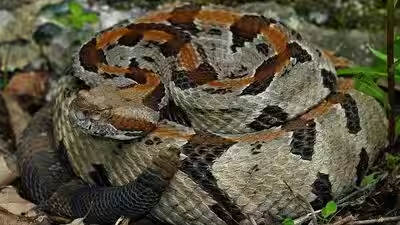

Timber rattlesnakes spend much of the year near underground shelters where they escape the cold winter months. A study found that the snakes also spend several weeks waiting near these shelters before entering them in autumn and moving away in spring. Researchers monitored 38 timber rattlesnakes, 20 of them fitted with radio transmitters, in Jersey County, Illinois, over two autumns and two springs to understand this behaviour. They found that temperature may have influenced when the snakes arrived, entered their shelters, and left in warmer weather.According to the research published in Ecology and Evolution titled ‘Fall and Spring Staging in a Refugia‐Dependent Migratory Snake’, the snakes spent more than 6 months inside their winter shelters. Including the waiting periods before and after winter, their association with these shelters lasted nearly 8 months.
Timber rattlesnakes spend weeks near winter shelters before entering
The researchers found that the snakes did not move directly from their summer ranges into underground refuges. In autumn, they first reached the overwintering habitat and stayed nearby before entering. This fall staging period averaged 29.23 days in 2021, but was shorter in 2022, at 8.2 days. Of 27 paired seasonal records from 17 snakes, 6 animals entered refuges on the day they arrived.The other 21 remained on the surface before going underground. They sheltered beneath leaves, rocks, or hollow logs, at an average distance of 58.17 metres from refuges. They used an average of 1.91 locations and stayed at each for about 12.29 days. Entry took place mainly at night at the monitored refuges in Jersey County.

PC: Ecology and Evolution
Why do timber rattlesnakes wait near winter shelters after emerging in spring
Spring brought a second pause after the snakes emerged from their underground refuges. Rather than immediately moving towards their summer habitats, the radio-tracked animals stayed in nearby bluff areas. The spring staging period averaged 21.81 days in 2022 and 26.35 days in 2023. Researchers recorded 31 paired seasonal records from 20 tracked snakes.After emerging, the snakes concealed themselves beneath leaves, rocks and hollow logs, an average of 75.50 metres from their overwintering refuges. They occupied an average of 2.4 locations and remained at each for about 10.63 days. Some returned to staging locations they had used during the previous autumn or in earlier years. Most emerged at night, although a smaller midday peak was recorded during the monitoring period.
How do temperature changes influence rattlesnakes’ seasonal movements
Temperature measurements showed different conditions for the snakes’ arrival, entry, emergence and departure. In autumn, they reached overwintering habitat at an average temperature near 19°C, but entered refuges at about 14°C. In spring, they emerged at around 14°C and began moving towards summer habitats at approximately 19°C.The researchers found that snakes began entering refuges after a rapid fall in temperature. Spring departures followed a sharp and sustained rise over several consecutive days. Emergence was staggered, as snakes came out during warm periods before colder weather interrupted activity. The study suggests temperature may be an important cue for these movements, although the authors said further data would be needed to assess other influences across the two years covered in each season.
Staging periods help snakes navigate seasonal temperature changes
The authors describe the pauses as staging periods that separate migration from entry into or exit from winter refuges. They suggest these intervals may act as buffers, helping snakes match seasonal movements with suitable temperatures. In autumn, arriving early may allow the reptiles to reach shelter before conditions become too cold, while delaying entry leaves time for remaining active-season opportunities.In spring, emerging before moving away may reduce the risk of travelling during cold conditions. The researchers said this behaviour could help temperate reptiles manage unpredictable seasonal changes. However, they noted that the study could not establish every reason for staging, and that additional multi-year research is needed to examine the role of temperature alongside other environmental or internal factors.
Source link