
Prove you’re alive with a selfie: What pensioners need to know about Jeevan Pramaan | India News

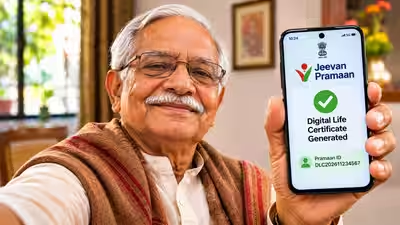

Imagine having to prove every year that you are alive to keep receiving your pension. For millions of India’s pensioners, that routine may now take little more than a selfie. No bank visit, no long queues and no need to depend on someone else to submit a life certificate.A smartphone camera can now do the job. Through the government’s Jeevan Pramaan system, pensioners can use Aadhaar-based face authentication to verify their identity and generate a Digital Life Certificate (DLC) from home.The system captures their live facial image and matches it with the photograph linked to their Aadhaar number, allowing the certificate to be sent electronically to the pension disbursing authority.The facility is particularly significant for elderly, sick and differently abled pensioners, for whom travelling to a bank or pension office can be difficult.The government is now pushing wider adoption of the technology through its fifth nationwide Digital Life Certificate campaign, running from November 1 to 30, 2026, with a target of 2.30 crore certificates, including 1.50 crore through face authentication.What is a Digital Life Certificate and why pensioners need itA Digital Life Certificate is an electronic document that confirms a pensioner is alive and eligible to continue receiving pension payments.Government pensioners are required to submit this certificate periodically to the authority responsible for disbursing their pension. The requirement is intended to ensure that pension payments continue to reach eligible beneficiaries and are not credited after a pensioner’s death.Under the traditional system, pensioners generally had to appear before their bank or another authorised official to establish that they were alive. The certificate was then submitted to the pension disbursing agency for processing.For elderly pensioners, particularly those suffering from illness or mobility problems, travelling to a bank or government office every year could be difficult.The Reserve Bank of India (RBI), in a December 2014 circular to banks, acknowledged that several pensioners found it difficult to submit life certificates on time despite the facility being available at different branches of their pension disbursing banks.To address this problem, the government launched Jeevan Pramaan on November 10, 2014, introducing an Aadhaar-based Digital Life Certificate system. Developed by the then department of electronics and information technology, the initiative aimed to remove the need for pensioners to physically visit their pension disbursing authorities to submit the certificate.The official Jeevan Pramaan portal describes the initiative as a way to address the “hardship and unnecessary inconvenience” faced by elderly and infirm pensioners who may be unable to appear personally before the authorities.Under the system, a certificate generated after successful biometric authentication is stored in a central repository and made available electronically to the pension disbursing agency.

How a selfie-based Digital Life Certificate worksThe process is more than simply clicking a selfie and uploading it. It uses Aadhaar-based facial authentication to verify the pensioner’s identity before generating the certificate.The technology was introduced to make the process easier, particularly for elderly pensioners whose fingerprints may have become difficult to capture with age.To use the facility, pensioners need two applications on their smartphones, the government’s Jeevan Pramaan app and UIDAI’s AadhaarFaceRD app.The latter enables the phone camera to capture the pensioner’s face for authentication. The official Jeevan Pramaan portal says that a separate fingerprint or iris-scanning device is not required for face authentication.The process begins with the pensioner entering details such as Aadhaar number, name, mobile number and pension-related information, including the Pension Payment Order (PPO) number, bank account and pension disbursing authority.The user then completes the required operator authentication, which is a one-time process and can also be performed by the pensioner. After providing consent, the pensioner captures a live facial image using the smartphone camera.But how does the phone know that the person in front of the camera is the actual pensioner? The captured image is sent for Aadhaar-based face authentication, where UIDAI matches it with the facial photograph linked to the Aadhaar number provided.UIDAI describes this as a 1:1 matching process, meaning the live image is checked against the photograph associated with that particular Aadhaar number, rather than being searched against a database of millions of faces. The authority also says face authentication is based on the Aadhaar holder’s consent.Once authentication is successful, the Digital Life Certificate is generated with a unique identification number called the Pramaan ID.An acknowledgement is sent to the pensioner’s registered mobile number, while the certificate is stored in the Jeevan Pramaan repository and made available electronically to the pension disbursing agency. This means the pensioner does not ordinarily need to visit the bank to submit a printed copy.

Who can use this facility and when must they submit itThe Jeevan Pramaan facility is available to pensioners whose Pension Sanctioning Authority (PSA) is registered on the platform. This includes eligible pensioners receiving pensions from Central and state governments and other government organisations.The facility is also available to eligible Employees’ Pension Scheme (EPS-95) pensioners, provided their pension disbursing agency is onboarded on the system.For Central government pensioners, submitting an annual life certificate in November is necessary for the continuation of pension payments.However, pensioners aged 80 and above are given an additional window and can submit their certificates from October 1 every year. The Department of Pension and Pensioners’ Welfare reiterated these rules in an office memorandum dated October 26, 2026.Importantly, not every pensioner follows the same submission schedule. For instance, EPS-95 pensioners can submit their life certificates at any time during the year, with the next certificate remaining valid for one year from the date of the previous submission.Therefore, the November deadline applicable to Central government pensioners should not be treated as a universal deadline for all pension categories.There are also certain restrictions. According to the official Jeevan Pramaan FAQ, pensioners who have been re-employed or remarried are not eligible to use the Digital Life Certificate facility and must submit their life certificates through conventional methods.

What can go wrongWhile the Digital Life Certificate system is designed to make pension verification easier, generating the certificate does not necessarily mean that the process is complete.A pensioner’s face may be successfully authenticated and a certificate generated, but errors in pension details or the selection of the wrong pension disbursing authority can prevent it from being updated in the bank’s records.This problem was highlighted at the 35th meeting of the Standing Committee of Voluntary Agencies (SCOVA), held on March 10, 2026, under the department of pension and pensioners’ welfare.The meeting discussed complaints of delays and rejection of Digital Life Certificates submitted through Jeevan Pramaan, particularly involving Bank of Baroda and Central Bank of India.Central Bank of India disclosed that during the government’s November 2025 Digital Life Certificate campaign, 79,905 certificates belonging to its pension account holders were uploaded to the Jeevan Pramaan portal. Of these, 60,637 were successfully updated in the bank’s pension processing system, while the remaining 19,268 were rejected.This means around 24 per cent of the certificates uploaded to the portal were not updated in the bank’s records.The bank attributed the rejections mainly to pensioners entering incorrect pension account details. It also pointed to cases involving defence and telecom pensioners who had moved to the SPARSH and SAMPANN pension systems respectively but continued selecting Central Bank of India as their pension disbursing agency while submitting their certificates.Bank of Baroda identified similar problems, including incorrect PPO numbers, account numbers and selection of the wrong Pension Sanctioning Authority. It also reported cases in which pensioners submitted certificates through both physical and digital modes or generated multiple digital certificates, leading to processing complications.The distinction is important for pensioners: successful face authentication confirms identity, but the certificate must also reach the correct pension authority and be updated in its records. Pensioners should therefore retain their Pramaan ID and check the certificate’s status rather than assuming that a successful scan automatically completes the process.

What if face authentication failsFace authentication may not work every time. Poor lighting, incorrect positioning of the face, slow internet connectivity or incorrect pension details can prevent the certificate from being generated.The Controller General of Defence Accounts (CGDA), in its guidance on Digital Life Certificates, has also identified locked Aadhaar biometrics, an incorrect PPO number, an unclear facial image and failure to follow the app’s instructions during the scan as possible reasons for unsuccessful submissions.If a pensioner receives an SMS informing them that their Digital Life Certificate has been rejected, the Jeevan Pramaan portal advises them to contact their Pension Disbursing Agency (PDA), such as their bank or post office.The pensioner should verify the details entered during submission and generate a fresh certificate with the correct information and biometric authentication. The status of the certificate can also be checked by downloading it from the official Jeevan Pramaan portal using the Pramaan ID.For pensioners who do not own a smartphone or are unable to complete the face scan, the digital system is not the only option. They can visit a bank branch, post office or authorised Common Service Centre (CSC) to submit their life certificate through available biometric facilities.Banks also offer doorstep banking services through which an agent can visit the pensioner’s home to complete the process.India Post Payments Bank (IPPB) also provides a doorstep Digital Life Certificate facility through postmen and Gramin Dak Sevaks.Under the service, an authorised postal representative visits the pensioner’s home and completes the authentication process using the available biometric facility.The standard IPPB service is charged at Rs 70, inclusive of applicable taxes, for successful certificate generation. However, eligible EPS-95 pensioners can avail the separate EPFO-IPPB doorstep facility free of charge.Importantly, submitting a Digital Life Certificate is an additional facility and not a compulsory replacement for the traditional method.Pensioners who prefer physical submission can continue to provide their life certificates through the authorised conventional channels. The State Bank of India also confirms that physical life certificates will continue to be accepted from pensioners who prefer this method.Is the digital system safe? What pensioners should keep in mindSince the process involves Aadhaar-based biometric authentication, consent and data protection are important considerations.The Jeevan Pramaan application requires pensioners to provide consent before their Aadhaar details and biometric information are used for authentication.According to the consent declaration displayed in the application, the ministry of electronics and information technology (MeitY) and the National Informatics Centre (NIC) state that the pensioner’s biometric will not be stored or shared.
Share your thoughts in the comments
Be respectful · TOI community guidelines
Pensioners should download the Jeevan Pramaan and AadhaarFaceRD applications only through official app stores and avoid sharing their Aadhaar details, OTPs or banking information with unknown callers or agents. They should also retain the SMS acknowledgement and unique Pramaan ID generated after successful authentication.The government describes Jeevan Pramaan as an additional facility alongside existing methods of submitting life certificates. Its purpose is to make an essential annual requirement less burdensome for pensioners, particularly those who are elderly or unable to travel.However, the process does not end with a successful face scan. Pensioners must ensure that their certificate is correctly generated, reaches the appropriate pension disbursing authority and is accepted in the pension records.
Source link


