
World

America’s rarest fish is bouncing back: Biologists diving into Nevada’s Devils Hole counted 137 pupfish this fall, nearly double the 69 found a year earlier in the only place the species lives in the wild

America’s rarest fish is bouncing back: Biologists diving into Nevada’s Devils Hole counted 137 pupfish this fall, nearly double the 69 found a year earlier in the only place the species lives in the wild
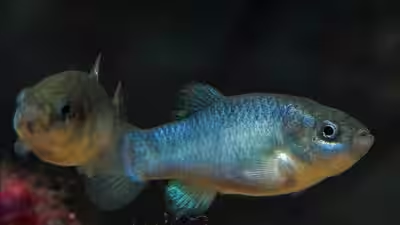
Devils Hole pupfish (Image courtesy: Olin Feuerbacher / USFWS | Public Domain)

A fish that can barely grow beyond an inch is showing signs of a remarkable comeback. Nature has a weird way of making life find a way, even in places where survival seems almost impossible. Sometimes, it is a tiny fish living in a water-filled cavern, far removed from the rest of the world, that reminds us of just how resilient life can be. Deep inside a water-filled cavern in Nevada’s Death Valley National Park, one of the world’s rarest fish species is slowly rebuilding its population. The Devils Hole pupfish, which exists naturally in only one location on Earth, was once pushed dangerously close to extinction. However, a recent survey has offered conservationists a reason for optimism, with the number of fish recorded in the cavern more than doubling in just one year.According to a news release published by the National Park Service (NPS) on November 3, 2026, biologists counted 137 Devils Hole pupfish during an October 10 survey. This was more than double the 69 fish recorded during the autumn survey in 2025 and nearly twice the 77 observed in spring 2026. The survey was conducted by divers and surface counters from the National Park Service and the US Fish and Wildlife Service, which have monitored the population using these methods since 1972.“It’s exciting to see Devils Hole pupfish numbers increase so significantly over the past year,” said Mike Reynolds, superintendent of Death Valley National Park. “These results reflect the dedication of our scientists and conservation partners working to protect this extraordinary species. While challenges remain, we’re encouraged by this progress and committed to its long-term survival.”

How earthquakes brought the tiny fish close to extinction

Devils-Hole-Pupfish_1

Devil’s Hole PupfishUS Fish and Wildlife Service/Olin Feuerbacher

The Devils Hole pupfish (Cyprinodon diabolis) is a small, blue-coloured fish that lives exclusively in Devils Hole, a deep, water-filled limestone cavern in Nevada. Its entire wild population depends on a remarkably small habitat, particularly a shallow limestone shelf measuring approximately 215 square feet, where the fish feed and reproduce.The species has adapted to an environment that would be difficult for many other fish to survive in. The water temperature remains around 90 to 93 degrees Fahrenheit, while oxygen and nutrient levels are relatively low. The pupfish primarily feed on algae growing on the limestone shelf, along with small invertebrates.However, this extremely limited habitat also makes the species vulnerable to even minor environmental disturbances. In December 2024 and February 2025, earthquakes generated powerful waves inside the cavern, disrupting its normally still waters. The waves swept away algae, fish eggs and other organic material from the shallow shelf, affecting both the food supply and breeding grounds of the pupfish.By March 2025, the population had fallen to approximately 20 fish, raising serious concerns about the species’ survival. The situation was particularly worrying because the fish has an average lifespan of just 10 to 14 months, leaving little room for prolonged population decline.

How conservation efforts helped the population recover

Devils-Hole-Pupfish_USFWS

Image : Wikimedia Commons

To prevent the species from disappearing in the wild, conservation teams turned to a captive population maintained at the Ash Meadows Fish Conservation Facility, located a few miles from Devils Hole. The facility contains a specially designed 100,000-gallon tank that recreates important features of the fish’s natural habitat, allowing researchers to maintain a backup population and study its behaviour.Between March 2025 and February 2026, scientists released 72 captive-raised pupfish into Devils Hole. This marked the first time that captive-raised Devils Hole pupfish had been returned to their natural habitat. Conservation teams also provided supplemental food while the algae on the limestone shelf recovered, using research conducted at the facility to guide their efforts.Interestingly, biologists believe that most of the 137 fish recorded during the latest survey were not among those directly released into the cavern. Given the species’ short lifespan, researchers believe most of them hatched and grew naturally inside Devils Hole, suggesting that the population has begun reproducing successfully again in its original habitat.The recovery is particularly significant for a species that has faced decades of environmental pressure. The Devils Hole pupfish was listed as endangered in 1967, with groundwater extraction for agriculture and ranching posing a major threat to its habitat. A landmark 1976 US Supreme Court decision, in the case of Cappaert v. United States, upheld protections preventing groundwater pumping from lowering water levels in a way that would threaten the fish’s habitat.Although the latest count offers encouraging signs, conservationists caution that the species remains vulnerable to earthquakes, fluctuations in water levels and changes in its food supply. Its entire wild population continues to depend on a single, isolated cavern.For now, the return of the tiny pupfish offers a reminder of what sustained conservation, scientific monitoring and carefully planned intervention can achieve. While 137 fish may seem like a modest number, for a species that had fallen to just 20, every new generation represents another opportunity for survival.


Source link

Related Articles

Leave a Reply

Your email address will not be published. Required fields are marked *

Back to top button
×
newsnation.aanest.com
Logo
Date of Publish : 20 November 2026, 11:37 am Digital Edition : News nation
America’s rarest fish is bouncing back: Biologists diving into Nevada’s Devils Hole counted 137 pupfish this fall, nearly double the 69 found a year earlier in the only place the species lives in the wild

Devils Hole pupfish (Image courtesy: Olin Feuerbacher / USFWS | Public Domain) A fish that can barely grow beyond an inch is showing signs of a remarkable comeback. Nature has a weird way of making life find a way, even in places where survival seems almost impossible. Sometimes, it is a tiny fish living in a water-filled cavern, far removed from the rest of the world, that reminds us of just how resilient life can be. Deep inside a water-filled cavern in Nevada's Death Valley National Park, one of the world's rarest fish species is slowly rebuilding its population. The Devils Hole pupfish, which exists naturally in only one location on Earth, was once pushed dangerously close to extinction. However, a recent survey has offered conservationists a reason for optimism, with the number of fish recorded in the cavern more than doubling in just one year.According to a news release published by the National Park Service (NPS) on November 3, 2026, biologists counted 137 Devils Hole pupfish during an October 10 survey. This was more than double the 69 fish recorded during the autumn survey in 2025 and nearly twice the 77 observed in spring 2026. The survey was conducted by divers and surface counters from the National Park Service and the US Fish and Wildlife Service, which have monitored the population using these methods since 1972."It's exciting to see Devils Hole pupfish numbers increase so significantly over the past year," said Mike Reynolds, superintendent of Death Valley National Park. "These results reflect the dedication of our scientists and conservation partners working to protect this extraordinary species. While challenges remain, we're encouraged by this progress and committed to its long-term survival."How earthquakes brought the tiny fish close to extinctionDevil's Hole PupfishUS Fish and Wildlife Service/Olin FeuerbacherThe Devils Hole pupfish (Cyprinodon diabolis) is a small, blue-coloured fish that lives exclusively in Devils Hole, a deep, water-filled limestone cavern in Nevada. Its entire wild population depends on a remarkably small habitat, particularly a shallow limestone shelf measuring approximately 215 square feet, where the fish feed and reproduce.The species has adapted to an environment that would be difficult for many other fish to survive in. The water temperature remains around 90 to 93 degrees Fahrenheit, while oxygen and nutrient levels are relatively low. The pupfish primarily feed on algae growing on the limestone shelf, along with small invertebrates.However, this extremely limited habitat also makes the species vulnerable to even minor environmental disturbances. In December 2024 and February 2025, earthquakes generated powerful waves inside the cavern, disrupting its normally still waters. The waves swept away algae, fish eggs and other organic material from the shallow shelf, affecting both the food supply and breeding grounds of the pupfish.By March 2025, the population had fallen to approximately 20 fish, raising serious concerns about the species' survival. The situation was particularly worrying because the fish has an average lifespan of just 10 to 14 months, leaving little room for prolonged population decline.How conservation efforts helped the population recoverImage : Wikimedia CommonsTo prevent the species from disappearing in the wild, conservation teams turned to a captive population maintained at the Ash Meadows Fish Conservation Facility, located a few miles from Devils Hole. The facility contains a specially designed 100,000-gallon tank that recreates important features of the fish's natural habitat, allowing researchers to maintain a backup population and study its behaviour.Between March 2025 and February 2026, scientists released 72 captive-raised pupfish into Devils Hole. This marked the first time that captive-raised Devils Hole pupfish had been returned to their natural habitat. Conservation teams also provided supplemental food while the algae on the limestone shelf recovered, using research conducted at the facility to guide their efforts.Interestingly, biologists believe that most of the 137 fish recorded during the latest survey were not among those directly released into the cavern. Given the species' short lifespan, researchers believe most of them hatched and grew naturally inside Devils Hole, suggesting that the population has begun reproducing successfully again in its original habitat.The recovery is particularly significant for a species that has faced decades of environmental pressure. The Devils Hole pupfish was listed as endangered in 1967, with groundwater extraction for agriculture and ranching posing a major threat to its habitat. A landmark 1976 US Supreme Court decision, in the case of Cappaert v. United States, upheld protections preventing groundwater pumping from lowering water levels in a way that would threaten the fish's habitat.Although the latest count offers encouraging signs, conservationists caution that the species remains vulnerable to earthquakes, fluctuations in water levels and changes in its food supply. Its entire wild population continues to depend on a single, isolated cavern.For now, the return of the tiny pupfish offers a reminder of what sustained conservation, scientific monitoring and carefully planned intervention can achieve. While 137 fish may seem like a modest number, for a species that had fallen to just 20, every new generation represents another opportunity for survival.

Source link