World

In 1930, an 11-year-old British girl suggested the name Pluto over breakfast after hearing about a newly discovered planet; astronomers accepted her suggestion, making her part of space history |

In 1930, an 11-year-old British girl suggested the name Pluto over breakfast after hearing about a newly discovered planet; astronomers accepted her suggestion, making her part of space history
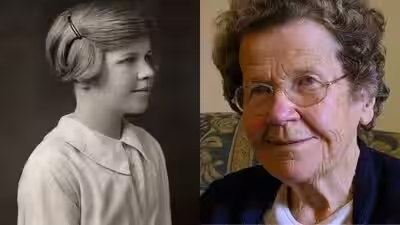
(L) Venetia Burney, aged 11, c. 1929; (R) Venetia in December 2006. Image Credits: Wikipedia & Nasa

The discovery of a new planet in 1930 beyond Neptune gave astronomers an unexpected task of finding a suitable name for it. Among the many suggestions submitted to the Lowell Observatory in Arizona was one from an 11-year-old British schoolgirl named Venetia Burney. Her idea was inspired by classical mythology and a conversation over breakfast with her grandfather. The observatory eventually selected her suggestion, giving the distant celestial body a name that would remain familiar for decades, even after its classification changed.

An 11-year-old British girl came up with the name Pluto

The story began in Oxford, England, where Venetia Burney lived with her family. On 14 March 1930, she was having breakfast with her mother and grandfather, Falconer Madan, when he shared the news that astronomers had discovered a new planet. He wondered what the newly identified object might be called.According to an interview with NASA in January 2006, Burney recalled that she suggested Pluto after a short pause. She was familiar with Greek and Roman mythology through the children’s books she had read and already knew the names of the other planets in the solar system. She felt Pluto was a suitable choice because the name had not been used for another planet.The suggestion was not the result of a formal discussion or any involvement in scientific research. It was a simple idea offered during an ordinary family breakfast. However, her grandfather recognised its potential and decided to pass it on to someone who could bring it to the attention of astronomers.

The discovery that started the search for a name

The American Astronomical Society explained that the search for another planet had started years before Burney made her suggestion.American astronomer Percival Lowell had begun searching for an unseen planet beyond Neptune in 1906. He believed that an undiscovered object, which he called Planet X, was influencing the orbits of Uranus and Neptune. Although his search continued until his death in 1916, he did not find the object.The search resumed in 1929 when Vesto Slipher, director of Lowell Observatory in Flagstaff, Arizona, hired Clyde Tombaugh to continue the work. Tombaugh used photographic plates to record sections of the night sky on different nights. By comparing the images, he could identify objects that had moved against the background of distant stars.After months of systematic observations, Tombaugh identified a moving object on photographic plates taken on 23 and 29 January 1930. The discovery was confirmed, and Lowell Observatory announced it on 13 March 1930.The discovery attracted considerable attention because the object appeared to be another world beyond Neptune, making it an important addition to the known solar system.

How did the suggestion reach American astronomers

Burney’s grandfather played an important role in taking the idea beyond the family breakfast table. Falconer Madan was a retired librarian who had previously served as the head librarian at the Bodleian Library at the University of Oxford. He also had connections with several astronomers.As NASA explained in its interview with Burney, Madan passed the proposed name to Herbert Hall Turner, an Oxford professor and former Astronomer Royal. Turner was attending a meeting of the Royal Astronomical Society in London when he received the suggestion.The Arizona Memory Project preserves an important piece of evidence from this exchange. Its digital archive contains a telegram sent by Turner to Lowell Observatory on 16 March 1930, relaying the suggestion of Pluto and identifying Burney as the young English girl who had proposed it.

Why did astronomers choose the name Pluto

In Roman mythology, Pluto was the god of the underworld. The name was considered appropriate for a distant, dark and relatively mysterious object located at the outer edges of the solar system. It also maintained the tradition of giving planets names connected with classical mythology.There was another interesting detail. The first two letters of Pluto were the initials of Percival Lowell, whose earlier search for Planet X had helped set the discovery in motion.According to EarthSky, Lowell Observatory received around 1,000 suggestions from people around the world. Despite the large number of entries, Burney’s proposal was ultimately selected.The observatory officially announced the name on 1 May 1930. EarthSky also reported that Burney received £5 as a reward for her suggestion.

Pluto’s place in the solar system changed over time

For more than 70 years, Pluto was recognised as the 9th planet in the solar system. Its status, however, became a subject of discussion as astronomers discovered more objects in the distant region beyond Neptune.The American Astronomical Society noted that from 1992 onwards, several other bodies were identified orbiting the Sun in the same region as Pluto, now known as the Kuiper Belt. These discoveries led scientists to reconsider whether Pluto fitted the traditional definition of a planet.In 2006, the International Astronomical Union introduced a formal definition of a planet and established a separate category called dwarf planets. Pluto did not meet all the requirements and was placed in the new category. It became the first object recognised in this classification.Although its scientific classification changed, its name remained untouched.

How did Venetia Burney’s suggestion become part of space history

Burney did not pursue a career in astronomy. According to NASA, she later worked as an accountant and taught economics and mathematics in England. Nevertheless, her contribution continued to attract attention long after the naming decision.NASA interviewed her in 2006, shortly before the launch of the New Horizons spacecraft, which was designed to explore Pluto and the Kuiper Belt. The spacecraft reached Pluto in July 2015, providing the first close-up observations of the distant world.In recognition of Burney’s contribution, the New Horizons team renamed its Student Dust Counter instrument the Venetia Burney Student Dust Counter in June 2006. NASA later presented her with a plaque, certificate and spacecraft model during a small ceremony at her home.Burney died on 30 April 2009, aged 90, at her home in Epsom, England.


Source link

Related Articles

Leave a Reply

Your email address will not be published. Required fields are marked *

Back to top button
×
newsnation.aanest.com
Logo
Date of Publish : 18 November 2026, 4:11 am Digital Edition : News nation
In 1930, an 11-year-old British girl suggested the name Pluto over breakfast after hearing about a newly discovered planet; astronomers accepted her suggestion, making her part of space history |

(L) Venetia Burney, aged 11, c. 1929; (R) Venetia in December 2006. Image Credits: Wikipedia & Nasa The discovery of a new planet in 1930 beyond Neptune gave astronomers an unexpected task of finding a suitable name for it. Among the many suggestions submitted to the Lowell Observatory in Arizona was one from an 11-year-old British schoolgirl named Venetia Burney. Her idea was inspired by classical mythology and a conversation over breakfast with her grandfather. The observatory eventually selected her suggestion, giving the distant celestial body a name that would remain familiar for decades, even after its classification changed.An 11-year-old British girl came up with the name PlutoThe story began in Oxford, England, where Venetia Burney lived with her family. On 14 March 1930, she was having breakfast with her mother and grandfather, Falconer Madan, when he shared the news that astronomers had discovered a new planet. He wondered what the newly identified object might be called.According to an interview with NASA in January 2006, Burney recalled that she suggested Pluto after a short pause. She was familiar with Greek and Roman mythology through the children's books she had read and already knew the names of the other planets in the solar system. She felt Pluto was a suitable choice because the name had not been used for another planet.The suggestion was not the result of a formal discussion or any involvement in scientific research. It was a simple idea offered during an ordinary family breakfast. However, her grandfather recognised its potential and decided to pass it on to someone who could bring it to the attention of astronomers.The discovery that started the search for a nameThe American Astronomical Society explained that the search for another planet had started years before Burney made her suggestion.American astronomer Percival Lowell had begun searching for an unseen planet beyond Neptune in 1906. He believed that an undiscovered object, which he called Planet X, was influencing the orbits of Uranus and Neptune. Although his search continued until his death in 1916, he did not find the object.The search resumed in 1929 when Vesto Slipher, director of Lowell Observatory in Flagstaff, Arizona, hired Clyde Tombaugh to continue the work. Tombaugh used photographic plates to record sections of the night sky on different nights. By comparing the images, he could identify objects that had moved against the background of distant stars.After months of systematic observations, Tombaugh identified a moving object on photographic plates taken on 23 and 29 January 1930. The discovery was confirmed, and Lowell Observatory announced it on 13 March 1930.The discovery attracted considerable attention because the object appeared to be another world beyond Neptune, making it an important addition to the known solar system.How did the suggestion reach American astronomersBurney's grandfather played an important role in taking the idea beyond the family breakfast table. Falconer Madan was a retired librarian who had previously served as the head librarian at the Bodleian Library at the University of Oxford. He also had connections with several astronomers.As NASA explained in its interview with Burney, Madan passed the proposed name to Herbert Hall Turner, an Oxford professor and former Astronomer Royal. Turner was attending a meeting of the Royal Astronomical Society in London when he received the suggestion.The Arizona Memory Project preserves an important piece of evidence from this exchange. Its digital archive contains a telegram sent by Turner to Lowell Observatory on 16 March 1930, relaying the suggestion of Pluto and identifying Burney as the young English girl who had proposed it.Why did astronomers choose the name PlutoIn Roman mythology, Pluto was the god of the underworld. The name was considered appropriate for a distant, dark and relatively mysterious object located at the outer edges of the solar system. It also maintained the tradition of giving planets names connected with classical mythology.There was another interesting detail. The first two letters of Pluto were the initials of Percival Lowell, whose earlier search for Planet X had helped set the discovery in motion.According to EarthSky, Lowell Observatory received around 1,000 suggestions from people around the world. Despite the large number of entries, Burney's proposal was ultimately selected.The observatory officially announced the name on 1 May 1930. EarthSky also reported that Burney received £5 as a reward for her suggestion.Pluto's place in the solar system changed over timeFor more than 70 years, Pluto was recognised as the 9th planet in the solar system. Its status, however, became a subject of discussion as astronomers discovered more objects in the distant region beyond Neptune.The American Astronomical Society noted that from 1992 onwards, several other bodies were identified orbiting the Sun in the same region as Pluto, now known as the Kuiper Belt. These discoveries led scientists to reconsider whether Pluto fitted the traditional definition of a planet.In 2006, the International Astronomical Union introduced a formal definition of a planet and established a separate category called dwarf planets. Pluto did not meet all the requirements and was placed in the new category. It became the first object recognised in this classification.Although its scientific classification changed, its name remained untouched.How did Venetia Burney's suggestion become part of space historyBurney did not pursue a career in astronomy. According to NASA, she later worked as an accountant and taught economics and mathematics in England. Nevertheless, her contribution continued to attract attention long after the naming decision.NASA interviewed her in 2006, shortly before the launch of the New Horizons spacecraft, which was designed to explore Pluto and the Kuiper Belt. The spacecraft reached Pluto in July 2015, providing the first close-up observations of the distant world.In recognition of Burney's contribution, the New Horizons team renamed its Student Dust Counter instrument the Venetia Burney Student Dust Counter in June 2006. NASA later presented her with a plaque, certificate and spacecraft model during a small ceremony at her home.Burney died on 30 April 2009, aged 90, at her home in Epsom, England.

Source link