World

A 74-year-old widow sent half her life savings to someone pretending to be David Attenborough; the fraudster used AI-generated images to convince her they were in a relationship | World News

A 74-year-old widow sent half her life savings to someone pretending to be David Attenborough; the fraudster used AI-generated images to convince her they were in a relationship

A Facebook message from someone claiming to be Sir David Attenborough eventually turned into a relationship that a 74-year-old Canadian widow believed could lead to marriage and a new life in Britain. For six months, Diane exchanged intimate messages with the supposed broadcaster, sent him money and began making plans to leave her home behind. As reported by The Independent, the person on the other side of the screen was not Attenborough. Using fabricated photographs, an AI-generated video and a succession of personal crises, the fraudster persuaded her to part with a substantial portion of her savings. By the time her son discovered what was happening, the financial damage and emotional fallout had already begun.

Fake David Attenborough Facebook account drew Diane into a six-month romance scam

Diane first encountered the fake celebrity account in October 2024. The profile presented itself as belonging to Attenborough, and the initial contact soon developed into regular conversations. As reported, the person managing the account suggested moving their exchanges to Telegram, claiming the messaging platform would offer greater privacy.What followed was an increasingly consuming online relationship. Diane began staying awake late into the night to speak with the man, who said he was following British time. Their conversations became part of her daily routine, and within weeks, the two were exchanging declarations of love.There was little reason for Diane to believe that the person behind the account was facing the sort of financial difficulties he described. But the supposed relationship soon acquired a series of problems that required her help. He claimed his former wife had taken hundreds of thousands of pounds from him, leaving him struggling to recover the money.

How the supposed broadcaster began asking for money

The requests for financial assistance started with what appeared to be a temporary problem. The fraudster told Diane that he needed money to pay a lawyer who could help retrieve the funds allegedly taken by his former wife. He also claimed he needed the money to arrange life-saving treatment for a kidney condition.Diane initially transferred CA$4,000, equivalent to approximately £2,200. The requests did not stop there. Over the following weeks, she sent further amounts, sometimes a few hundred dollars and sometimes several thousand.The payments were made through cash deposits into a cryptocurrency account specified by the fraudster. This arrangement made the transactions harder to trace and left Diane with little prospect of recovering the money once it had been transferred.By March 2025, she had handed over CA$22,000, roughly half of her life savings. She was left with only CA$6,000 in an account she could access.Diane later acknowledged that she had suspected something was wrong even while the relationship continued. There were moments when she questioned the identity of the person she was speaking to, but her feelings had become deeply involved. She knew the situation did not always make sense and continued sending money anyway.

AI-generated images and a fake video helped sustain the deception

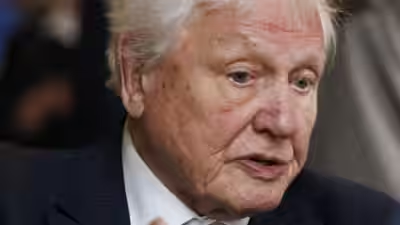
The fraudster also had to maintain the appearance that he was the celebrated natural historian Diane believed she was communicating with. An AI-generated photograph of Attenborough was used on the Facebook profile, giving the account a visual identity that could appear convincing to someone unfamiliar with the signs of digital impersonation.As Diane began asking more questions, the person behind the account supplied further material. Eventually, she received a pre-recorded video featuring an AI-generated version of Attenborough, complete with a fabricated voice.The technology gave the fraudster another way to reinforce the story. Rather than relying entirely on written messages and photographs, the account could now appear to offer a personal video from the man Diane believed was her partner.Her doubts did not disappear completely. She withdrew the remaining funds from the cryptocurrency account after becoming suspicious, but the break was short-lived. A few days later, the fraudster contacted her through another Facebook profile, presenting the new account as further proof of his identity. Diane resumed communicating with him.

Marriage plans and the prospect of moving to London

The relationship had by then moved beyond requests for money to discussions about their future together. The supposed Attenborough spoke about marriage and a life in Britain, suggesting that Diane could join him in London. There was a condition attached to this plan. She would first have to sell her Canadian flat and send him the proceeds.Diane began preparing for the move and bought a passport. To her, the relationship appeared to be heading towards a permanent commitment, even though she had never met the person she believed she was going to marry.Her son Jim eventually discovered the extent of what had happened. When he confronted her at home one Sunday morning, he learnt that his mother had been communicating with someone impersonating the veteran broadcaster for six months and had already transferred a large part of her savings. The confrontation was painful. Jim believed his mother had become so involved with the fraudster that she was prepared to abandon her existing life and leave him behind.His intervention prompted Diane to distance herself from the account and begin dealing with the consequences of the deception.

The fraudster tried to pull her back after she ended contact

Breaking away did not immediately end the manipulation. Around ten days after Jim confronted his mother, the fraudster sent Diane an email while continuing to pose as Attenborough. The message accused her of pretending to love him and blamed her for causing him emotional pain. It was another attempt to make Diane feel responsible for the breakdown of a relationship that had never been genuine.By then, she understood that she had been defrauded. Yet the emotional attachment had not simply vanished with that realisation. The Independent reported that she still had lingering feelings for the person she had believed she loved. About six weeks after receiving the email, Diane emptied her savings account and sent the remaining money to the fraudster.The episode left her family facing not only the loss of her money but the difficulty of rebuilding trust and helping her recover from the experience. Jim and his mother subsequently opened a joint bank account for her finances, allowing him to monitor deposits and withdrawals. Diane also sought assistance from her family doctor.

Romance fraud relies on relationships built over time

Diane’s experience reflects a pattern seen in romance fraud cases, where financial requests emerge only after fraudsters have spent considerable time establishing emotional connections with their targets.Rather than asking for a large payment immediately, perpetrators may begin with everyday conversations, gradually introducing declarations of affection and claims of personal hardship. Once a victim feels responsible for the supposed partner’s wellbeing, requests for money can become increasingly difficult to refuse.Research cited in The Independent’s investigation found that romance fraud often involves repeated payments, reflecting the length of the relationships fraudsters build. The publication also referred to findings from UK Finance showing that romance scams accounted for £20.5 million in reported losses during the first half of 2025, an increase of more than a third compared with the same period in 2024.The amount lost annually to this type of fraud had also nearly doubled since 2020, according to the figures reported. Social media and messaging services have made it easier for fraudsters to approach people while concealing their actual identities. Diane’s case began on Facebook before moving to Telegram, taking the conversations away from the original platform.Figures from TSB cited in the investigation indicated that 58 per cent of romance fraud cases began on social media. Celebrity impersonation featured in 29% of those cases.

Fake David Attenborough pages remained active despite reports to Facebook

Diane’s experience also formed part of a wider investigation into how fraudulent celebrity profiles were handled by Facebook, which is owned by Meta. The Independent identified two Facebook pages pretending to represent Attenborough. Both had been active for several months and encouraged fans to contact them privately. The publication reported the accounts to Facebook, but the platform initially declined to remove either, saying its enforcement efforts prioritised cases involving the most severe potential real-world harm.The newspaper subsequently contacted the pages itself. Both responded while pretending to be the broadcaster. One account went on to engage a reporter in an attempted romance scam, following a pattern similar to the one Diane had described. Around six weeks into the exchange, the person behind it requested £2,000 through Bitcoin.The investigation also examined 100 other recently active fake celebrity pages, each with at least 1,000 followers. One had accumulated 206,000 followers. Facebook initially said that 91 of the reported pages did not breach its content policies. Five were removed, while the remaining cases received different responses. Some accounts continued attracting followers during the following months. One impersonating Denzel Washington reportedly gained more than 100,000 additional followers before Meta was contacted directly by the newspaper. Most of the remaining pages were subsequently taken down.Meta said impersonating public figures was against its policies and that it had removed or disabled the pages brought to its attention. The company also said it used automated systems and facial recognition technology to identify fraudulent accounts.For Diane, however, the damage had already been done long before the wider investigation brought attention to the fake profiles. A person she had never met had managed to convince her that she was in a relationship with one of Britain’s best-known broadcasters, leaving her with a fraction of the money she had saved over her lifetime.Disclaimer: This article is based on publicly available reports and information. The Times of India has not independently verified the details of the alleged romance scam, financial transactions or circumstances surrounding the incident.


Source link

Related Articles

Leave a Reply

Your email address will not be published. Required fields are marked *

Back to top button
×
newsnation.aanest.com
Logo
Date of Publish : 16 November 2026, 2:16 pm Digital Edition : News nation
A 74-year-old widow sent half her life savings to someone pretending to be David Attenborough; the fraudster used AI-generated images to convince her they were in a relationship | World News

A Facebook message from someone claiming to be Sir David Attenborough eventually turned into a relationship that a 74-year-old Canadian widow believed could lead to marriage and a new life in Britain. For six months, Diane exchanged intimate messages with the supposed broadcaster, sent him money and began making plans to leave her home behind. As reported by The Independent, the person on the other side of the screen was not Attenborough. Using fabricated photographs, an AI-generated video and a succession of personal crises, the fraudster persuaded her to part with a substantial portion of her savings. By the time her son discovered what was happening, the financial damage and emotional fallout had already begun.Fake David Attenborough Facebook account drew Diane into a six-month romance scamDiane first encountered the fake celebrity account in October 2024. The profile presented itself as belonging to Attenborough, and the initial contact soon developed into regular conversations. As reported, the person managing the account suggested moving their exchanges to Telegram, claiming the messaging platform would offer greater privacy.What followed was an increasingly consuming online relationship. Diane began staying awake late into the night to speak with the man, who said he was following British time. Their conversations became part of her daily routine, and within weeks, the two were exchanging declarations of love.There was little reason for Diane to believe that the person behind the account was facing the sort of financial difficulties he described. But the supposed relationship soon acquired a series of problems that required her help. He claimed his former wife had taken hundreds of thousands of pounds from him, leaving him struggling to recover the money.How the supposed broadcaster began asking for moneyThe requests for financial assistance started with what appeared to be a temporary problem. The fraudster told Diane that he needed money to pay a lawyer who could help retrieve the funds allegedly taken by his former wife. He also claimed he needed the money to arrange life-saving treatment for a kidney condition.Diane initially transferred CA$4,000, equivalent to approximately £2,200. The requests did not stop there. Over the following weeks, she sent further amounts, sometimes a few hundred dollars and sometimes several thousand.The payments were made through cash deposits into a cryptocurrency account specified by the fraudster. This arrangement made the transactions harder to trace and left Diane with little prospect of recovering the money once it had been transferred.By March 2025, she had handed over CA$22,000, roughly half of her life savings. She was left with only CA$6,000 in an account she could access.Diane later acknowledged that she had suspected something was wrong even while the relationship continued. There were moments when she questioned the identity of the person she was speaking to, but her feelings had become deeply involved. She knew the situation did not always make sense and continued sending money anyway.AI-generated images and a fake video helped sustain the deceptionThe fraudster also had to maintain the appearance that he was the celebrated natural historian Diane believed she was communicating with. An AI-generated photograph of Attenborough was used on the Facebook profile, giving the account a visual identity that could appear convincing to someone unfamiliar with the signs of digital impersonation.As Diane began asking more questions, the person behind the account supplied further material. Eventually, she received a pre-recorded video featuring an AI-generated version of Attenborough, complete with a fabricated voice.The technology gave the fraudster another way to reinforce the story. Rather than relying entirely on written messages and photographs, the account could now appear to offer a personal video from the man Diane believed was her partner.Her doubts did not disappear completely. She withdrew the remaining funds from the cryptocurrency account after becoming suspicious, but the break was short-lived. A few days later, the fraudster contacted her through another Facebook profile, presenting the new account as further proof of his identity. Diane resumed communicating with him.Marriage plans and the prospect of moving to LondonThe relationship had by then moved beyond requests for money to discussions about their future together. The supposed Attenborough spoke about marriage and a life in Britain, suggesting that Diane could join him in London. There was a condition attached to this plan. She would first have to sell her Canadian flat and send him the proceeds.Diane began preparing for the move and bought a passport. To her, the relationship appeared to be heading towards a permanent commitment, even though she had never met the person she believed she was going to marry.Her son Jim eventually discovered the extent of what had happened. When he confronted her at home one Sunday morning, he learnt that his mother had been communicating with someone impersonating the veteran broadcaster for six months and had already transferred a large part of her savings. The confrontation was painful. Jim believed his mother had become so involved with the fraudster that she was prepared to abandon her existing life and leave him behind.His intervention prompted Diane to distance herself from the account and begin dealing with the consequences of the deception.The fraudster tried to pull her back after she ended contactBreaking away did not immediately end the manipulation. Around ten days after Jim confronted his mother, the fraudster sent Diane an email while continuing to pose as Attenborough. The message accused her of pretending to love him and blamed her for causing him emotional pain. It was another attempt to make Diane feel responsible for the breakdown of a relationship that had never been genuine.By then, she understood that she had been defrauded. Yet the emotional attachment had not simply vanished with that realisation. The Independent reported that she still had lingering feelings for the person she had believed she loved. About six weeks after receiving the email, Diane emptied her savings account and sent the remaining money to the fraudster.The episode left her family facing not only the loss of her money but the difficulty of rebuilding trust and helping her recover from the experience. Jim and his mother subsequently opened a joint bank account for her finances, allowing him to monitor deposits and withdrawals. Diane also sought assistance from her family doctor.Romance fraud relies on relationships built over timeDiane's experience reflects a pattern seen in romance fraud cases, where financial requests emerge only after fraudsters have spent considerable time establishing emotional connections with their targets.Rather than asking for a large payment immediately, perpetrators may begin with everyday conversations, gradually introducing declarations of affection and claims of personal hardship. Once a victim feels responsible for the supposed partner's wellbeing, requests for money can become increasingly difficult to refuse.Research cited in The Independent's investigation found that romance fraud often involves repeated payments, reflecting the length of the relationships fraudsters build. The publication also referred to findings from UK Finance showing that romance scams accounted for £20.5 million in reported losses during the first half of 2025, an increase of more than a third compared with the same period in 2024.The amount lost annually to this type of fraud had also nearly doubled since 2020, according to the figures reported. Social media and messaging services have made it easier for fraudsters to approach people while concealing their actual identities. Diane's case began on Facebook before moving to Telegram, taking the conversations away from the original platform.Figures from TSB cited in the investigation indicated that 58 per cent of romance fraud cases began on social media. Celebrity impersonation featured in 29% of those cases.Fake David Attenborough pages remained active despite reports to FacebookDiane's experience also formed part of a wider investigation into how fraudulent celebrity profiles were handled by Facebook, which is owned by Meta. The Independent identified two Facebook pages pretending to represent Attenborough. Both had been active for several months and encouraged fans to contact them privately. The publication reported the accounts to Facebook, but the platform initially declined to remove either, saying its enforcement efforts prioritised cases involving the most severe potential real-world harm.The newspaper subsequently contacted the pages itself. Both responded while pretending to be the broadcaster. One account went on to engage a reporter in an attempted romance scam, following a pattern similar to the one Diane had described. Around six weeks into the exchange, the person behind it requested £2,000 through Bitcoin.The investigation also examined 100 other recently active fake celebrity pages, each with at least 1,000 followers. One had accumulated 206,000 followers. Facebook initially said that 91 of the reported pages did not breach its content policies. Five were removed, while the remaining cases received different responses. Some accounts continued attracting followers during the following months. One impersonating Denzel Washington reportedly gained more than 100,000 additional followers before Meta was contacted directly by the newspaper. Most of the remaining pages were subsequently taken down.Meta said impersonating public figures was against its policies and that it had removed or disabled the pages brought to its attention. The company also said it used automated systems and facial recognition technology to identify fraudulent accounts.For Diane, however, the damage had already been done long before the wider investigation brought attention to the fake profiles. A person she had never met had managed to convince her that she was in a relationship with one of Britain's best-known broadcasters, leaving her with a fraction of the money she had saved over her lifetime.Disclaimer: This article is based on publicly available reports and information. The Times of India has not independently verified the details of the alleged romance scam, financial transactions or circumstances surrounding the incident.

Source link