A British collector bought an 1834 silver coin for just £8 at a car boot sale; 3D scans have now uncovered evidence of a possible minting accident hidden for 192 years

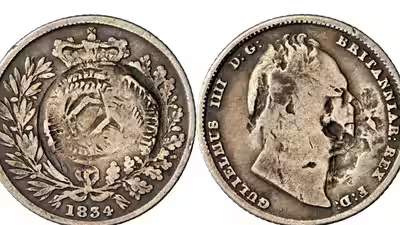

A badly damaged silver coin dating back to 1834 may hold clues to an unusual manufacturing accident that occurred nearly two centuries ago. What initially appeared to be an ordinary damaged antique has now become the subject of a scientific investigation, with researchers suggesting that the coin may have been crushed during the original minting process. According to a report published by ScienceDaily on November 11, 2026, the findings are based on a study by IA STUDIO published in the journal npj Heritage Science. Independent coverage by EurekAlert and Science News has also highlighted the unusual physical evidence uncovered during the investigation. The coin, a silver sixpence issued during the reign of King William IV, was discovered in an album containing assorted coins at a car boot sale in Greater Manchester, England. It had been individually marked with a price tag of £8, although the album was eventually purchased as a single lot rather than the sixpence being sold separately. What makes the discovery particularly interesting is the coin’s unusual condition. Its central sections are severely distorted, with much of the original design barely recognisable. However, parts of its outer rim and the grooves along its edge remain surprisingly intact. This contrast prompted researchers to investigate whether the damage had occurred through years of circulation, corrosion, an accidental impact or something that went wrong during manufacturing.
3D scans reveal unusual patterns of damage
To understand the coin’s condition, researchers combined scanning electron microscopy, chemical analysis and optical surface profilometry, a technique used to create detailed three-dimensional maps of an object’s surface. The scans revealed deep depressions, raised ridges and overlapping layers of displaced metal. The damage was particularly pronounced on the front of the coin, known as the obverse, which carries the portrait of William IV.Measurements showed a height difference of approximately 0.75 millimetres across the damaged central portrait area. Although this may seem insignificant, it represents substantial deformation on the surface of a thin silver coin. The distribution of the damage proved especially important. Rather than showing the gradual smoothing typically associated with years of handling, the coin displayed sharp depressions and distinct raised sections, suggesting that considerable force had been applied to specific areas. Researchers believe the pattern is most consistent with repeated applications of intense pressure, with the metal’s ability to spread sideways appearing to have been restricted.
Why researchers suspect a minting accident
Chemical examinations provided further information about the coin’s composition. Less damaged sections contained a silver and copper alloy, while the distorted areas showed changes associated with corrosion and surface contamination.However, these chemical changes could not explain the depth and arrangement of the physical damage. The three-dimensional measurements offered stronger evidence that the metal had undergone substantial mechanical deformation.The researchers therefore considered several possible explanations, including ordinary wear, corrosion, accidental damage after production and compression under restricted conditions. Their findings favoured an unusual striking anomaly during the original manufacturing process. However, the study does not establish the precise sequence of events or rule out every possibility of later damage.
A rare survivor from the steam-powered minting era
The sixpence was produced in 1834, when Britain was already using steam-powered presses to manufacture coins. Mechanised production allowed mints to strike coins on a much larger scale, but manufacturing defects could still occur. Severely defective coins were generally identified during quality inspections and melted down so that their precious metal could be reused. This makes the survival of an unusually damaged silver coin particularly interesting to researchers.If the proposed explanation is correct, the sixpence could offer a rare physical record of a manufacturing failure from the early period of mechanised British coin production. The investigation also explored the use of artificial intelligence in historical research. Computational tools helped the study’s author, A. Ikraam of IA STUDIO, organise observations, consider competing explanations and formulate questions for laboratory testing. However, the conclusions were based on independently obtained scientific measurements rather than AI-generated findings.The laboratory work involved the Experimental Techniques Centre at Brunel University of London and the Oxford Materials Characterisation Service at the University of Oxford. The research demonstrates how modern imaging and materials analysis can reveal details that might otherwise remain hidden in historical objects. For a coin that spent nearly two centuries with its origins of damage unexplained, its distorted surface may now offer an unusual glimpse into the workings of Britain’s 19th-century mints.
Source link