A woman booked a Washington Airbnb for 32 days after a fire displaced her, but stayed for months; the homeowner offered $2,500 and two months of free rent before a judge ruled in her favour | World News


A short-term rental arrangement can become complicated when a guest decides not to leave after the agreed period. That is what happened to Rochanne Douglas, a Washington, D.C., homeowner who initially welcomed a woman into her Northeast Washington property for a 32-day Airbnb stay. The booking was supposed to provide temporary accommodation while the guest waited for repairs to her previous apartment. Instead, the arrangement stretched into several months, payments became irregular and the guest disputed the homeowner’s attempts to regain possession. Even an offer of $2,500, alongside two months without rent, did not bring an immediate end to the disagreement. The matter eventually reached a judge.
How a 32-day Airbnb booking turned into an extended stay in a Washington rowhouse
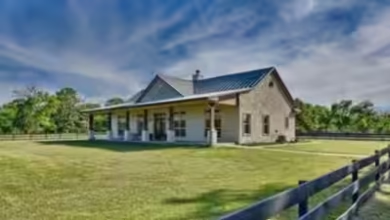
As reported by The Washington Post, the arrangement began in late February 2025 when Shadija Romero booked Douglas’s Northeast Washington rowhouse through Airbnb. Douglas, 49, had owned the property since 2019 and was working as a realtor and entrepreneur in Maryland.Romero reportedly explained that a fire had forced her out of her previous apartment and that repairs would take slightly more than a month. She wanted somewhere to stay while the work was completed. Douglas agreed to accommodate her, charging $100 a night through Airbnb.The initial booking covered 32 days. Romero made the payments through the platform and moved into the property expecting a temporary arrangement. When the agreed period ended, however, she asked to remain for another month. She said the repairs at her previous accommodation were taking longer than expected. Reportedly, this time, the payments were made directly to Douglas rather than through Airbnb.The change in arrangement would later become an important part of the dispute. Airbnb subsequently clarified that the extended stay was covered by a separate agreement between the homeowner and Romero, not by the original platform booking.
Late payments and past eviction records raised concerns for the homeowner
According to Douglas, Romero initially kept up with the payments. The situation began changing around June, when payments started arriving late or in smaller amounts. Romero also requested additional time to settle what she owed.Douglas said she began looking into Romero’s background through public court records after the repeated payment problems. Her searches uncovered previous landlord-tenant disputes, including a substantial unpaid rent balance connected to another District apartment.Court records reviewed by The Washington Post showed that Romero owed nearly $50,000 in back rent for an apartment in Washington, D.C., in 2024. She had also been ordered evicted from another District apartment building in 2023 over unpaid rent. Public records showed at least a dozen judgments or liens involving her dating back to 2008, most relating to landlord-tenant matters in Maryland and Virginia.By August, Douglas had become increasingly concerned about the arrangement. When the payment for that month had still not arrived by the middle of the month, Romero asked for another extension. Douglas responded by issuing notices asking her to leave, including an immediate vacate notice and a separate 30-day notice. Romero eventually paid the August charges, but the following month brought another round of delayed payments and installments.
The homeowner’s attempts to get her property back
By September, Douglas said she no longer wanted to continue the rental arrangement. After receiving the month’s payment in installments, she again told Romero to vacate the property. She also warned that the electricity would be disconnected if she remained beyond October 15.Douglas said, “I told her she needed to vacate the property. And I specifically told her this is why I’m not a landlord because this is the kind of correspondence I don’t want to do.”“Airbnb is very clear. You book it, they pay you the next day. … I didn’t want to be in a situation where I had to listen to this every month.”Douglas maintained that she did not want to continue accepting payments or extend the arrangement. Her position was that the original short-term booking had ended and there was no agreement for Romero to remain indefinitely.When October 15 arrived without Romero leaving, Douglas arranged for the electricity to be switched off. But the power was restored shortly afterwards. According to Douglas, Romero had transferred the electricity account with Pepco, the local utility provider, into her own name and arranged for the service to resume. Romero’s position was that she had tenant rights and could not simply be removed from the property. That argument brought a separate legal complication into the dispute.Under Washington, D.C.’s tenant protections, a written lease is not always necessary for a tenancy to exist. However, landlords can pursue eviction for unpaid rent through the required legal process after giving the appropriate notice.Airbnb also distanced itself from the extended stay. A company spokesperson told The Washington Post, “This agreement was separate from any prior booking made through Airbnb. While issues like this are rare, hosts and guests should always communicate, book, and pay on Airbnb, so they’re covered by our policies and protections.”
Homeowner offered $2,500 and waived two months’ rent, but Airbnb guest refused to leave
With the disagreement continuing, Douglas consulted a lawyer about her options. She was advised that Washington, D.C.’s housing laws could allow Romero to delay an eviction for months. Douglas then proposed a settlement intended to avoid a prolonged court battle. Under the agreement, Romero would leave the property by November 15 and give up any claim to tenancy rights. In exchange, Douglas agreed not to charge her for October or November. She also offered an additional $2,500 to help with relocation expenses.Romero signed the document on October 23, and it was submitted to the court. The November deadline passed without the property being vacated. Douglas said she then took a copy of the signed agreement to the police and asked officers to help remove Romero.The homeowner’s efforts to regain possession continued to encounter difficulties. When Douglas arrived at the house with police, Romero again maintained that she was a tenant and refused to leave. Douglas said she told Romero that she could not continue allowing someone to occupy the property without paying. She also pointed to her monthly mortgage payment of approximately $4,000, which continued to be her responsibility.The dispute grew beyond the original payment disagreement. Douglas alleged that Romero had disabled security cameras at the property and contacted authorities to have Douglas’s car towed from the driveway. Douglas eventually put up a large red-and-white notice on the front of the house declaring that the occupant was unauthorised. Romero covered part of the sign with a sheet, although it remained visible.
Police visits and a temporary return to the property
The situation appeared to be nearing an end just before Thanksgiving, when Douglas received word from neighbours that Romero seemed to have moved out. The following morning, Douglas returned to the property with police officers. She said the house was empty and that officers told her she could change the locks and secure the building. She removed the batteries from the electronic locks and arranged for contractors to board up the property. The electricity and water were also disconnected. Douglas said police had informed her that Romero could face arrest for breaking and entering if she returned.A few days later, neighbours contacted Douglas again, reporting that Romero had returned to the house with police. According to Douglas, officers allowed Romero to remove the locks and enter the property again. The homeowner was back in the same position, with the disagreement still unresolved. On December 4, an emergency virtual court hearing resulted in an order requiring Douglas to restore electricity and water to the house while the wider case was being considered.
A judge ruled that the signed agreement gave up the tenancy claim
The case eventually reached D.C. Superior Court, where Judge Maurice Ross heard evidence from Douglas, her lawyer and Romero. The judge focused on the agreement Romero had signed on October 23. The document required her to leave by November 15 and acknowledged that she did not have tenant rights. By signing it, Ross determined Romero had given up her claim to tenancy. The judge therefore allowed Douglas to retake possession of the property without waiting through the usual 20-day period.He told the homeowner that she could begin the process immediately. The ruling was welcomed by D.C. Council member Zachary Parker, who represents Ward 5, where the property is located. Parker said he was pleased that the court had brought the dispute towards a resolution and that his team would examine District laws to understand how the situation had been allowed to develop. A representative from the D.C. The Office of the Tenant Advocate said that short-term rental regulations were designed, among other things, to protect the supply of housing intended for longer-term residents.
The homeowner finally regained control of the house
Douglas moved quickly after the judge’s decision. On Thursday afternoon, she returned with her husband, along with friends and family members, to remove Romero’s belongings from the property. The items included candles, books, bedding, towels, electronic equipment and kitchenware. They were placed in the driveway behind the house as the homeowner worked to recover possession.Romero later posted an emotional video on TikTok, disputing aspects of the account that had circulated about her stay and the unpaid payments. She challenged the suggestion that she had remained in the property since February without making payments after March, saying that this version of events was untrue. She also addressed the criticism directed towards her following the court ruling and said she intended to take some time for herself.According to Douglas, Romero returned to the property later that Thursday evening and collected her belongings using a U-Haul van. The two women had not spoken since.Disclaimer: This article is based on publicly available reports. The Times of India has not independently verified all claims, statements, payment details or circumstances surrounding the Airbnb booking and subsequent occupancy dispute. Allegations and accounts attributed to the homeowner or guest have been presented as reported and should not be interpreted as independently established facts.
Source link