
Sophie Turner travelled to Rwanda to meet women who survived the genocide; the Game of Thrones actress later became an ambassador for an organisation helping survivors rebuild their lives | World News

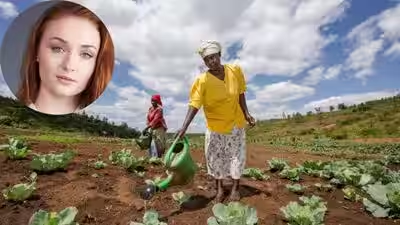

Sophie Turner, best known for playing Sansa Stark in Game of Thrones, used her experience on the television series to draw attention to sexual violence and the struggles faced by women survivors of conflict. In 2017, the British actress travelled to Rwanda, where she met women affected by the 1994 genocide and witnessed how they were rebuilding their lives. The visit marked an important step in her work with Women for Women International, an organisation supporting women survivors of war through education, financial skills and community support.
How Sophie Turner’s Game of Thrones role led her to Rwanda
Turner’s involvement with women’s rights grew partly from the reaction to a controversial storyline in Game of Thrones. Her character, Sansa Stark, experienced sexual violence during the fifth season, and the scene prompted considerable criticism from viewers. However, Turner believed the public response revealed something important about the way sexual violence was discussed.In an interview reported by Arab News in March 2017, the actress said she was shocked by the reaction. She questioned why audiences considered the depiction of rape on television unacceptable while sexual violence continued to affect women around the world. Turner argued that such experiences deserved attention rather than being treated as subjects too uncomfortable to discuss.The conversation prompted her to use her public profile to raise awareness of gender-based violence. Women for Women International says that researching and filming the rape and abuse scenes inspired Turner to support survivors of sexual violence.Her interest eventually led her to Rwanda, where the legacy of mass violence was still shaping women’s lives decades after the genocide.
The devastating legacy of Rwanda’s 1994 genocide
The 1994 genocide against the Tutsi remains one of the darkest periods in Rwanda’s history. Women for Women International states that more than one million people were killed during approximately 100 days of violence.Sexual violence was also widespread. The organisation estimates that between 100,000 and 250,000 women were raped during the genocide, while the United Nations estimates of up to 500,000 women subjected to systematic rape.The consequences extended far beyond the immediate violence. Many women lost husbands, relatives and homes, while others were left responsible for supporting children and surviving family members. The genocide also transformed Rwanda’s population and workforce, with women accounting for around 70% of the population in its aftermath.Women for Women International began working in Rwanda in 1997, three years after the genocide, to help women recover and regain control over their lives.
What did Sophie Turner witness during her visit
During her trip, Turner met women who had survived the genocide and were participating in programmes run by Women for Women International. The organisation explains that she saw how survivors were receiving practical support to move beyond survival and towards greater independence.The actress encountered women whose progress illustrated the difference that financial training and community support could make. One of them was Grace, a single mother of five who had struggled to provide for her children after losing her husband.According to Women for Women International, Grace learnt saving skills through a women’s opportunity centre. The knowledge helped her provide for her children and eventually purchase two cows, giving her family greater financial security.Turner also met Judith, a woman who had established her own textiles business. Judith made clothes while teaching other women the skills she had developed, allowing her work to benefit people beyond her own household.
How Women for Women International helps survivors rebuild
Women for Women International focuses on helping women affected by conflict become economically independent and participate more actively in their communities. Its work in Rwanda began in 1997 and has continued through programmes designed to strengthen women’s financial security, confidence and rights.The organisation describes its Stronger Women, Stronger Nations programme as a combination of peer support and practical training. Participants learn how to generate income, save money and become financially independent while gaining knowledge about their rights.The programme also encourages women to participate in decisions within their households and communities.The organisation reported that 68% of women involved in its programme participated in household spending decisions, compared with 49% when they enrolled. Participation in savings and self-help groups also increased, while more women took leadership roles in community groups.In 2021, local leadership established Women for Women Rwanda as an independent sister organisation. The country profile states that the programme had reached more than 82,418 women since its office opened in 1997, including 811 women and girls enrolled in programmes in 2025.
Sophie Turner became an ambassador for survivors
Turner’s visit was followed by a formal role with Women for Women International. On International Women’s Day in 2017, she announced that she had become an ambassador for the organisation, according to its official profile.Her responsibilities included using her public platform to raise awareness about women survivors of war and help bring attention to their experiences. The organisation’s ambassador programme relies on public figures to communicate its mission, mobilise resources and encourage wider support for women rebuilding their lives after conflict.Arab News, reporting in March 2017, described Turner as a new patron of the charity.
Source link


