World

A moth collected by Alfred Russel Wallace nearly 170 years ago was rediscovered in a museum drawer and helped identify 11 new species |

A moth collected by Alfred Russel Wallace nearly 170 years ago was rediscovered in a museum drawer and helped identify 11 new species

A battered moth that had spent decades overlooked in the Natural History Museum’s collection has helped scientists identify 11 species previously unknown to science. The tiny specimen was collected in Sarawak, Borneo, by British naturalist Alfred Russel Wallace around 1855-1856, but its significance went unnoticed for generations. Consisting of little more than a thorax and a pair of wings, it had even been dismissed by an earlier expert as unworthy of further attention. Modern DNA sequencing and research into its original labels eventually revealed its identity, allowing scientists to revive an entire moth genus.

Alfred Russel Wallace’s forgotten moth was found among millions of museum specimens

The discovery came while Natural History Museum scientific associate Mark Sterling and senior curator Dr David Lees were examining a collection of small, snow-white moths from Southeast Asia. They were investigating several specimens that appeared to represent previously undescribed species when an old, damaged moth became central to their research. The specimen had originally been described in 1863, but its deteriorated condition made identification difficult. In 1927, moth expert Edward Meyrick had recommended that it was ‘better neglected’. Sterling and Lees took a closer look after noticing clues on its original labels, which suggested a much more significant history.

A tiny label connected the moth to Wallace’s expedition in Borneo

One of the specimen’s labels carried the abbreviation ‘SAR’, which caught the researchers’ attention. The letters stood for Sarawak, a region in what is now Malaysian Borneo that Wallace visited during his travels through Southeast Asia. The researchers compared the label with historical records and Wallace’s own account of his expedition, published in The Malay Archipelago. His writings described collecting moths from a bungalow near Kuching, Sarawak, between December 1855 and January 1856. The location and other historical evidence helped Sterling and Lees establish that the damaged specimen had been collected by Wallace during that period, almost 170 years earlier.

It might not look like much, but this battered moth was collected in Sarawak, Borneo, by Alfred Russell Wallace almost 170 years ago

Image: Mark Sterling

DNA sequencing helped scientists revive the forgotten moth genus Topiris

The researchers used a new DNA sequencing technique being trialled at the Museum to examine the specimen. Even though the moth was badly damaged, they were able to extract a tiny piece of its leg and obtain genetic information. The results showed that it belonged to the same species as more recently collected specimens from nearby Brunei. Further analysis established that the other moths under investigation also belonged to the genus Topiris. The findings allowed the researchers to resurrect the genus, which had effectively fallen out of scientific use following the earlier dismissal of the original specimen. The study was subsequently published in the journal ZooKeys.

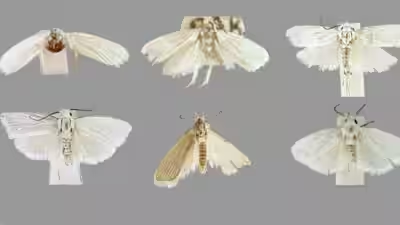
The Wallace specimen has helped name 11 new species of moths, including this one named for Greta Thunberg

Image: Mark Sterling

Eleven new moth species were named, including one after Greta Thunberg

The research expanded Topiris into a group of 14 species, 11 of which were newly described by scientists. Among the newly named moths were species inspired by the fictional characters Snow White and Cinderella, while another was named in honour of environmental activist Greta Thunberg. The discovery demonstrated how historical museum collections can still contribute to modern scientific research, even when individual specimens appear too damaged to be useful. The butterfly and moth collection contains approximately 13.5 million specimens, representing more than 100,000 species. The Wallace moth’s rediscovery showed that overlooked material stored in museum drawers can still hold important clues about biodiversity and evolution.


Source link

Related Articles

Leave a Reply

Your email address will not be published. Required fields are marked *

Back to top button
×
newsnation.aanest.com
Logo
Date of Publish : 08 November 2026, 3:20 am Digital Edition : News nation
A moth collected by Alfred Russel Wallace nearly 170 years ago was rediscovered in a museum drawer and helped identify 11 new species |

A battered moth that had spent decades overlooked in the Natural History Museum's collection has helped scientists identify 11 species previously unknown to science. The tiny specimen was collected in Sarawak, Borneo, by British naturalist Alfred Russel Wallace around 1855-1856, but its significance went unnoticed for generations. Consisting of little more than a thorax and a pair of wings, it had even been dismissed by an earlier expert as unworthy of further attention. Modern DNA sequencing and research into its original labels eventually revealed its identity, allowing scientists to revive an entire moth genus.Alfred Russel Wallace's forgotten moth was found among millions of museum specimensThe discovery came while Natural History Museum scientific associate Mark Sterling and senior curator Dr David Lees were examining a collection of small, snow-white moths from Southeast Asia. They were investigating several specimens that appeared to represent previously undescribed species when an old, damaged moth became central to their research. The specimen had originally been described in 1863, but its deteriorated condition made identification difficult. In 1927, moth expert Edward Meyrick had recommended that it was 'better neglected'. Sterling and Lees took a closer look after noticing clues on its original labels, which suggested a much more significant history.A tiny label connected the moth to Wallace's expedition in BorneoOne of the specimen's labels carried the abbreviation 'SAR', which caught the researchers' attention. The letters stood for Sarawak, a region in what is now Malaysian Borneo that Wallace visited during his travels through Southeast Asia. The researchers compared the label with historical records and Wallace's own account of his expedition, published in The Malay Archipelago. His writings described collecting moths from a bungalow near Kuching, Sarawak, between December 1855 and January 1856. The location and other historical evidence helped Sterling and Lees establish that the damaged specimen had been collected by Wallace during that period, almost 170 years earlier.Image: Mark SterlingDNA sequencing helped scientists revive the forgotten moth genus TopirisThe researchers used a new DNA sequencing technique being trialled at the Museum to examine the specimen. Even though the moth was badly damaged, they were able to extract a tiny piece of its leg and obtain genetic information. The results showed that it belonged to the same species as more recently collected specimens from nearby Brunei. Further analysis established that the other moths under investigation also belonged to the genus Topiris. The findings allowed the researchers to resurrect the genus, which had effectively fallen out of scientific use following the earlier dismissal of the original specimen. The study was subsequently published in the journal ZooKeys.Image: Mark SterlingEleven new moth species were named, including one after Greta ThunbergThe research expanded Topiris into a group of 14 species, 11 of which were newly described by scientists. Among the newly named moths were species inspired by the fictional characters Snow White and Cinderella, while another was named in honour of environmental activist Greta Thunberg. The discovery demonstrated how historical museum collections can still contribute to modern scientific research, even when individual specimens appear too damaged to be useful. The butterfly and moth collection contains approximately 13.5 million specimens, representing more than 100,000 species. The Wallace moth's rediscovery showed that overlooked material stored in museum drawers can still hold important clues about biodiversity and evolution.

Source link