World

In 1969, a Nevada man began turning roadside junk, bottles, hubcaps and car parts into a desert home; decades later, the five-acre Thunder Mountain Monument is a free roadside attraction

In 1969, a Nevada man began turning roadside junk, bottles, hubcaps and car parts into a desert home; decades later, the five-acre Thunder Mountain Monument is a free roadside attraction
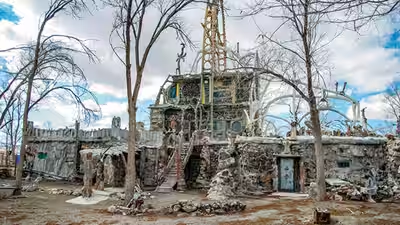
Van Zant used whatever materials he could find, fitting discarded objects into walls, windows and decorative features. Old bottles became part of the walls, creating colourful patterns when sunlight passed through them. (Image Credit: Sally Hanrahan via Travel Nevada)

Just off Interstate 80 near Imlay, Nevada, a five-acre roadside attraction showcases an unusual collection of concrete structures and sculptures made from discarded bottles, car parts and scrap metal. What looks like a giant artwork made from discarded objects began as the personal project of Frank Van Zant, better known as Chief Rolling Mountain Thunder. According to Travel Nevada, Van Zant started building Thunder Mountain Monument in 1969, using materials such as old bottles, scrap metal and car parts to create a home and a tribute to Native American history. Over the following decades, the site grew into a five-acre collection of handmade structures that visitors can explore for free during daylight hours.

How a roadside stop became a lifelong project

Van Zant’s journey to Nevada was not originally a plan to build a desert monument. A World War II veteran, he had worked as a deputy sheriff and later for the US Forest Service, where he collected artefacts he found while preparing maps. In 1968, he travelled east from California with his wife. According to Travel Nevada’s account, their truck broke down near Imlay, a small settlement between Lovelock and Winnemucca. The couple stayed in the area, and Van Zant eventually began building on the property.He adopted the name Rolling Mountain Thunder and developed a vision for a place that would honour Native American people and their history. He also spoke of spiritual experiences and believed he had a purpose in creating the monument. Rather than designing a conventional house, he started transforming a trailer and gradually expanded it with concrete, rocks and objects collected from the surrounding area. What began as a shelter grew into a much larger and more unusual undertaking.

Building with what others threw away

Thunder Mountain took shape through improvisation rather than formal architectural plans. Van Zant used whatever materials he could find, fitting discarded objects into walls, windows and decorative features. Old bottles became part of the walls, creating colourful patterns when sunlight passed through them. Car parts, hubcaps, windshields, railroad materials and scrap metal were incorporated into the structures. Concrete held many of these objects together, giving the buildings their distinctive appearance. Travel Nevada’s account describes how Van Zant could turn an unwanted typewriter into a design feature or arrange bottles to form a makeshift stained-glass window. Objects that might otherwise have been thrown away became part of the monument’s architecture. The result was not a carefully planned building in the conventional sense. Its unusual appearance reflected the materials available and Van Zant’s changing ideas as construction continued.Over the years, he created more than 200 concrete sculptures, many depicting Native American figures and themes connected to their history and experiences. The site became both a personal residence and an expansive outdoor art environment.

A home, a hostel and a spiritual refuge

Thunder Mountain was not always simply a roadside attraction. For years, Van Zant lived on the property with members of his family, and the compound also provided shelter for visitors. During the 1970s, the site attracted people travelling through the region, including members of the counterculture movement, some of whom stayed there temporarily.Van Zant’s family life was closely connected to the property. He had eight children, and the main structure developed into a maze of rooms, stairways, unusual windows and walls incorporating car parts. His vision combined artistic expression, spiritual beliefs and a desire to commemorate Native American history. The monument’s many objects were not merely decorations; they formed part of the personal meaning he attached to the place.However, the site also experienced setbacks. A fire in 1983 destroyed much of the compound, including a hostel. Van Zant continued living at Thunder Mountain until his death in 1989.

Preserving the monument after his death

After Van Zant died, the property suffered from vandalism and deterioration. Its survival depended on people willing to maintain the structures and prevent the unusual collection from falling into ruin. The monument was recognised as a Nevada State Historic Site in 1992. His son, Dan Van Zant, subsequently helped preserve the property, contributing money and arranging repairs. The work has remained a challenge because the buildings were assembled from unconventional materials and were never constructed like ordinary homes. Today, a caretaker helps look after the grounds, while donations from visitors support ongoing maintenance. The site remains a reminder of one man’s determination to turn an unconventional vision into a lasting landmark.

Visiting Thunder Mountain Monument today

Located near Imlay, Thunder Mountain Monument sits just off Interstate 80 at Exit 145. Visitors can follow the signs to reach the property and walk around the outdoor sculptures and structures during daylight hours. Admission is free, although donations are encouraged to help maintain the site. The main residence is not open for visitors to enter, and people are asked to respect fences and restricted areas.For travellers passing through Nevada, the monument offers something different from the state’s better-known natural attractions. Its buildings and sculptures combine found objects, concrete and personal symbolism in a way that is difficult to mistake for anything else. More than five decades after construction began, Thunder Mountain remains a testament to Van Zant’s resourcefulness and imagination. What started with a broken-down truck and a collection of discarded materials has become a distinctive roadside landmark, preserved for curious visitors who stop to see what one man built in the desert.


Source link

Related Articles

Leave a Reply

Your email address will not be published. Required fields are marked *

Back to top button
×
newsnation.aanest.com
Logo
Date of Publish : 10 October 2026, 6:15 pm Digital Edition : News nation
In 1969, a Nevada man began turning roadside junk, bottles, hubcaps and car parts into a desert home; decades later, the five-acre Thunder Mountain Monument is a free roadside attraction

Van Zant used whatever materials he could find, fitting discarded objects into walls, windows and decorative features. Old bottles became part of the walls, creating colourful patterns when sunlight passed through them. (Image Credit: Sally Hanrahan via Travel Nevada) Just off Interstate 80 near Imlay, Nevada, a five-acre roadside attraction showcases an unusual collection of concrete structures and sculptures made from discarded bottles, car parts and scrap metal. What looks like a giant artwork made from discarded objects began as the personal project of Frank Van Zant, better known as Chief Rolling Mountain Thunder. According to Travel Nevada, Van Zant started building Thunder Mountain Monument in 1969, using materials such as old bottles, scrap metal and car parts to create a home and a tribute to Native American history. Over the following decades, the site grew into a five-acre collection of handmade structures that visitors can explore for free during daylight hours.How a roadside stop became a lifelong projectVan Zant's journey to Nevada was not originally a plan to build a desert monument. A World War II veteran, he had worked as a deputy sheriff and later for the US Forest Service, where he collected artefacts he found while preparing maps. In 1968, he travelled east from California with his wife. According to Travel Nevada's account, their truck broke down near Imlay, a small settlement between Lovelock and Winnemucca. The couple stayed in the area, and Van Zant eventually began building on the property.He adopted the name Rolling Mountain Thunder and developed a vision for a place that would honour Native American people and their history. He also spoke of spiritual experiences and believed he had a purpose in creating the monument. Rather than designing a conventional house, he started transforming a trailer and gradually expanded it with concrete, rocks and objects collected from the surrounding area. What began as a shelter grew into a much larger and more unusual undertaking.Building with what others threw awayThunder Mountain took shape through improvisation rather than formal architectural plans. Van Zant used whatever materials he could find, fitting discarded objects into walls, windows and decorative features. Old bottles became part of the walls, creating colourful patterns when sunlight passed through them. Car parts, hubcaps, windshields, railroad materials and scrap metal were incorporated into the structures. Concrete held many of these objects together, giving the buildings their distinctive appearance. Travel Nevada's account describes how Van Zant could turn an unwanted typewriter into a design feature or arrange bottles to form a makeshift stained-glass window. Objects that might otherwise have been thrown away became part of the monument's architecture. The result was not a carefully planned building in the conventional sense. Its unusual appearance reflected the materials available and Van Zant's changing ideas as construction continued.Over the years, he created more than 200 concrete sculptures, many depicting Native American figures and themes connected to their history and experiences. The site became both a personal residence and an expansive outdoor art environment.A home, a hostel and a spiritual refugeThunder Mountain was not always simply a roadside attraction. For years, Van Zant lived on the property with members of his family, and the compound also provided shelter for visitors. During the 1970s, the site attracted people travelling through the region, including members of the counterculture movement, some of whom stayed there temporarily.Van Zant's family life was closely connected to the property. He had eight children, and the main structure developed into a maze of rooms, stairways, unusual windows and walls incorporating car parts. His vision combined artistic expression, spiritual beliefs and a desire to commemorate Native American history. The monument's many objects were not merely decorations; they formed part of the personal meaning he attached to the place.However, the site also experienced setbacks. A fire in 1983 destroyed much of the compound, including a hostel. Van Zant continued living at Thunder Mountain until his death in 1989.Preserving the monument after his deathAfter Van Zant died, the property suffered from vandalism and deterioration. Its survival depended on people willing to maintain the structures and prevent the unusual collection from falling into ruin. The monument was recognised as a Nevada State Historic Site in 1992. His son, Dan Van Zant, subsequently helped preserve the property, contributing money and arranging repairs. The work has remained a challenge because the buildings were assembled from unconventional materials and were never constructed like ordinary homes. Today, a caretaker helps look after the grounds, while donations from visitors support ongoing maintenance. The site remains a reminder of one man's determination to turn an unconventional vision into a lasting landmark.Visiting Thunder Mountain Monument todayLocated near Imlay, Thunder Mountain Monument sits just off Interstate 80 at Exit 145. Visitors can follow the signs to reach the property and walk around the outdoor sculptures and structures during daylight hours. Admission is free, although donations are encouraged to help maintain the site. The main residence is not open for visitors to enter, and people are asked to respect fences and restricted areas.For travellers passing through Nevada, the monument offers something different from the state's better-known natural attractions. Its buildings and sculptures combine found objects, concrete and personal symbolism in a way that is difficult to mistake for anything else. More than five decades after construction began, Thunder Mountain remains a testament to Van Zant's resourcefulness and imagination. What started with a broken-down truck and a collection of discarded materials has become a distinctive roadside landmark, preserved for curious visitors who stop to see what one man built in the desert.

Source link