
World

Texas neighbours fought over a five-foot strip beside a Lake Conroe home where meters and a generator crossed the boundary; an appeals court upheld the easement and $100 trespass award

Texas neighbours fought over a five-foot strip beside a Lake Conroe home where meters and a generator crossed the boundary; an appeals court upheld the easement and $100 trespass award
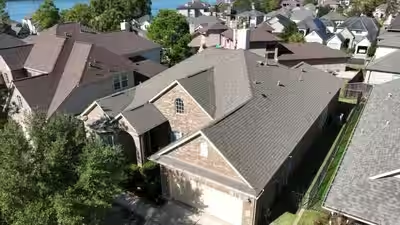
The subdivision’s original layout allowed houses to be constructed directly along certain property boundaries (Representational photo)

A dispute between two neighbouring families over a five-foot strip of land beside their waterfront homes in Texas reached an appeals court after disagreements over property boundaries, utility meters, drainage and access for home repairs. The case involved two houses near Lake Conroe, where one property was built so close to the boundary that its owners needed to enter the neighbouring land to maintain it.On Thursday, the Ninth Court of Appeals in Beaumont upheld an earlier ruling that allowed Rudy R. Amador and Carolyn S. Amador to use part of their neighbours’ property for repairs and maintenance. According to the judgement document, the court also upheld a $100 award for trespassing against the Amadors, finding that their right to access the land did not extend to unrelated activities.The dispute began when John P. Suitts and Kelly A. Marchman-Suitts, who own Lot 59 in the Pebble Glen on the Lake subdivision, sued the Amadors, owners of adjoining Lot 58. Both properties face Lake Conroe, and the Amadors’ house stands less than five inches from the common boundary.The Suitts argued that the Amadors had no written easement allowing them to enter their property or keep equipment extending across the boundary. They also raised concerns about drainage from the neighbouring property and alleged that the Amadors and their contractors had repeatedly entered their land without permission.

How the five-foot strip became a dispute

The subdivision’s original layout allowed houses to be constructed directly along certain property boundaries. While the Amadors’ property had no building setback along the shared boundary, the Suitts’ property had a five-foot setback area.The Amadors’ house was built in 2003 by its previous owners, Charles and Barbara Rosok. Its gas meter, electric meter and other utility equipment had been installed when the house was constructed. The Amadors purchased the property in 2013 and later installed a Generac generator and related equipment in 2016.According to the Suitts, a 2021 survey showed that the neighbouring property’s gas meter, electric meter, Generac panel and gutter extended onto their land. They wanted the equipment removed and sought an order preventing further unauthorised entry.The Amadors argued that access to the five-foot area was necessary because they could not repair or maintain the south side of their house without stepping onto the Suitts’ property.

What happened between the neighbours?

The Suitts accused the Amadors of changing the natural flow of rainwater by raising parts of their backyard and constructing a swimming pool.They also complained about drainage connections, landscaping and incidents involving security lights and survey markers.During the trial, John Suitts testified that Rudy Amador had entered his property without permission and had kicked over a security light and survey stake. Rudy acknowledged entering the property and moving a light. He also admitted kicking survey stakes but claimed he had reacted to an insect crawling up his leg.Rudy received a criminal trespass warning in 2022. He then testified that he stopped entering the property after receiving the warning and instructed his contractors to do the same.However, evidence presented during the trial also showed that the neighbours had previously cooperated. John had allowed drainage connections, helped install a French drain and permitted access for certain maintenance activities.

Representational AI image

Representational AI image

Why the jury recognised an easement

The central legal question was whether the Amadors could claim an easement by estoppel, even though no written easement gave them access to the five-foot strip.An easement allows one person to use another person’s land for a specific purpose without owning it. An easement by estoppel can arise when a property owner’s words or conduct lead another person to rely on permission to use the land.The jury found that the Amadors had an easement by estoppel for maintaining and repairing the south side of their house. It rejected their claims for easements based on necessity and prior use. The appeals court agreed that sufficient evidence supported the jury’s decision.The judges also noted that the Suitts had allowed the previous owners and the Amadors to use the area for approximately 13 years. They had also permitted drainage improvements and participated in some of the work.The court concluded that this conduct supported that the Amadors reasonably relied on being allowed to access the area.

Why the court upheld the $100 award

Although the Amadors were granted limited access rights, the trial court found that they had trespassed on two occasions.It awarded the Suitts $100 in nominal damages and issued a permanent injunction preventing the Amadors from entering the property for purposes outside the recognised easement.The Suitts also challenged the dismissal of their claims concerning the utility equipment. They argued that every use of the meters, lines and generator panel amounted to a fresh trespass.The appeals court rejected that argument. It found that installing the equipment involved individual acts that caused continuing effects, rather than repeated wrongful acts creating new claims.Because the equipment had been installed years earlier, the court upheld the trial judge’s decision that those claims were barred by the applicable limitation period.

What the appeals court finally decided

The appeals court rejected both arguments raised by the Suitts and affirmed the trial court’s judgment. The ruling allows the Amadors to access the five-foot setback area for necessary maintenance and repairs to the south side of their house, including its utilities. It does not give them unrestricted permission to enter their neighbours’ property.The judgment also leaves in place the $100 trespass award, the restrictions on unrelated entry and the order requiring the Suitts to remove their fence along the south side of their property.


Source link

Related Articles

Leave a Reply

Your email address will not be published. Required fields are marked *

Back to top button
×
newsnation.aanest.com
Logo
Date of Publish : 09 October 2026, 5:09 pm Digital Edition : News nation
Texas neighbours fought over a five-foot strip beside a Lake Conroe home where meters and a generator crossed the boundary; an appeals court upheld the easement and $100 trespass award

The subdivision's original layout allowed houses to be constructed directly along certain property boundaries (Representational photo) A dispute between two neighbouring families over a five-foot strip of land beside their waterfront homes in Texas reached an appeals court after disagreements over property boundaries, utility meters, drainage and access for home repairs. The case involved two houses near Lake Conroe, where one property was built so close to the boundary that its owners needed to enter the neighbouring land to maintain it.On Thursday, the Ninth Court of Appeals in Beaumont upheld an earlier ruling that allowed Rudy R. Amador and Carolyn S. Amador to use part of their neighbours' property for repairs and maintenance. According to the judgement document, the court also upheld a $100 award for trespassing against the Amadors, finding that their right to access the land did not extend to unrelated activities.The dispute began when John P. Suitts and Kelly A. Marchman-Suitts, who own Lot 59 in the Pebble Glen on the Lake subdivision, sued the Amadors, owners of adjoining Lot 58. Both properties face Lake Conroe, and the Amadors' house stands less than five inches from the common boundary.The Suitts argued that the Amadors had no written easement allowing them to enter their property or keep equipment extending across the boundary. They also raised concerns about drainage from the neighbouring property and alleged that the Amadors and their contractors had repeatedly entered their land without permission.How the five-foot strip became a disputeThe subdivision's original layout allowed houses to be constructed directly along certain property boundaries. While the Amadors' property had no building setback along the shared boundary, the Suitts' property had a five-foot setback area.The Amadors' house was built in 2003 by its previous owners, Charles and Barbara Rosok. Its gas meter, electric meter and other utility equipment had been installed when the house was constructed. The Amadors purchased the property in 2013 and later installed a Generac generator and related equipment in 2016.According to the Suitts, a 2021 survey showed that the neighbouring property's gas meter, electric meter, Generac panel and gutter extended onto their land. They wanted the equipment removed and sought an order preventing further unauthorised entry.The Amadors argued that access to the five-foot area was necessary because they could not repair or maintain the south side of their house without stepping onto the Suitts' property.What happened between the neighbours?The Suitts accused the Amadors of changing the natural flow of rainwater by raising parts of their backyard and constructing a swimming pool.They also complained about drainage connections, landscaping and incidents involving security lights and survey markers.During the trial, John Suitts testified that Rudy Amador had entered his property without permission and had kicked over a security light and survey stake. Rudy acknowledged entering the property and moving a light. He also admitted kicking survey stakes but claimed he had reacted to an insect crawling up his leg.Rudy received a criminal trespass warning in 2022. He then testified that he stopped entering the property after receiving the warning and instructed his contractors to do the same.However, evidence presented during the trial also showed that the neighbours had previously cooperated. John had allowed drainage connections, helped install a French drain and permitted access for certain maintenance activities.Representational AI imageWhy the jury recognised an easementThe central legal question was whether the Amadors could claim an easement by estoppel, even though no written easement gave them access to the five-foot strip.An easement allows one person to use another person's land for a specific purpose without owning it. An easement by estoppel can arise when a property owner's words or conduct lead another person to rely on permission to use the land.The jury found that the Amadors had an easement by estoppel for maintaining and repairing the south side of their house. It rejected their claims for easements based on necessity and prior use. The appeals court agreed that sufficient evidence supported the jury's decision.The judges also noted that the Suitts had allowed the previous owners and the Amadors to use the area for approximately 13 years. They had also permitted drainage improvements and participated in some of the work.The court concluded that this conduct supported that the Amadors reasonably relied on being allowed to access the area.Why the court upheld the $100 awardAlthough the Amadors were granted limited access rights, the trial court found that they had trespassed on two occasions.It awarded the Suitts $100 in nominal damages and issued a permanent injunction preventing the Amadors from entering the property for purposes outside the recognised easement.The Suitts also challenged the dismissal of their claims concerning the utility equipment. They argued that every use of the meters, lines and generator panel amounted to a fresh trespass.The appeals court rejected that argument. It found that installing the equipment involved individual acts that caused continuing effects, rather than repeated wrongful acts creating new claims.Because the equipment had been installed years earlier, the court upheld the trial judge's decision that those claims were barred by the applicable limitation period.What the appeals court finally decidedThe appeals court rejected both arguments raised by the Suitts and affirmed the trial court's judgment. The ruling allows the Amadors to access the five-foot setback area for necessary maintenance and repairs to the south side of their house, including its utilities. It does not give them unrestricted permission to enter their neighbours' property.The judgment also leaves in place the $100 trespass award, the restrictions on unrelated entry and the order requiring the Suitts to remove their fence along the south side of their property.

Source link