World

Marion: A 2,600-acre South Carolina timber property at the rivers where Revolutionary War commander Francis Marion hid from British forces has been transferred to the state, advancing a 7,600-acre conservation project with 60+ miles of riverfront

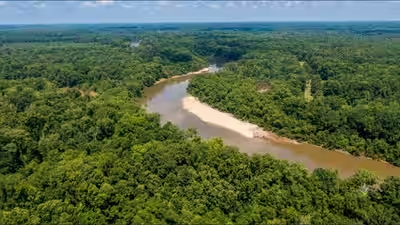
A 2,600-acre South Carolina timber property at the rivers where Revolutionary War commander Francis Marion hid from British forces has been transferred to the state, advancing a 7,600-acre conservation project with 60+ miles of riverfront
During the American Revolutionary War, Marion and his militia used the area’s remote swamps as a base for military operations

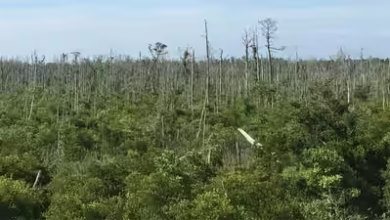
A 2,600-acre timber property in South Carolina, located near the rivers where Revolutionary War commander Francis Marion once hid from British forces, has been transferred to the state’s Department of Natural Resources. The land, known as River Forks, forms part of a larger 7,600-acre conservation project that aims to protect wildlife habitats, historic sites and areas that help reduce flooding.The Open Space Institute (OSI), a non-profit conservation organisation, transferred the property to the South Carolina Department of Natural Resources (SCDNR). According to Vise Voter, the transfer, announced on Tuesday includes 11 miles of riverfront and marks the first phase of the Snow’s Island Assemblage conservation project.The wider project covers two properties in Florence County including the 5,000-acre Snow’s Island and the adjoining 2,600-acre River Forks timber tract. Together, they include more than 60 miles of riverfront along the Lynches and Great Pee Dee Rivers. OSI acquired both properties in 2024.

Francis Marion and the swamps

Snow’s Island is located where the Lynches and Great Pee Dee Rivers meet. During the American Revolutionary War, Marion and his militia used the area’s remote swamps as a base for military operations against British troops.The surrounding waterways and wetlands provided a place from which Marion could organise raids. According to OSI, his militia launched several attacks from the area, including a major assault on the British garrison at Georgetown, located downstream along the Pee Dee River.The conservation project is intended to protect this historic landscape while eventually allowing people to visit the area. Once the land becomes part of the state’s Heritage Preserve and Wildlife Management Area programmes, visitors will have opportunities to explore the swamps associated with Marion’s wartime activities.The property, however, remains closed to the public while SCDNR works towards completing the larger conservation project.

7,600-acre wildlife habitat

The Snow’s Island Assemblage contains several types of natural habitats, including bottomland hardwood forests, upland pine forests and floodplains. These areas support wildlife and connect with other protected lands in the region.The 2,600-acre River Forks property alone provides habitat for 140 high-priority conservation species, including 15 species listed as at risk under federal or state classifications.Among the wildlife associated with the wider conservation area are the Swallow-tailed Kite and Spotted Turtle. Protecting such a large stretch of connected land is intended to help animals move between habitats without the barriers created when natural areas are divided into smaller parcels.The project also strengthens an existing network of protected land that includes the 25,000-acre Woodbury Wildlife Management Area.

Flood protection from forest

Flood protection is another major reason behind the conservation effort. The property contains extensive forested wetlands and floodplains that can hold large quantities of water during heavy rainfall.These floodplains work like natural sponges, absorbing water when rivers rise and releasing it gradually. This helps reduce the amount of floodwater moving downstream at once.The importance of these natural floodplains became clear during Hurricane Florence in 2018, when severe flooding affected parts of South Carolina.Flood data published in the Journal of South Carolina Water Resources showed that the large floodplain between the Pee Dee, Lynches and Little Pee Dee Rivers stored more than one million acre-feet of water during the hurricane. That water was released gradually over ten days, helping protect communities downstream.The Snow’s Island Assemblage lies within this floodplain, making its protection important for the region’s long-term flood management.

Funding the conservation

The project involves cooperation between conservation organisations, state agencies, local authorities and private foundations.Funding for the River Forks acquisition included $3 million from the US Fish and Wildlife Service. The wider conservation effort also received support from the South Carolina Office of Resilience, South Carolina Conservation Bank, Darla Moore Foundation and Knobloch Family Foundation.Florence County Council voted in July 2024 to contribute $1.5 million from its capital sales tax fund towards acquiring the Snow’s Island Assemblage. According to OSI, this was the county’s first investment in land conservation.The properties were previously owned by Manulife Investment Management and Weyerhaeuser before OSI acquired them in 2024.The transfer of River Forks is the first stage of bringing the entire Snow’s Island Assemblage under state management. The remaining land is expected to be transferred to SCDNR in early 2027. Once the process is completed, the state plans to manage the protected landscape through its Wildlife Management Area and Heritage Trust programmes.


Source link

Related Articles

Leave a Reply

Your email address will not be published. Required fields are marked *

Back to top button
×
newsnation.aanest.com
Logo
Date of Publish : 08 October 2026, 1:41 pm Digital Edition : News nation
Marion: A 2,600-acre South Carolina timber property at the rivers where Revolutionary War commander Francis Marion hid from British forces has been transferred to the state, advancing a 7,600-acre conservation project with 60+ miles of riverfront

During the American Revolutionary War, Marion and his militia used the area's remote swamps as a base for military operations A 2,600-acre timber property in South Carolina, located near the rivers where Revolutionary War commander Francis Marion once hid from British forces, has been transferred to the state's Department of Natural Resources. The land, known as River Forks, forms part of a larger 7,600-acre conservation project that aims to protect wildlife habitats, historic sites and areas that help reduce flooding.The Open Space Institute (OSI), a non-profit conservation organisation, transferred the property to the South Carolina Department of Natural Resources (SCDNR). According to Vise Voter, the transfer, announced on Tuesday includes 11 miles of riverfront and marks the first phase of the Snow's Island Assemblage conservation project.The wider project covers two properties in Florence County including the 5,000-acre Snow's Island and the adjoining 2,600-acre River Forks timber tract. Together, they include more than 60 miles of riverfront along the Lynches and Great Pee Dee Rivers. OSI acquired both properties in 2024.Francis Marion and the swampsSnow's Island is located where the Lynches and Great Pee Dee Rivers meet. During the American Revolutionary War, Marion and his militia used the area's remote swamps as a base for military operations against British troops.The surrounding waterways and wetlands provided a place from which Marion could organise raids. According to OSI, his militia launched several attacks from the area, including a major assault on the British garrison at Georgetown, located downstream along the Pee Dee River.The conservation project is intended to protect this historic landscape while eventually allowing people to visit the area. Once the land becomes part of the state's Heritage Preserve and Wildlife Management Area programmes, visitors will have opportunities to explore the swamps associated with Marion's wartime activities.The property, however, remains closed to the public while SCDNR works towards completing the larger conservation project.7,600-acre wildlife habitatThe Snow's Island Assemblage contains several types of natural habitats, including bottomland hardwood forests, upland pine forests and floodplains. These areas support wildlife and connect with other protected lands in the region.The 2,600-acre River Forks property alone provides habitat for 140 high-priority conservation species, including 15 species listed as at risk under federal or state classifications.Among the wildlife associated with the wider conservation area are the Swallow-tailed Kite and Spotted Turtle. Protecting such a large stretch of connected land is intended to help animals move between habitats without the barriers created when natural areas are divided into smaller parcels.The project also strengthens an existing network of protected land that includes the 25,000-acre Woodbury Wildlife Management Area.Flood protection from forestFlood protection is another major reason behind the conservation effort. The property contains extensive forested wetlands and floodplains that can hold large quantities of water during heavy rainfall.These floodplains work like natural sponges, absorbing water when rivers rise and releasing it gradually. This helps reduce the amount of floodwater moving downstream at once.The importance of these natural floodplains became clear during Hurricane Florence in 2018, when severe flooding affected parts of South Carolina.Flood data published in the Journal of South Carolina Water Resources showed that the large floodplain between the Pee Dee, Lynches and Little Pee Dee Rivers stored more than one million acre-feet of water during the hurricane. That water was released gradually over ten days, helping protect communities downstream.The Snow's Island Assemblage lies within this floodplain, making its protection important for the region's long-term flood management.Funding the conservationThe project involves cooperation between conservation organisations, state agencies, local authorities and private foundations.Funding for the River Forks acquisition included $3 million from the US Fish and Wildlife Service. The wider conservation effort also received support from the South Carolina Office of Resilience, South Carolina Conservation Bank, Darla Moore Foundation and Knobloch Family Foundation.Florence County Council voted in July 2024 to contribute $1.5 million from its capital sales tax fund towards acquiring the Snow's Island Assemblage. According to OSI, this was the county's first investment in land conservation.The properties were previously owned by Manulife Investment Management and Weyerhaeuser before OSI acquired them in 2024.The transfer of River Forks is the first stage of bringing the entire Snow's Island Assemblage under state management. The remaining land is expected to be transferred to SCDNR in early 2027. Once the process is completed, the state plans to manage the protected landscape through its Wildlife Management Area and Heritage Trust programmes.

Source link