World

Billionaire Ron Burkle bought Frank Lloyd Wright’s earthquake-damaged Ennis House for about $4.5 million, roughly 70% below its original ask, then spent up to $17 million restoring it before it sold for $18 million

Billionaire Ron Burkle bought Frank Lloyd Wright’s earthquake-damaged Ennis House for about $4.5 million, roughly 70% below its original ask, then spent up to $17 million restoring it before it sold for $18 million
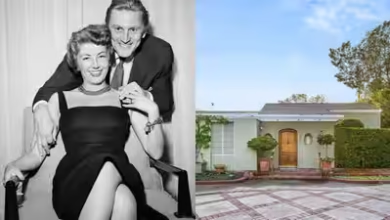
Photo credit (L-R): Burkle Foundation and the MLS

Billionaire investor Ron Burkle purchased Frank Lloyd Wright’s Ennis House in Los Feliz for about $4.5 million in 2011, roughly 70 percent below its original asking price, after the landmark had been damaged by earthquakes and heavy rains. He then spent up to $17 million on a meticulous restoration that repaired structural cracks, rebuilt decorative concrete blocks and updated mechanical systems. In 2024, the fully restored home sold for $18 million, making it one of the most expensive Wright-designed residences ever sold, according to the Los Angeles Times and Architectural Digest. Read more details about it here:

A textile-block masterpiece in Los Feliz

The Ennis House sits on a ridge in Los Feliz, overlooking the city from a dramatic hillside site. Designed by Frank Lloyd Wright in 1923 and completed in 1924, it is the largest of his four textile-block houses in the Los Angeles area. The home is built from more than 27,000 interlocking concrete blocks, each cast with a geometric pattern that creates the distinctive Mayan-revival aesthetic for which the house is known.Wright conceived the textile-block system as a way to create beautiful, affordable homes using locally made concrete blocks reinforced with steel. The blocks are both structure and ornament in the Ennis House, with patterned faces on the exterior and interior walls. The result is a residence that’s both monumental and intricately detailed, a hallmark of Wright’s later California work. Over the decades, the Ennis House became an icon of Los Angeles architecture and a frequent filming location for movies and television. Its striking appearance and hillside location made it a natural choice for productions seeking a dramatic, otherworldly backdrop. That fame, however, also brought wear and tear, as the house hosted events and shoots that sometimes strained its aging structure.

Earthquakes, rain and years of decline

The Ennis House suffered significant damage in the 1994 Northridge earthquake, which opened cracks in walls and destabilised portions of the structure. Further problems emerged in the winter of 2004 to 2005, when heavy rains saturated the hillside and triggered mudslides that threatened the foundation. Water infiltration and ground movement compounded the earthquake damage, leaving the house in a precarious condition. Clearly, by the time it was listed, the house would require a lot of restoration. The architectural importance of the house, as well as its choice location, justified the initial asking price of $15 million. However, the extent of the damage and the cost of repairs deterred many potential buyers, and the price was eventually reduced. Burkle’s purchase at about $4.5 million represented a steep discount, but it came with the understanding that millions more would need to be invested to save the house, as per the reports.The situation underscored a broader challenge facing many historic homes. Architectural importance does not equal financial viability, especially in the face of serious structural problems. Without a buyer willing to undertake a major restoration, the Ennis House would be at risk of further deterioration, or even partial loss. Burkle’s purchase ensured preservation, rather than abandonment or subdivision.

A multi-year restoration effort

Burkle assembled a team of architects, engineers and craftsmen to lead the restoration, with a focus on repairing the textile blocks and stabilising the structure. Cracks in walls were carefully injected with grout, and damaged blocks were removed, recast and reinstalled to match the original patterns. The goal was to preserve as much of Wright’s fabric as possible while ensuring the house could withstand future seismic events.Mechanical, electrical and plumbing systems were also upgraded to modern standards. The house was rewired and plumbed, the heating and cooling systems upgraded, and the drainage and waterproofing improved to keep water out. These were necessary upgrades to make the home livable by modern standards while maintaining its historic character. The restoration took more than a decade, with work continuing into the 2020s. Reports estimate that Burkle spent up to $17 million on the project, far more than his initial purchase price. That investment transformed the Ennis House from a damaged landmark into a fully restored residence that could once again serve as a private home and a showcase of Wright’s vision.From restoration to record sale The restored Ennis House went back on the market in 2024 with an asking price to match its restored state and importance as an architectural landmark. The property sold for $18 million, a figure that put it among the most expensive Wright-designed homes ever sold. The sale price was close to Burkle’s total investment when combining his purchase price and restoration costs, though it also represented a major milestone in the market for historic architecture.Architectural Digest noted that the Ennis House sale set a new benchmark for Wright properties, surpassing previous records for his residential work. The price reflected not only the design of the house but how much work it would take to return it to life. For buyers, the Ennis House is a rare chance to own a fully restored masterpiece by one of the greatest architects in American history. The sale also highlighted the role of private owners in preserving historic landmarks. Without Burkle’s willingness to invest serious money in restoration, the Ennis House might have continued to decay, or been altered in ways that could have compromised its integrity. His stewardship ensured that the house would be passed on in excellent condition, ready for the next chapter in its long history.

A sign of preservation and possibility

The saga of L.A.’s Ennis House shows how quickly architectural icons can fall apart when earthquakes, water damage and neglect set in. But its turnaround makes a bigger point: damaged history isn’t a lost cause if someone brings enough cash and patience to the table.In Los Angeles, the property is a point of great pride, a connection to visionary designers that defined the city’s identity. When Ron Burkle stepped in, he wasn’t just sealing a real estate deal, he was saving heritage that almost disappeared. His subsequent $18 million sale didn’t magically erase years of costly repairs, but it proved iconic architecture holds value when cared for right. Now restored, the Ennis House enters a fresh new era.


Source link

Related Articles

Leave a Reply

Your email address will not be published. Required fields are marked *

Back to top button
×
newsnation.aanest.com
Logo
Date of Publish : 07 October 2026, 1:51 pm Digital Edition : News nation
Billionaire Ron Burkle bought Frank Lloyd Wright’s earthquake-damaged Ennis House for about $4.5 million, roughly 70% below its original ask, then spent up to $17 million restoring it before it sold for $18 million

Photo credit (L-R): Burkle Foundation and the MLS Billionaire investor Ron Burkle purchased Frank Lloyd Wright’s Ennis House in Los Feliz for about $4.5 million in 2011, roughly 70 percent below its original asking price, after the landmark had been damaged by earthquakes and heavy rains. He then spent up to $17 million on a meticulous restoration that repaired structural cracks, rebuilt decorative concrete blocks and updated mechanical systems. In 2024, the fully restored home sold for $18 million, making it one of the most expensive Wright-designed residences ever sold, according to the Los Angeles Times and Architectural Digest. Read more details about it here:A textile-block masterpiece in Los FelizThe Ennis House sits on a ridge in Los Feliz, overlooking the city from a dramatic hillside site. Designed by Frank Lloyd Wright in 1923 and completed in 1924, it is the largest of his four textile-block houses in the Los Angeles area. The home is built from more than 27,000 interlocking concrete blocks, each cast with a geometric pattern that creates the distinctive Mayan-revival aesthetic for which the house is known.Wright conceived the textile-block system as a way to create beautiful, affordable homes using locally made concrete blocks reinforced with steel. The blocks are both structure and ornament in the Ennis House, with patterned faces on the exterior and interior walls. The result is a residence that’s both monumental and intricately detailed, a hallmark of Wright’s later California work. Over the decades, the Ennis House became an icon of Los Angeles architecture and a frequent filming location for movies and television. Its striking appearance and hillside location made it a natural choice for productions seeking a dramatic, otherworldly backdrop. That fame, however, also brought wear and tear, as the house hosted events and shoots that sometimes strained its aging structure.Earthquakes, rain and years of declineThe Ennis House suffered significant damage in the 1994 Northridge earthquake, which opened cracks in walls and destabilised portions of the structure. Further problems emerged in the winter of 2004 to 2005, when heavy rains saturated the hillside and triggered mudslides that threatened the foundation. Water infiltration and ground movement compounded the earthquake damage, leaving the house in a precarious condition. Clearly, by the time it was listed, the house would require a lot of restoration. The architectural importance of the house, as well as its choice location, justified the initial asking price of $15 million. However, the extent of the damage and the cost of repairs deterred many potential buyers, and the price was eventually reduced. Burkle’s purchase at about $4.5 million represented a steep discount, but it came with the understanding that millions more would need to be invested to save the house, as per the reports.The situation underscored a broader challenge facing many historic homes. Architectural importance does not equal financial viability, especially in the face of serious structural problems. Without a buyer willing to undertake a major restoration, the Ennis House would be at risk of further deterioration, or even partial loss. Burkle’s purchase ensured preservation, rather than abandonment or subdivision.A multi-year restoration effortBurkle assembled a team of architects, engineers and craftsmen to lead the restoration, with a focus on repairing the textile blocks and stabilising the structure. Cracks in walls were carefully injected with grout, and damaged blocks were removed, recast and reinstalled to match the original patterns. The goal was to preserve as much of Wright’s fabric as possible while ensuring the house could withstand future seismic events.Mechanical, electrical and plumbing systems were also upgraded to modern standards. The house was rewired and plumbed, the heating and cooling systems upgraded, and the drainage and waterproofing improved to keep water out. These were necessary upgrades to make the home livable by modern standards while maintaining its historic character. The restoration took more than a decade, with work continuing into the 2020s. Reports estimate that Burkle spent up to $17 million on the project, far more than his initial purchase price. That investment transformed the Ennis House from a damaged landmark into a fully restored residence that could once again serve as a private home and a showcase of Wright’s vision.From restoration to record sale The restored Ennis House went back on the market in 2024 with an asking price to match its restored state and importance as an architectural landmark. The property sold for $18 million, a figure that put it among the most expensive Wright-designed homes ever sold. The sale price was close to Burkle’s total investment when combining his purchase price and restoration costs, though it also represented a major milestone in the market for historic architecture.Architectural Digest noted that the Ennis House sale set a new benchmark for Wright properties, surpassing previous records for his residential work. The price reflected not only the design of the house but how much work it would take to return it to life. For buyers, the Ennis House is a rare chance to own a fully restored masterpiece by one of the greatest architects in American history. The sale also highlighted the role of private owners in preserving historic landmarks. Without Burkle’s willingness to invest serious money in restoration, the Ennis House might have continued to decay, or been altered in ways that could have compromised its integrity. His stewardship ensured that the house would be passed on in excellent condition, ready for the next chapter in its long history.A sign of preservation and possibilityThe saga of L.A.’s Ennis House shows how quickly architectural icons can fall apart when earthquakes, water damage and neglect set in. But its turnaround makes a bigger point: damaged history isn’t a lost cause if someone brings enough cash and patience to the table.In Los Angeles, the property is a point of great pride, a connection to visionary designers that defined the city’s identity. When Ron Burkle stepped in, he wasn’t just sealing a real estate deal, he was saving heritage that almost disappeared. His subsequent $18 million sale didn't magically erase years of costly repairs, but it proved iconic architecture holds value when cared for right. Now restored, the Ennis House enters a fresh new era.

Source link