Crews are removing over 850,000 cubic yards of toxic sediment from Ohio’s Cuyahoga River; the waste is being stabilised two miles downstream |

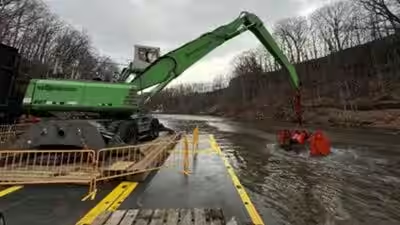

Crews are removing more than 850,000 cubic yards of contaminated sediment from the Cuyahoga River in Cuyahoga Falls, Ohio, as part of a major cleanup around the Gorge Dam. The material contains pollutants including heavy metals, oil, grease and industrial chemicals that have remained trapped in the river for decades. Instead of being left in the river or simply moved elsewhere, the dredged material is being transported two miles downstream, where it is processed, strengthened and placed in a specially prepared area. The work is expected to continue through 2027, according to theUS Environmental Protection Agency.
Why more than 850,000 cubic yards of contaminated sediment is being removed
The sediment has built up in the pool behind the Cuyahoga Gorge Dam, where pollutants from the river’s long industrial history have remained trapped. According to the US EPA’s Cuyahoga Gorge Dam cleanup project, an estimated 865,200 cubic yards of contaminated sediment will be remediated as part of the project.The material contains polycyclic aromatic hydrocarbons, polychlorinated biphenyls, oil and grease, as well as heavy metals such as cadmium and lead. Removing it is intended to reduce the risk of exposure for people, fish and other wildlife.The scale of the work is substantial, but it is also part of a long effort to restore a river that has already undergone major changes.

An aerial view of the Gorge Dam pool during active dredging. Image Credit: US EPA
The Cuyahoga River has a long history of industrial pollution
For much of the 20th century, the Cuyahoga River was heavily affected by industrial waste. UniquePlacestoSave reports that factories and oil refineries discharged solid and chemical waste into the river, including material containing toxic heavy metals.The river caught fire repeatedly, with fires recorded as far back as 1868. The 1969 fire drew particular national attention after an oil slick caught fire, helping turn Cuyahoga into a powerful symbol of severe water pollution, according to UniquePlacestoSave.The situation began to change after stronger pollution controls were introduced. The organisation notes that the Clean Water Act of 1972 gave the federal government greater authority to limit pollution and regulate discharges. Over time, industries reduced the dumping of chemical waste and cities improved their sewage systems.
How the dredged material is being stabilised downstream
The sediment is not simply being dug out and dumped at another location. The EPA says it is transported through a pipeline to a specially constructed processing and placement area about two miles downstream from the dam pool.At the processing site, the dredged sediment is mixed with Portland cement to make it stronger and more stable. The resulting material is known as stabilised dredged material. It is then placed in designated cells, where it is graded and allowed to cure.The EPA’s project updates show that crews regularly test the material as it cures to make sure it reaches the required strength. The process is designed to hold the contaminated sediment securely in place rather than leaving loose material exposed.

An excavator directs the flow of stabilised dredged material (SDM) as it is being pumped and placed within the Sediment Placement Area. Image Credit: US EPA
What happens to the sediment once it reaches the placement area
The placement area has been designed to receive the processed material in layers. EPA project information shows that the stabilised sediment is pumped or transported into placement cells, where excavators spread and grade it.Crews also monitor the strength and moisture of the material during the process. Some of the dredged material is separated into different components, including sand and debris, before the remaining sediment is processed.The EPA says soil from a nearby borrow area will eventually be used as a top layer over the stabilised sediment mounds. The finished areas will then be seeded with native plants to help them fit into the surrounding landscape.

An aerial view of the Sediment Processing and Placement Areas. In the foreground, the SHERP UTV mixes dredged material in the sediment surge basin. In the background, excavators are grading and placing stabilised dredged material. Image Credit: US EPA
Gorge Dam remains central to the river’s recovery
The sediment cleanup is closely linked to the future removal of the Gorge Dam. The EPA says the dam itself will be removed through a separate project after the sediment remediation is completed.The dam has stood in the river since 1911. Once it is removed, a significant section of the Cuyahoga will be able to return to a free-flowing condition for the first time in more than a century, according to the EPA.UniquePlacestoSave describes the Gorge Dam as one of the final major obstacles to the river’s wider recovery. 5 other dams along the Cuyahoga have already been removed over the past two decades, leaving the Gorge Dam as the last major obstruction between Lake Erie and the river’s upper reaches.
Importance of cleanup for wildlife and local communities
The EPA says removing the contaminated sediment will reduce the risk posed by pollutants to people, fish and other wildlife. It also expects the project to help restore fishing and recreational opportunities along the river.That progress builds on improvements that have already taken place. UniquePlacestoSave reports that fish and wildlife have returned to sections of the Cuyahoga that were once considered severely degraded. At least 40 fish species are now found in the stretch between Cleveland and Akron, including northern pike and steelhead trout.The organisation also notes that Cuyahoga was recognised by the EPA as an Area of Recovery in 2019, reflecting the progress made in improving its water quality.The current dredging operation began in 2025, and the EPA expects it to continue through 2027. Work resumed in early March 2026 after a winter pause caused by below-freezing temperatures, the agency reported in March 2026.The project is funded through the Great Lakes Restoration Initiative along with project partners, including the Northeast Ohio Regional Sewer District, the City of Akron, FirstEnergy/Ohio Edison and Ohio EPA.
Source link