
World

A 10.22-kg rock used as a Michigan barn doorstop for decades was identified as a new iron meteorite |

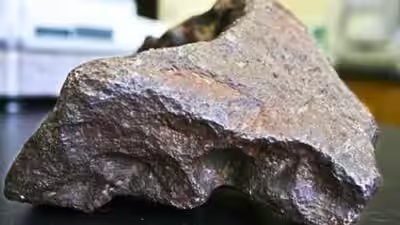
A 10.22-kg rock used as a Michigan barn doorstop for decades was identified as a new iron meteorite
PC: 50th Lunar and Planetary Science Conference in 2019

A meteorite that spent decades as a barn doorstop in Michigan has been identified as a new IIIAB iron meteorite. The 10.22-kilogram rock reportedly fell on a farm near Edmore in 1939. After a different meteorite fell near Hamburg, Michigan, in 2018, the farm’s later owners, who had been told the rock’s story, recognized its value to science and brought it to Central Michigan University for identification.According to the research presented at the 50th Lunar and Planetary Science Conference in 2019, a slice was later studied at the Smithsonian Institution, where scientists analysed its composition and internal structure. The meteorite, which had been found near Edmore in 1939 and used as a doorstop for decades, was later named Edmore, Michigan, as its officially approved meteorite name.

The rock found in 1939 was later identified as a meteorite

The Edmore meteorite was found on a farm near the town of Edmore in Michigan in 1939. The owner reportedly recovered it and later used the stone as a doorstop for a barn. The farm’s subsequent owners had been told the story of the unusual rock and later brought it to Central Michigan University for identification.After the Hamburg, Michigan, fall in early 2018, the subsequent owners recognised that the old stone could have scientific value. They took it to Central Michigan University in Mt. Pleasant for identification. The specimen is triangular and measures 17 x 20 x 23 cm. It weighs 10.22 kg and has large surface indentations. Portions of its surface have a light brown fusion crust.

Scientists examined the meteorite’s internal structure

A slice of the meteorite was sent to the Smithsonian Institution for identification and classification. Scientists used a Nova NanoSEM 600 scanning electron microscope under low vacuum and energy-dispersive X-ray spectroscopy to identify nickel in the sample. They then prepared the slice with 10% Nital and alcohol to expose its Widmanstätten pattern.The meteorite was described as a medium octahedrite. The examined slice contained kamacite, taenite, and schreibersite. Kamacite lamellae within the Widmanstätten structure were about 0.8 mm wide. The taenite between the kamacite lamellae showed pronounced zoning. Schreibersite grains reached up to 4 mm in width and showed extensive fracturing.

Results:

Results

PC: 50th Lunar and Planetary Science Conference in 2019

Results

PC: 50th Lunar and Planetary Science Conference in 2019

Edmore became an officially recognised meteorite

The researchers noted that Edmore is a new IIIAB iron meteorite based on the information and analyses presented in the study. The paper states that the iridium data were particularly important in reaching this conclusion. Edmore, Michigan, is the approved name for the meteorite.Its identification also draws attention to meteorites that may remain in personal collections without their owners knowing their scientific importance. The researchers noted that the Edmore case, like the 2018 Hamburg fall, shows why greater public visibility of meteorites can help bring new specimens forward for study.


Source link

Related Articles

Leave a Reply

Your email address will not be published. Required fields are marked *

Back to top button
×
newsnation.aanest.com
Logo
Date of Publish : 04 October 2026, 4:49 pm Digital Edition : News nation
A 10.22-kg rock used as a Michigan barn doorstop for decades was identified as a new iron meteorite |

PC: 50th Lunar and Planetary Science Conference in 2019 A meteorite that spent decades as a barn doorstop in Michigan has been identified as a new IIIAB iron meteorite. The 10.22-kilogram rock reportedly fell on a farm near Edmore in 1939. After a different meteorite fell near Hamburg, Michigan, in 2018, the farm's later owners, who had been told the rock's story, recognized its value to science and brought it to Central Michigan University for identification.According to the research presented at the 50th Lunar and Planetary Science Conference in 2019, a slice was later studied at the Smithsonian Institution, where scientists analysed its composition and internal structure. The meteorite, which had been found near Edmore in 1939 and used as a doorstop for decades, was later named Edmore, Michigan, as its officially approved meteorite name.The rock found in 1939 was later identified as a meteoriteThe Edmore meteorite was found on a farm near the town of Edmore in Michigan in 1939. The owner reportedly recovered it and later used the stone as a doorstop for a barn. The farm’s subsequent owners had been told the story of the unusual rock and later brought it to Central Michigan University for identification.After the Hamburg, Michigan, fall in early 2018, the subsequent owners recognised that the old stone could have scientific value. They took it to Central Michigan University in Mt. Pleasant for identification. The specimen is triangular and measures 17 x 20 x 23 cm. It weighs 10.22 kg and has large surface indentations. Portions of its surface have a light brown fusion crust.Scientists examined the meteorite’s internal structureA slice of the meteorite was sent to the Smithsonian Institution for identification and classification. Scientists used a Nova NanoSEM 600 scanning electron microscope under low vacuum and energy-dispersive X-ray spectroscopy to identify nickel in the sample. They then prepared the slice with 10% Nital and alcohol to expose its Widmanstätten pattern.The meteorite was described as a medium octahedrite. The examined slice contained kamacite, taenite, and schreibersite. Kamacite lamellae within the Widmanstätten structure were about 0.8 mm wide. The taenite between the kamacite lamellae showed pronounced zoning. Schreibersite grains reached up to 4 mm in width and showed extensive fracturing.Results:PC: 50th Lunar and Planetary Science Conference in 2019PC: 50th Lunar and Planetary Science Conference in 2019Edmore became an officially recognised meteoriteThe researchers noted that Edmore is a new IIIAB iron meteorite based on the information and analyses presented in the study. The paper states that the iridium data were particularly important in reaching this conclusion. Edmore, Michigan, is the approved name for the meteorite.Its identification also draws attention to meteorites that may remain in personal collections without their owners knowing their scientific importance. The researchers noted that the Edmore case, like the 2018 Hamburg fall, shows why greater public visibility of meteorites can help bring new specimens forward for study.

Source link