World

California removed levees from a former dairy farm, turning it back into wetlands where 16,000 waterbirds were counted in one day | World News

California removed levees from a former dairy farm, turning it back into wetlands where 16,000 waterbirds were counted in one day

A former dairy pasture in California underwent a major transformation after levees were removed to restore tidal wetlands at the Giacomini Wetlands. The restoration allowed tidal waters to return, triggering rapid changes in vegetation and wildlife. Over the following years, salt and brackish marsh expanded, while native-dominated plant communities increased and non-native-dominated communities declined. The response was also visible in bird numbers. Waterbird numbers grew sharply in the initial years after restoration, reaching a record high of approximately 16,000 birds counted on a single day in December 2013. Ten-year monitoring found that the restored wetland had entered a more stable ecological condition.

How did California’s former dairy pasture change after levee breaching

The vegetation changes continued during the years after restoration. The National Park Service reported that salt and brackish marsh communities had increased by 143 acres by 2018 compared with the 2003 pre-restoration mapping, rising from 9 per cent of the project area to 37 per cent. Native California cordgrass also expanded substantially, growing across 21 per cent of the project area compared with 0.02 per cent before restoration.The restoration also changed the balance between native- and non-native-dominated vegetation. According to the National Park Service, non-native-dominated and mixed-nativity communities declined from 327 acres in 2008 to 164 acres in 2018, while native-dominated communities increased from 80 acres to 257 acres over the same period. The agency said the site had developed greater diversity of plant communities, become more similar to native reference marshes and provided valuable habitat for wildlife.

Waterbird numbers change after California marsh restoration

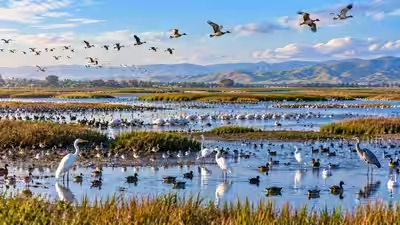
According to a monitoring summary by Avocet Research Associates, published by the National Park Service, “Waterbird numbers grew sharply in the initial years following restoration”, with a record high of approximately 16,000 waterbirds counted on a single day in December 2013. The source also reported that numbers began tapering off in 2014 and 2015 and remained similar during monitoring in 2017 and 2018.Two surface-feeding duck species were particularly abundant after restoration. Green-winged teal and American wigeon together accounted for 43.3 per cent of all waterbirds present between September and February. The source said the reduced waterbird numbers at Giacomini might have reflected changes in regional migration patterns caused by other tidal wetland restoration projects in San Francisco Bay, while another possibility was that resources had been limited by the early abundance of waterfowl.

Waterbird numbers change after California marsh restoration

Image AI generated

How did Giacomini Wetlands change after restoration

The increase in birds was part of wider ecological changes recorded at Giacomini. However, the source said the rapid growth eventually gave way to a more stable ecological condition as newly created niches became occupied and abundant resources were depleted.By the period between Year 5 and Year 10, the Giacomini Wetlands had reached what the National Park Service described as a “dynamic equilibrium” condition. The agency said that while birds, native fish and benthic invertebrates appeared to have reached a sustainable status quo, less tangible indicators such as biogeochemical processes and nutrient cycles might still have been changing.


Source link

Related Articles

Leave a Reply

Your email address will not be published. Required fields are marked *

Back to top button
×
newsnation.aanest.com
Logo
Date of Publish : 22 September 2026, 12:01 am Digital Edition : News nation
California removed levees from a former dairy farm, turning it back into wetlands where 16,000 waterbirds were counted in one day | World News

A former dairy pasture in California underwent a major transformation after levees were removed to restore tidal wetlands at the Giacomini Wetlands. The restoration allowed tidal waters to return, triggering rapid changes in vegetation and wildlife. Over the following years, salt and brackish marsh expanded, while native-dominated plant communities increased and non-native-dominated communities declined. The response was also visible in bird numbers. Waterbird numbers grew sharply in the initial years after restoration, reaching a record high of approximately 16,000 birds counted on a single day in December 2013. Ten-year monitoring found that the restored wetland had entered a more stable ecological condition.How did California’s former dairy pasture change after levee breachingThe vegetation changes continued during the years after restoration. The National Park Service reported that salt and brackish marsh communities had increased by 143 acres by 2018 compared with the 2003 pre-restoration mapping, rising from 9 per cent of the project area to 37 per cent. Native California cordgrass also expanded substantially, growing across 21 per cent of the project area compared with 0.02 per cent before restoration.The restoration also changed the balance between native- and non-native-dominated vegetation. According to the National Park Service, non-native-dominated and mixed-nativity communities declined from 327 acres in 2008 to 164 acres in 2018, while native-dominated communities increased from 80 acres to 257 acres over the same period. The agency said the site had developed greater diversity of plant communities, become more similar to native reference marshes and provided valuable habitat for wildlife.Waterbird numbers change after California marsh restorationAccording to a monitoring summary by Avocet Research Associates, published by the National Park Service, “Waterbird numbers grew sharply in the initial years following restoration”, with a record high of approximately 16,000 waterbirds counted on a single day in December 2013. The source also reported that numbers began tapering off in 2014 and 2015 and remained similar during monitoring in 2017 and 2018.Two surface-feeding duck species were particularly abundant after restoration. Green-winged teal and American wigeon together accounted for 43.3 per cent of all waterbirds present between September and February. The source said the reduced waterbird numbers at Giacomini might have reflected changes in regional migration patterns caused by other tidal wetland restoration projects in San Francisco Bay, while another possibility was that resources had been limited by the early abundance of waterfowl.Image AI generatedHow did Giacomini Wetlands change after restorationThe increase in birds was part of wider ecological changes recorded at Giacomini. However, the source said the rapid growth eventually gave way to a more stable ecological condition as newly created niches became occupied and abundant resources were depleted.By the period between Year 5 and Year 10, the Giacomini Wetlands had reached what the National Park Service described as a “dynamic equilibrium” condition. The agency said that while birds, native fish and benthic invertebrates appeared to have reached a sustainable status quo, less tangible indicators such as biogeochemical processes and nutrient cycles might still have been changing.

Source link