
World

Egyptian archaeologists uncovered rare rock-cut tombs at an ancient Nile Delta site, with Roman camp remains found in the layers above | World News

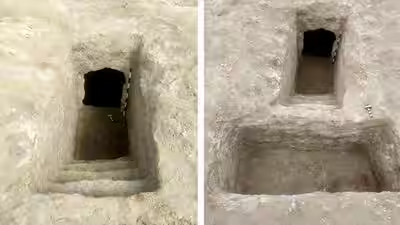
Egyptian archaeologists uncovered rare rock-cut tombs at an ancient Nile Delta site, with Roman camp remains found in the layers above
PC: The Egyptian Ministry of Tourism and Antiquities

Archaeologists working at the ancient Tell el-Yahudiya site in Egypt’s Qalyubia governorate have uncovered several rock-cut tombs, while continuing to uncover remains of a Roman camp. The discoveries were made by an Egyptian archaeological mission during continued excavation work at the site. Evidence indicates that the burials date from the late New Kingdom and continued into the Late Period.The Roman camp remains were found in the upper layers above the rock-cut tombs, indicating that the site continued to be used in later periods. The Egyptian Ministry of Tourism and Antiquities reveals that the tombs are particularly notable because rock-cut burials are uncommon in the Nile Delta, where clay-rich soil is widespread.

What are the two types of rock-cut tombs found at Tell el-Yahudiya

The tombs were built in different ways, with two distinct architectural designs identified during the excavation. In one type, the entrance begins with a staircase leading to a hall lined with burial openings (known as bayatat). The other type consists of a rectangular shaft that leads to two burial chambers. The Ministry notes that these varied designs are significant because rock-cut tombs are relatively uncommon in the Nile Delta. The Delta’s clay soil explains the rarity of this type of tomb. Finding tombs carved into rock here is important for understanding burial patterns and how they developed in the eastern Delta over the ages.

How did archaeologists determine the age of the newly discovered tombs

Archaeological objects found in the tombs helped the mission determine when they were used. The evidence shows that the tombs date to the late New Kingdom and continued to be used during the Late Period. This indicates that the burial area remained in use across different periods of ancient Egyptian history.The finds were portable artifacts associated with the tombs, and they helped determine the periods in which the tombs were used. This reflects funerary activity in the region extending across successive historical periods.

What does the Roman camp reveal about Tell el-Yahudiya

The mission is also completing the uncovering of the Roman camp remains in the surface layers above the tombs. The remains were found above the rock-cut tombs, showing that the area continued to be used after the earlier burials. The Egyptian Ministry of Tourism and Antiquities said the Roman remains add another layer to the history of Tell el-Yahudiya. The site was mainly associated with the Hyksos period and once contained a large camp from that time. It was later used during the Greek and Roman periods. The discovery of both tombs and camp remains indicates that the same area served different purposes over several historical periods.

How did Tell el-Yahudiya change over different historical periods

The site was already an important location during the Hyksos period, when the area contained a large camp. It was later used during the Greek and Roman periods. The newly uncovered tombs and Roman camp remains provide further evidence of this continued use. The discovery is also notable because rock-cut tombs are relatively uncommon in the Nile Delta.The ministry noted similar examples at Kom El-Shoqafa in Alexandria and in parts of the northern coast. At Tell el-Yahudiya, the archaeological layers now contain evidence of both burial activity and later use as a camp. The mission is continuing its work to uncover the remains of the Roman camp.


Source link

Related Articles

Leave a Reply

Your email address will not be published. Required fields are marked *

Back to top button
×
newsnation.aanest.com
Logo
Date of Publish : 21 September 2026, 5:54 pm Digital Edition : News nation
Egyptian archaeologists uncovered rare rock-cut tombs at an ancient Nile Delta site, with Roman camp remains found in the layers above | World News

PC: The Egyptian Ministry of Tourism and Antiquities Archaeologists working at the ancient Tell el-Yahudiya site in Egypt's Qalyubia governorate have uncovered several rock-cut tombs, while continuing to uncover remains of a Roman camp. The discoveries were made by an Egyptian archaeological mission during continued excavation work at the site. Evidence indicates that the burials date from the late New Kingdom and continued into the Late Period.The Roman camp remains were found in the upper layers above the rock-cut tombs, indicating that the site continued to be used in later periods. The Egyptian Ministry of Tourism and Antiquities reveals that the tombs are particularly notable because rock-cut burials are uncommon in the Nile Delta, where clay-rich soil is widespread.What are the two types of rock-cut tombs found at Tell el-YahudiyaThe tombs were built in different ways, with two distinct architectural designs identified during the excavation. In one type, the entrance begins with a staircase leading to a hall lined with burial openings (known as bayatat). The other type consists of a rectangular shaft that leads to two burial chambers. The Ministry notes that these varied designs are significant because rock-cut tombs are relatively uncommon in the Nile Delta. The Delta's clay soil explains the rarity of this type of tomb. Finding tombs carved into rock here is important for understanding burial patterns and how they developed in the eastern Delta over the ages.How did archaeologists determine the age of the newly discovered tombsArchaeological objects found in the tombs helped the mission determine when they were used. The evidence shows that the tombs date to the late New Kingdom and continued to be used during the Late Period. This indicates that the burial area remained in use across different periods of ancient Egyptian history.The finds were portable artifacts associated with the tombs, and they helped determine the periods in which the tombs were used. This reflects funerary activity in the region extending across successive historical periods.What does the Roman camp reveal about Tell el-YahudiyaThe mission is also completing the uncovering of the Roman camp remains in the surface layers above the tombs. The remains were found above the rock-cut tombs, showing that the area continued to be used after the earlier burials. The Egyptian Ministry of Tourism and Antiquities said the Roman remains add another layer to the history of Tell el-Yahudiya. The site was mainly associated with the Hyksos period and once contained a large camp from that time. It was later used during the Greek and Roman periods. The discovery of both tombs and camp remains indicates that the same area served different purposes over several historical periods.How did Tell el-Yahudiya change over different historical periodsThe site was already an important location during the Hyksos period, when the area contained a large camp. It was later used during the Greek and Roman periods. The newly uncovered tombs and Roman camp remains provide further evidence of this continued use. The discovery is also notable because rock-cut tombs are relatively uncommon in the Nile Delta.The ministry noted similar examples at Kom El-Shoqafa in Alexandria and in parts of the northern coast. At Tell el-Yahudiya, the archaeological layers now contain evidence of both burial activity and later use as a camp. The mission is continuing its work to uncover the remains of the Roman camp.

Source link