
World

Edward Norton ran the 2009 New York Marathon with Maasai warriors to support a Kenya conservation trust protecting 280,000 acres | World News

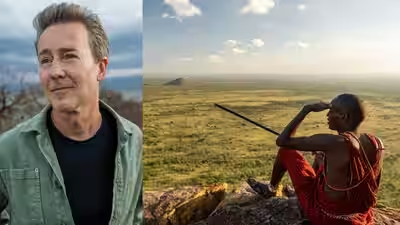
Edward Norton ran the 2009 New York Marathon with Maasai warriors to support a Kenya conservation trust protecting 280,000 acres
PC: National Geographic and MWCT

In 2009, Edward Norton ran the New York City Marathon alongside Maasai warriors to raise awareness and funds for a conservation project in Kenya. His connection with the cause began after he visited Campi ya Kanzi, an ecolodge near Mount Kilimanjaro that linked tourism income with protecting land and supporting the local Maasai community. Norton later became involved with the Maasai Wilderness Conservation Trust, which grew from that initiative and expanded its conservation work across the Chyulu Hills. The marathon brought international attention to its community-based approach. As reported by CBS News, the trust says its conservation efforts cover approximately 280,000 acres of Kenyan wilderness.

Edward Norton and the Kenya ecolodge that became a conservation trust

Italian conservationists Luca Belpietro and Antonella Bonomi established Campi ya Kanzi as an ecolodge near the foothills of Kilimanjaro. Its purpose went beyond tourism. Revenue from visitors was intended to give the surrounding Maasai community an economic reason to keep the landscape intact.Four years after the camp was established, Belpietro and Bonomi created the Maasai Wilderness Conservation Trust to expand that approach. Rather than treating conservation and local livelihoods as separate concerns, the trust developed programmes intended to connect the two.The landscape is part of the Chyulu Hills in southern Kenya, within the wider Amboseli-Tsavo ecosystem. The area contains wildlife habitat, migration routes, forests, grasslands, springs and other natural resources that are important both to wildlife and to communities living there. MWCT says its work is built around generating sustainable economic benefits from conserving these resources.

From Mount Kilimanjaro to a deeper role in Maasai conservation

Norton encountered the organisation during a trip to Kenya. The actor climbed Kilimanjaro and stayed at Campi ya Kanzi, giving him a direct look at the way the lodge and the surrounding conservation work were connected.The principle was relatively straightforward: if wildlife and natural resources could generate reliable income for local people, protecting them could become part of the community’s economic interests rather than an outside restriction imposed on them.According to National Geographic, Norton became involved with the Maasai Wilderness Conservation Trust and later served as president of its US board. The organisation described its conservation work as a partnership between professional conservationists and Maasai leaders, with programmes spanning wildlife protection, education, health, livelihoods and ecotourism.But Norton saw a limitation in the original funding structure. Tourism was helping finance conservation, yet the scale of the work depended heavily on money generated by visitors to the lodge.

From Mount Kilimanjaro to a deeper role in Maasai conservation<br>

PC: The UN

Why the New York Marathon became part of the campaign

Norton had lived in New York for years, so the city’s marathon offered a way to take a local sporting event and connect it with a conservation project thousands of miles away. Reportedly, the 2009 race was scheduled for November 1. Norton planned to run alongside Samson Parashina and two other Maasai warriors. Parashina was closely involved with the conservation effort and listed by MWCT as its president and chairman of the board.The contrast was hard to miss. Norton was accustomed to New York’s streets, while the Maasai runners came from a community where walking and running were part of everyday life. They trained in Central Park before the race, using some of the same paths where Norton would later compete. The Maasai runners also had to get used to pavement, crowds and the scale of Manhattan.There was even a practical question about footwear. They were accustomed to running in traditional sandals and were considering whether running shoes would make more sense on New York’s roads, as reported by New York Daily News.

The campaign brought celebrities into the race

Reportedly, Norton was not running alone on behalf of the trust. Singer Alanis Morissette and illusionist David Blaine were among the other public figures recruited for the fundraising effort, while a larger group of supporters joined the campaign.The fundraising was only one part of the plan. Norton and the trust were also trying to introduce a conservation project in East Africa to people who might never have heard of it.The marathon was not simply being treated as a charity event with a celebrity attached to it. It was a way of explaining a particular conservation model, one in which Maasai communities remained connected to the land and gained an economic stake in keeping its natural resources intact.

The 280,000-acre landscape behind Norton’s conservation work

At the time Norton ran the marathon, the trust and Maasai communities were managing roughly 280,000 acres. The trust says this landscape contains important wildlife corridors, habitat reserves, forests, grasslands and water sources. Its programmes include community ranger operations, wildlife monitoring, predator protection, rangeland restoration and land conservancies.That work is not limited to keeping poachers away from wildlife. The organisation has developed programmes intended to make conservation financially meaningful for local communities.The trust also employs community rangers from the local Maasai population. MWCT says the rangers work under a formal partnership with the Kenya Wildlife Service and use GPS-based monitoring and other technology during patrols.

The conservation model still centres on the Maasai community

The land is not simply treated as an empty wilderness waiting to be protected. It is a working landscape occupied and managed by communities whose livelihoods are tied to it. Conservation therefore has to account for people as well as animals, forests and water.MWCT’s programmes reflect that approach that includes ecotourism, health, education, livelihoods and conservation, with the organisation describing sustainable economic benefits as a way of encouraging local participation in protecting the ecosystem.For Norton, the New York race offered a way to connect two places that appeared to have little in common. A Maasai conservation project in the Kenyan savannah and a marathon through New York’s five boroughs became part of the same fundraising effort.


Source link

Related Articles

Leave a Reply

Your email address will not be published. Required fields are marked *

Back to top button
×
newsnation.aanest.com
Logo
Date of Publish : 21 September 2026, 11:08 am Digital Edition : News nation
Edward Norton ran the 2009 New York Marathon with Maasai warriors to support a Kenya conservation trust protecting 280,000 acres | World News

PC: National Geographic and MWCT In 2009, Edward Norton ran the New York City Marathon alongside Maasai warriors to raise awareness and funds for a conservation project in Kenya. His connection with the cause began after he visited Campi ya Kanzi, an ecolodge near Mount Kilimanjaro that linked tourism income with protecting land and supporting the local Maasai community. Norton later became involved with the Maasai Wilderness Conservation Trust, which grew from that initiative and expanded its conservation work across the Chyulu Hills. The marathon brought international attention to its community-based approach. As reported by CBS News, the trust says its conservation efforts cover approximately 280,000 acres of Kenyan wilderness.Edward Norton and the Kenya ecolodge that became a conservation trustItalian conservationists Luca Belpietro and Antonella Bonomi established Campi ya Kanzi as an ecolodge near the foothills of Kilimanjaro. Its purpose went beyond tourism. Revenue from visitors was intended to give the surrounding Maasai community an economic reason to keep the landscape intact.Four years after the camp was established, Belpietro and Bonomi created the Maasai Wilderness Conservation Trust to expand that approach. Rather than treating conservation and local livelihoods as separate concerns, the trust developed programmes intended to connect the two.The landscape is part of the Chyulu Hills in southern Kenya, within the wider Amboseli-Tsavo ecosystem. The area contains wildlife habitat, migration routes, forests, grasslands, springs and other natural resources that are important both to wildlife and to communities living there. MWCT says its work is built around generating sustainable economic benefits from conserving these resources.From Mount Kilimanjaro to a deeper role in Maasai conservationNorton encountered the organisation during a trip to Kenya. The actor climbed Kilimanjaro and stayed at Campi ya Kanzi, giving him a direct look at the way the lodge and the surrounding conservation work were connected.The principle was relatively straightforward: if wildlife and natural resources could generate reliable income for local people, protecting them could become part of the community's economic interests rather than an outside restriction imposed on them.According to National Geographic, Norton became involved with the Maasai Wilderness Conservation Trust and later served as president of its US board. The organisation described its conservation work as a partnership between professional conservationists and Maasai leaders, with programmes spanning wildlife protection, education, health, livelihoods and ecotourism.But Norton saw a limitation in the original funding structure. Tourism was helping finance conservation, yet the scale of the work depended heavily on money generated by visitors to the lodge.PC: The UNWhy the New York Marathon became part of the campaignNorton had lived in New York for years, so the city's marathon offered a way to take a local sporting event and connect it with a conservation project thousands of miles away. Reportedly, the 2009 race was scheduled for November 1. Norton planned to run alongside Samson Parashina and two other Maasai warriors. Parashina was closely involved with the conservation effort and listed by MWCT as its president and chairman of the board.The contrast was hard to miss. Norton was accustomed to New York's streets, while the Maasai runners came from a community where walking and running were part of everyday life. They trained in Central Park before the race, using some of the same paths where Norton would later compete. The Maasai runners also had to get used to pavement, crowds and the scale of Manhattan.There was even a practical question about footwear. They were accustomed to running in traditional sandals and were considering whether running shoes would make more sense on New York's roads, as reported by New York Daily News.The campaign brought celebrities into the raceReportedly, Norton was not running alone on behalf of the trust. Singer Alanis Morissette and illusionist David Blaine were among the other public figures recruited for the fundraising effort, while a larger group of supporters joined the campaign.The fundraising was only one part of the plan. Norton and the trust were also trying to introduce a conservation project in East Africa to people who might never have heard of it.The marathon was not simply being treated as a charity event with a celebrity attached to it. It was a way of explaining a particular conservation model, one in which Maasai communities remained connected to the land and gained an economic stake in keeping its natural resources intact.The 280,000-acre landscape behind Norton’s conservation workAt the time Norton ran the marathon, the trust and Maasai communities were managing roughly 280,000 acres. The trust says this landscape contains important wildlife corridors, habitat reserves, forests, grasslands and water sources. Its programmes include community ranger operations, wildlife monitoring, predator protection, rangeland restoration and land conservancies.That work is not limited to keeping poachers away from wildlife. The organisation has developed programmes intended to make conservation financially meaningful for local communities.The trust also employs community rangers from the local Maasai population. MWCT says the rangers work under a formal partnership with the Kenya Wildlife Service and use GPS-based monitoring and other technology during patrols.The conservation model still centres on the Maasai communityThe land is not simply treated as an empty wilderness waiting to be protected. It is a working landscape occupied and managed by communities whose livelihoods are tied to it. Conservation therefore has to account for people as well as animals, forests and water.MWCT's programmes reflect that approach that includes ecotourism, health, education, livelihoods and conservation, with the organisation describing sustainable economic benefits as a way of encouraging local participation in protecting the ecosystem.For Norton, the New York race offered a way to connect two places that appeared to have little in common. A Maasai conservation project in the Kenyan savannah and a marathon through New York's five boroughs became part of the same fundraising effort.

Source link